The Amsterdam issue
Buying Tulip Bulbs at Amsterdam's Floating Bloemenmarkt
The Singel's flower stalls are free, small and half souvenir shop. Here is which ones still sell real bulbs, how long to give it, and what to eat within five minutes.

By Giulia MarchettiEating Amsterdam one market stall and brown café at a time
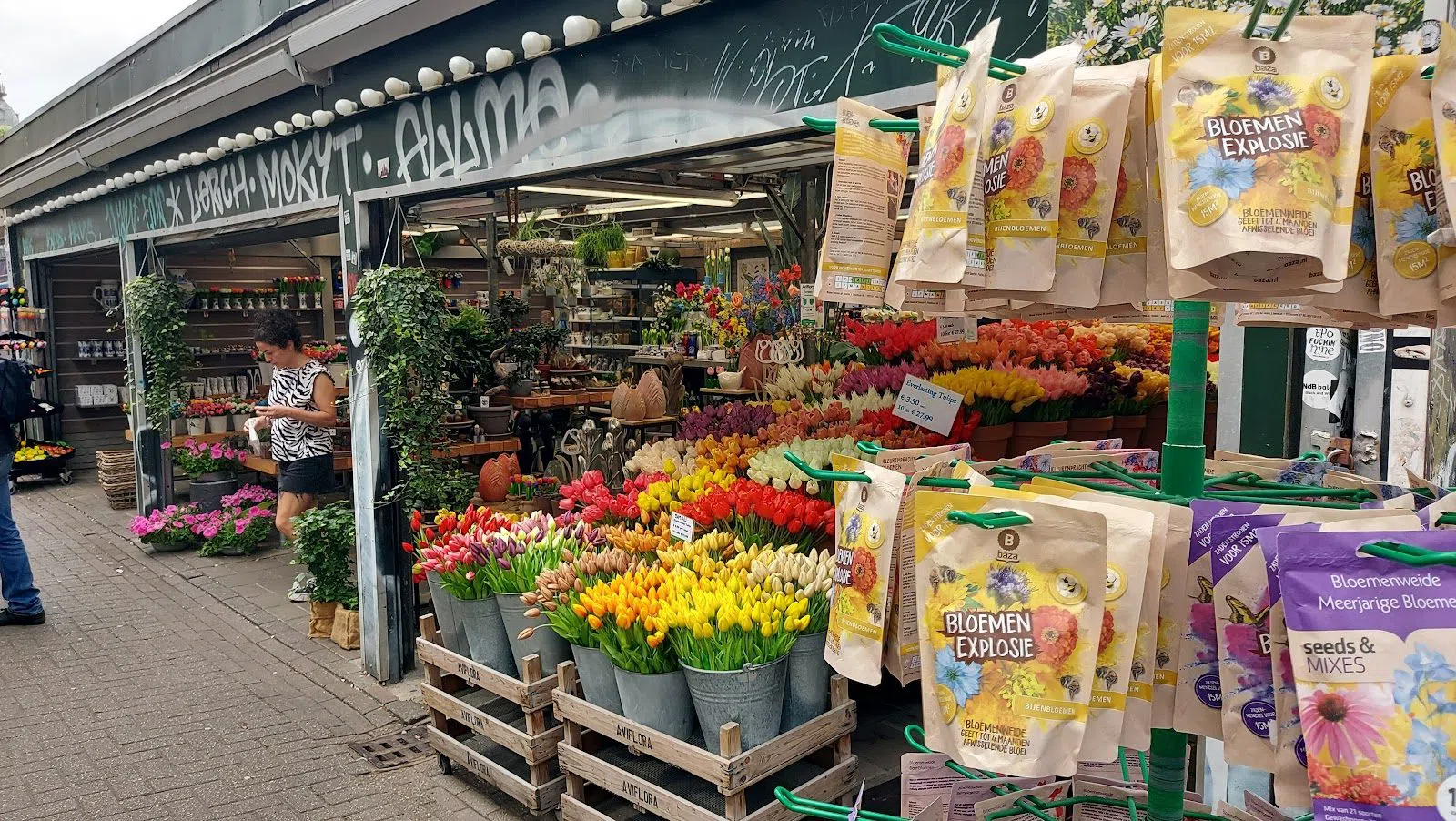
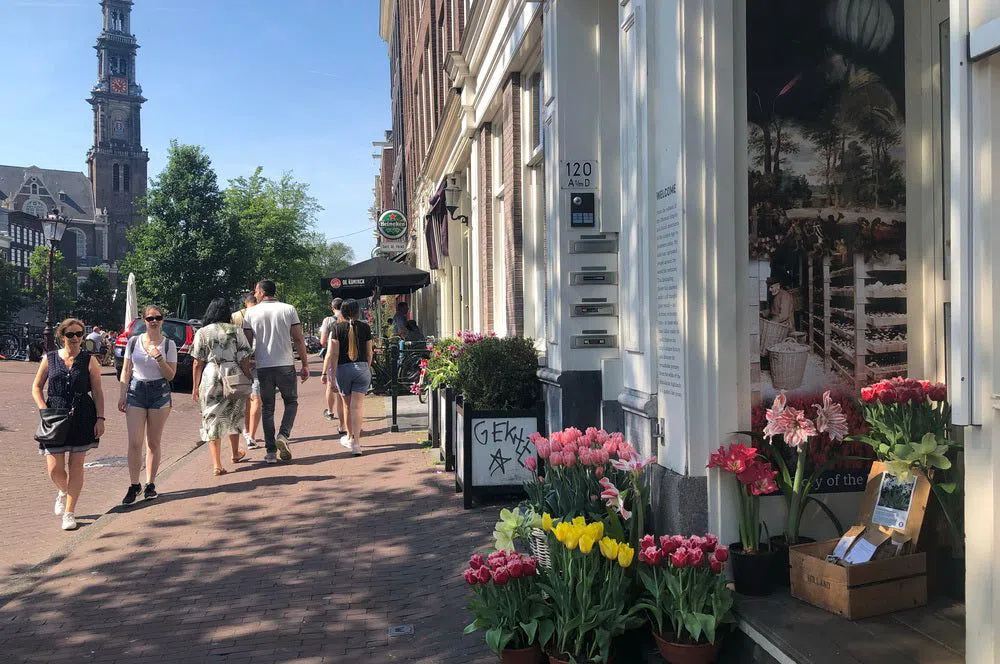
The Bloemenmarkt smells of dry paper and bulb netting before it smells of anything green, and the first thing most people say out loud is that it does not look like it floats. It does: the stalls stand on pontoons moored against the Singel's quay, though you only really register the water from the bridge at either end. Walk it knowing what it is now and you get a good twenty minutes and a bag of bulbs. Walk it expecting a working flower market and you will be finished, and slightly deflated, before your coffee has cooled.
What you are actually walking into
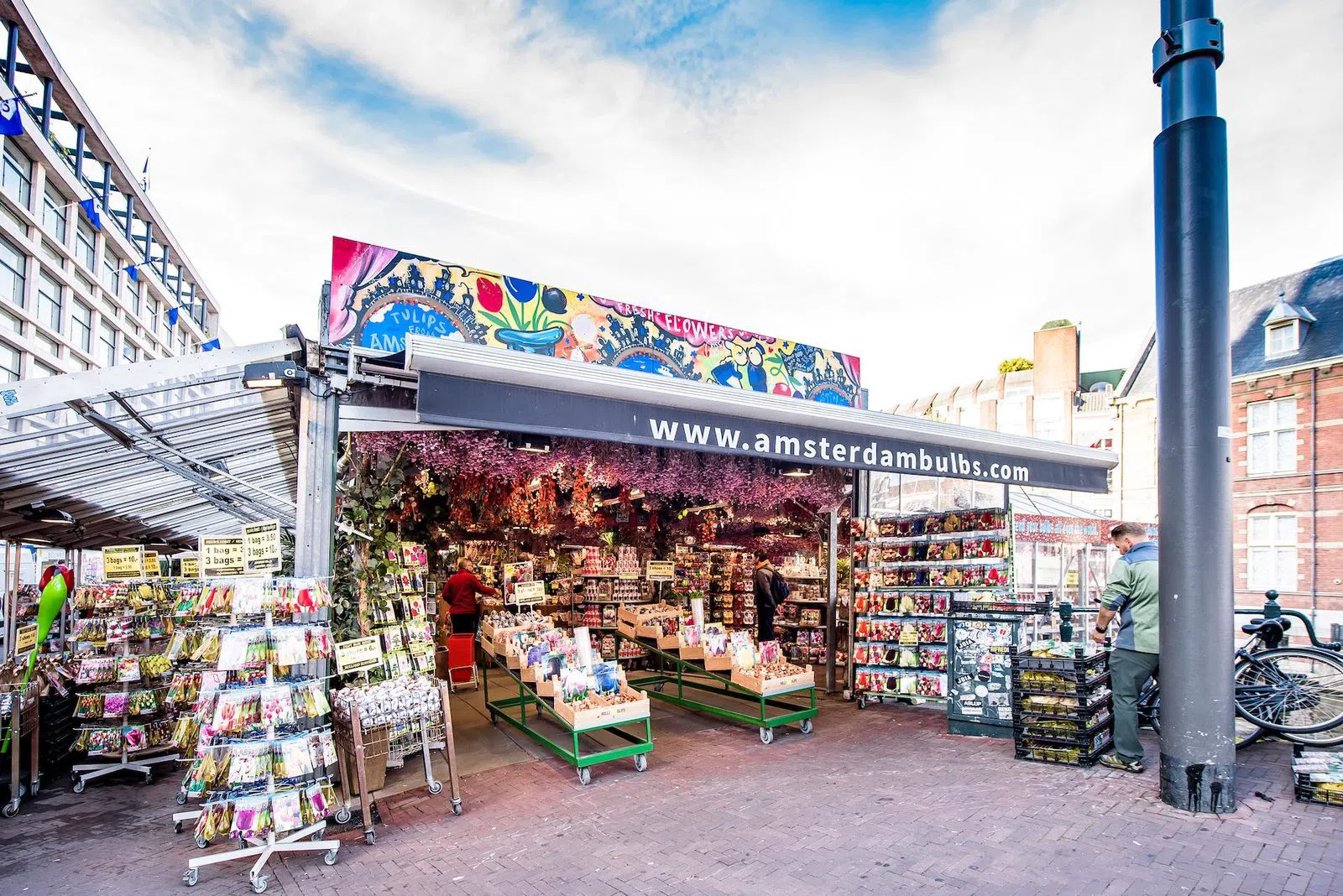
Bloemenmarkt (on the Singel, between Koningsplein and Muntplein in the old centre) is free. There is no ticket, no door, no queue and nobody checking anything. Roughly fifteen units run in a single line along the canal, each one a narrow glasshouse you enter from the street side and leave at the other end.
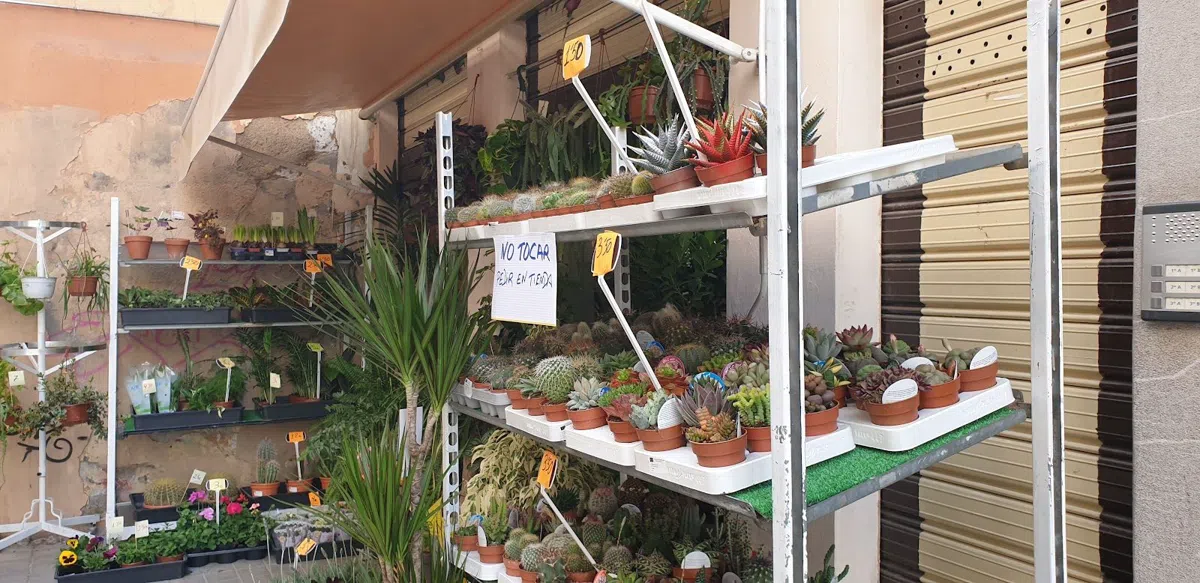
Be straight with yourself about the trade. Since the last true floating florist sold up in 2019, most of the units lean on packaged bulbs, dried stems and souvenirs rather than cut flowers, so this is a 20 to 30 minute stroll, not a morning. That is not a reason to skip it. It is the only floating flower market of its kind anywhere, the light through the plastic roofs in the first hour is lovely, and you can buy something here that will come up in your own garden next spring. It is a reason to plan the hour around it rather than build a day on it.
One practical thing that catches groups out: the stalls are single-file narrow inside. Four people abreast block the aisle and a family of six turns into a traffic jam. Split into twos, browse, regroup on the quay. Nobody will tell you off, but the sellers work in a metre and a half of space and they notice.
Plan your Amsterdam trip
Live prices from our booking partners.
Free cancellation on many rooms. We may earn a commission when you book.
Buying bulbs that will actually flower
If you want bulbs rather than a fridge magnet, go to Stins Flowermarket (mid-market, Singel side). It is one of the few units here that still trades primarily as a real bulb and plant seller rather than a souvenir shop. Bulb packs start around €5 and mixed tulip assortments run about €10 to €20. It is open seven days and walk-in, but the counter serves one or two customers at a time, so a group of five will be standing on the quay while the first two are served. That is fine. Just do not all crowd the till.
Ask two things before you pay, in your own words, at whichever stall you end up at. First, whether the pack is cleared for import into the country you are flying home to, because rules differ by destination and the seller deals with this question daily. Ask rather than guess at the airport. Second, when the bulbs want to go into the ground, because a tulip bulb bought in spring and a tulip bulb bought in autumn are not the same purchase.
The wooden tulips, at roughly €5 to €10 a bunch, are exactly what they look like: a souvenir, painted, permanent, and honestly quite good value as gifts for people who will not water anything. Nobody is pretending otherwise.
The two shops worth stepping into
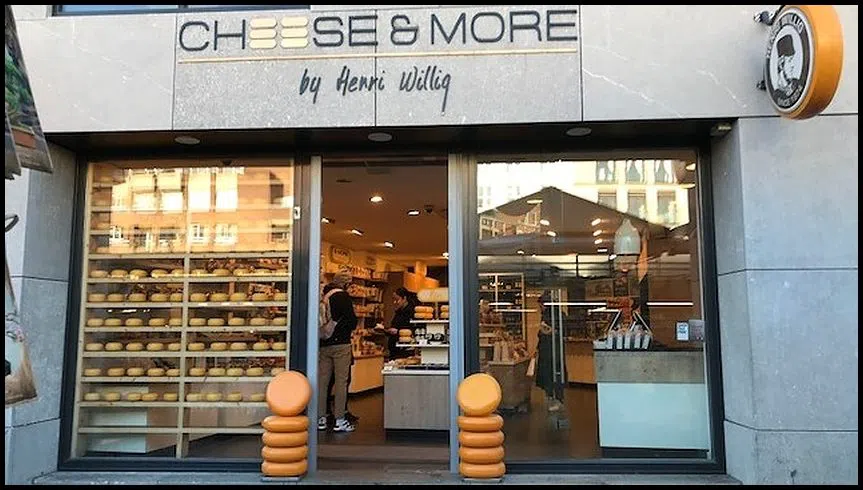
Cheese & More by Henri Willig Bloemenmarkt (right on the market) is open daily 10:00 to 19:00, and the tastings are free and self-serve, little cubes on boards that you help yourself to, with no obligation and no sales routine performed at you. The aged goat with fenugreek is the one that tends to convert people. Wheels run about €8 to €25. It is a shop and the tasting is a sales tool, but the cheese is genuinely good and the price for a small wheel is reasonable for the centre. Small groups are fine; a coach party fills the room in ten seconds.
Heinen Delfts Blauw (the Munttoren shop, at the market's east end) is daily 09:30 to 19:00. Use that name: it is not Royal Delft, and staff get asked constantly. Small hand-painted tiles start around €10 and serious pieces run into the hundreds. The old guardhouse under the tower has held a blue-and-white ceramics shop since 1885, which makes it the natural pairing with the bulb stalls if you are shopping for something to carry home. It is low-ceilinged and tight, so go in small clusters and do not swing a backpack.
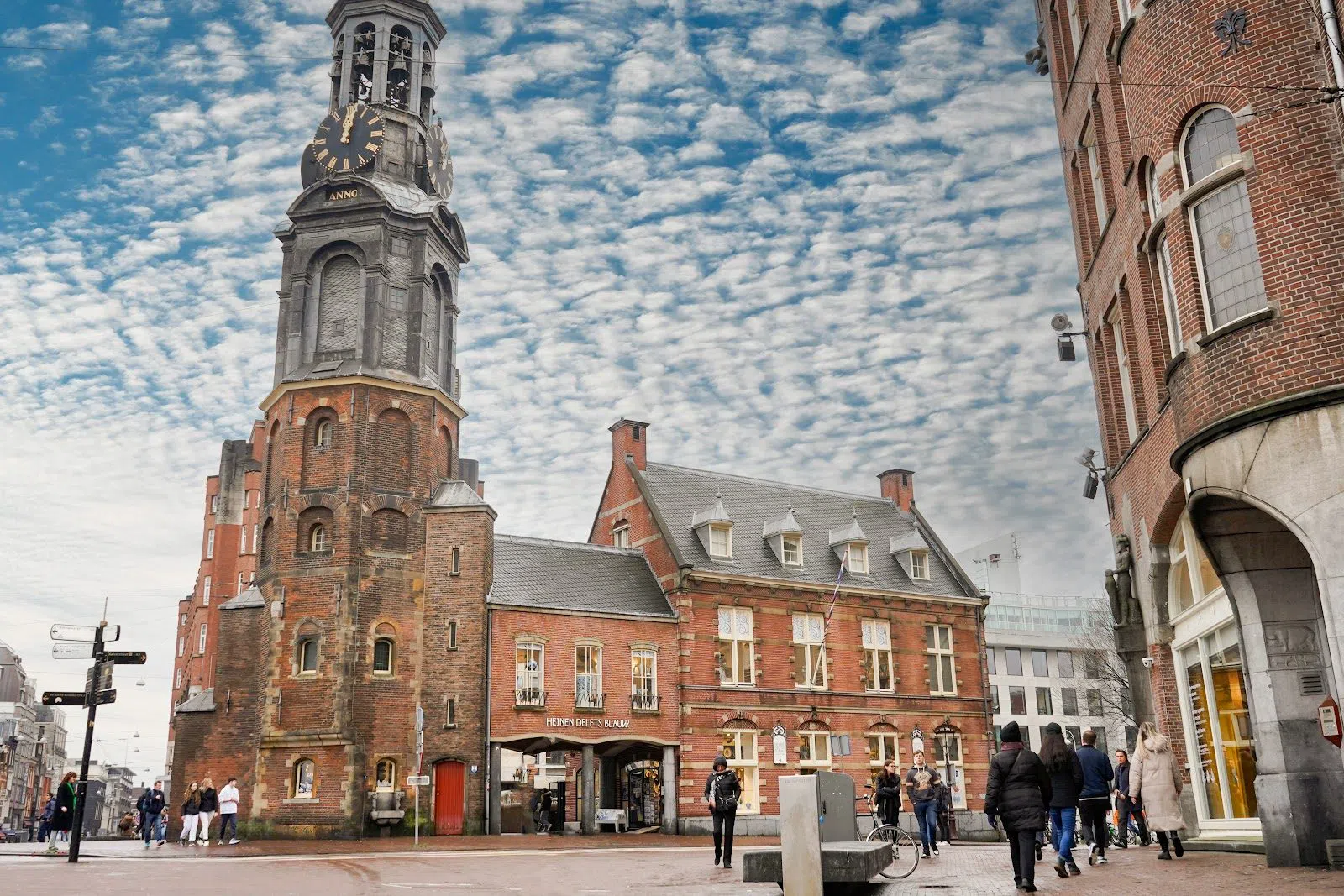
The Munttoren end and its Saturday bells
Munttoren and Muntplein (east bookend of the market) is outdoors, free and takes any group size. The tower interior is not open to visitors, so treat it as an exterior stop, and as the single best free angle back down the line of stalls, which is the photograph most people came for without knowing it.
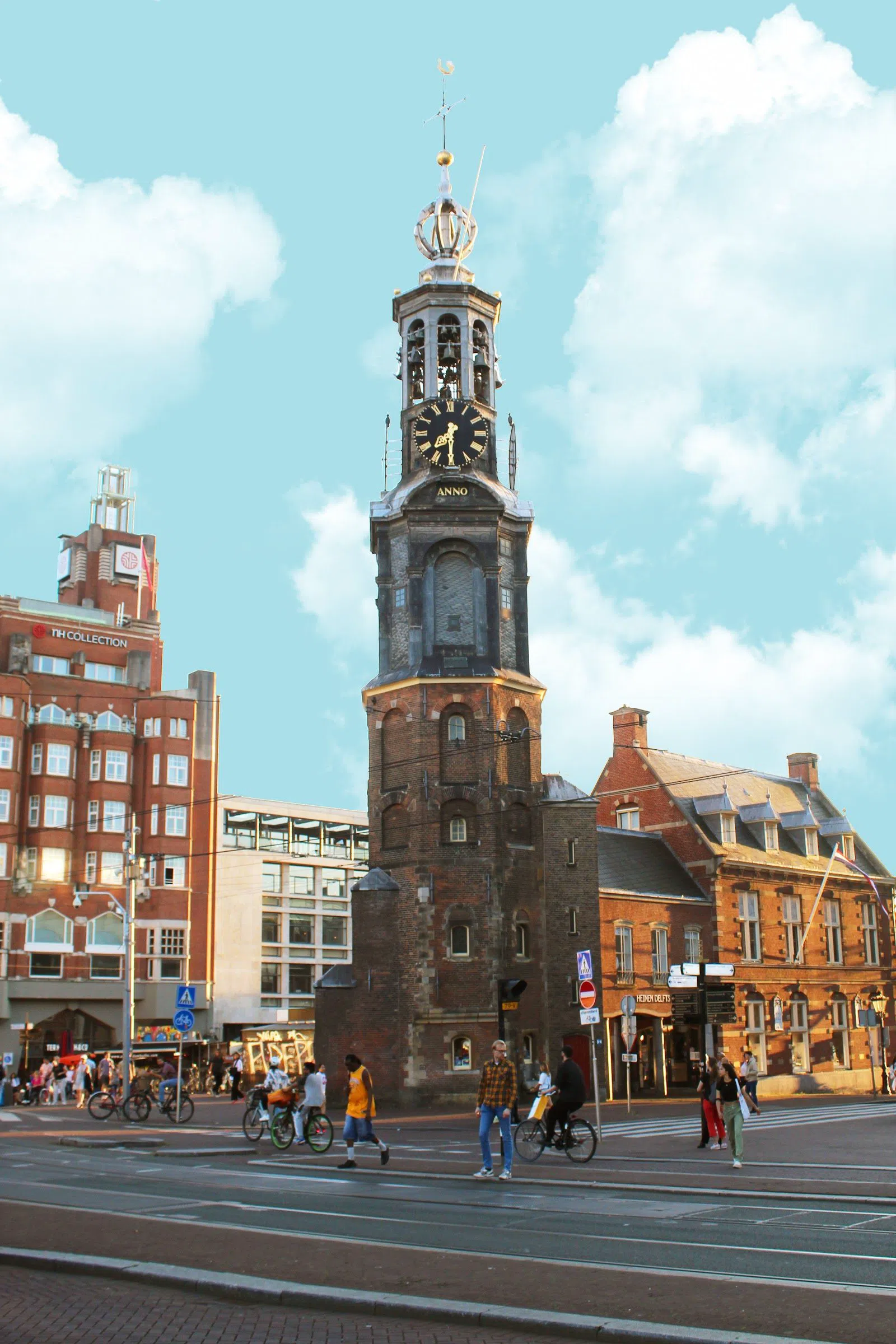
There is one real reason to time a visit around it. The city carillonneur plays the tower's 38 bells live on Saturday afternoons between 14:00 and 15:00. Stand on the Muntplein side, ignore the trams, and you get a free concert over the canal. It is the only fixed event anywhere near this market.
How long it takes and the best time to go
Give the stalls themselves 20 to 30 minutes and build a 90-minute loop around them. The market's quietest window is the first hour it is properly awake, roughly 10:00 to 11:00, when the shutters are up, the aisles are empty and the sellers have time to answer a real question about planting depth. By early afternoon in high season the aisle moves at shuffle pace and browsing stops being browsing.
Day by day: Saturday buys you the carillon between 14:00 and 15:00 but the busiest aisles. Friday is the best pairing day, because the book market five minutes away only runs on Fridays. Sunday is the weakest, because the neighbourhood market where locals actually buy flowers is shut. Weekday mornings are the sweet spot if you have the choice.
Seasonally, spring is when the surrounding city is at its most tulip-obsessed and the stalls look their best. Autumn and winter are when the market is at its most honestly commercial, fewer blooms and more boxes, but also when you will have the aisles more or less to yourself. Rain is not a reason to cancel: the stalls are roofed, and the one café that looks down on them is reached through a shopping centre without going outside.
If you are choosing dates and want a base within walking distance, the whole loop below sits inside a ten-minute radius of the Singel, worth factoring into an Amsterdam hotel search before you book something out by the ring road.
Eating within five minutes of the stalls
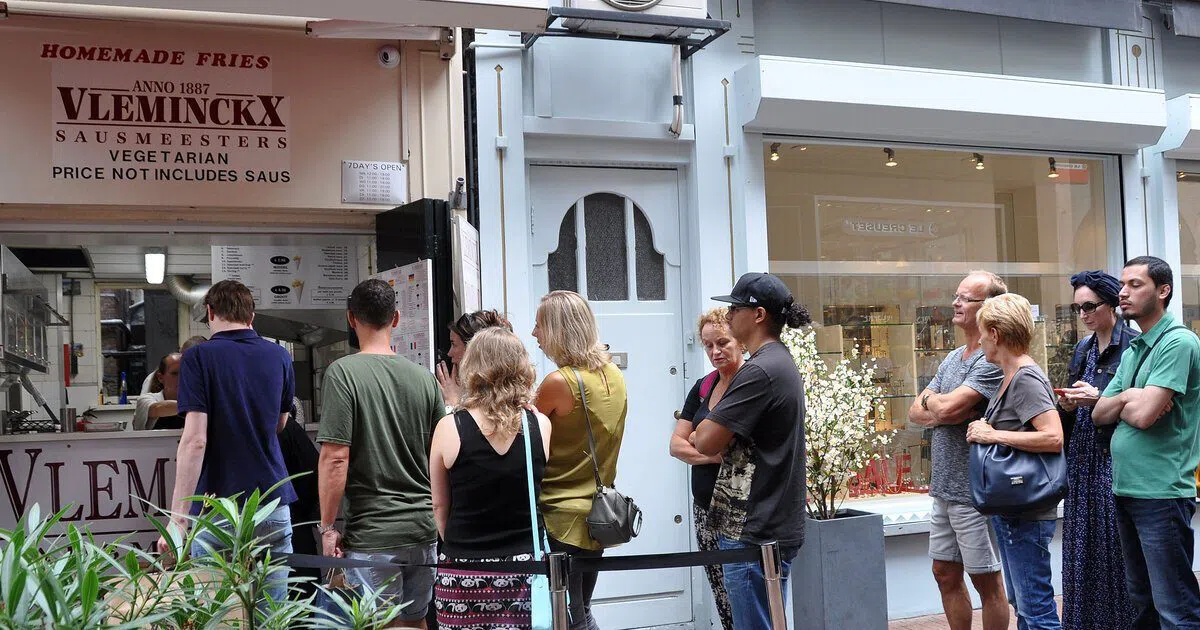
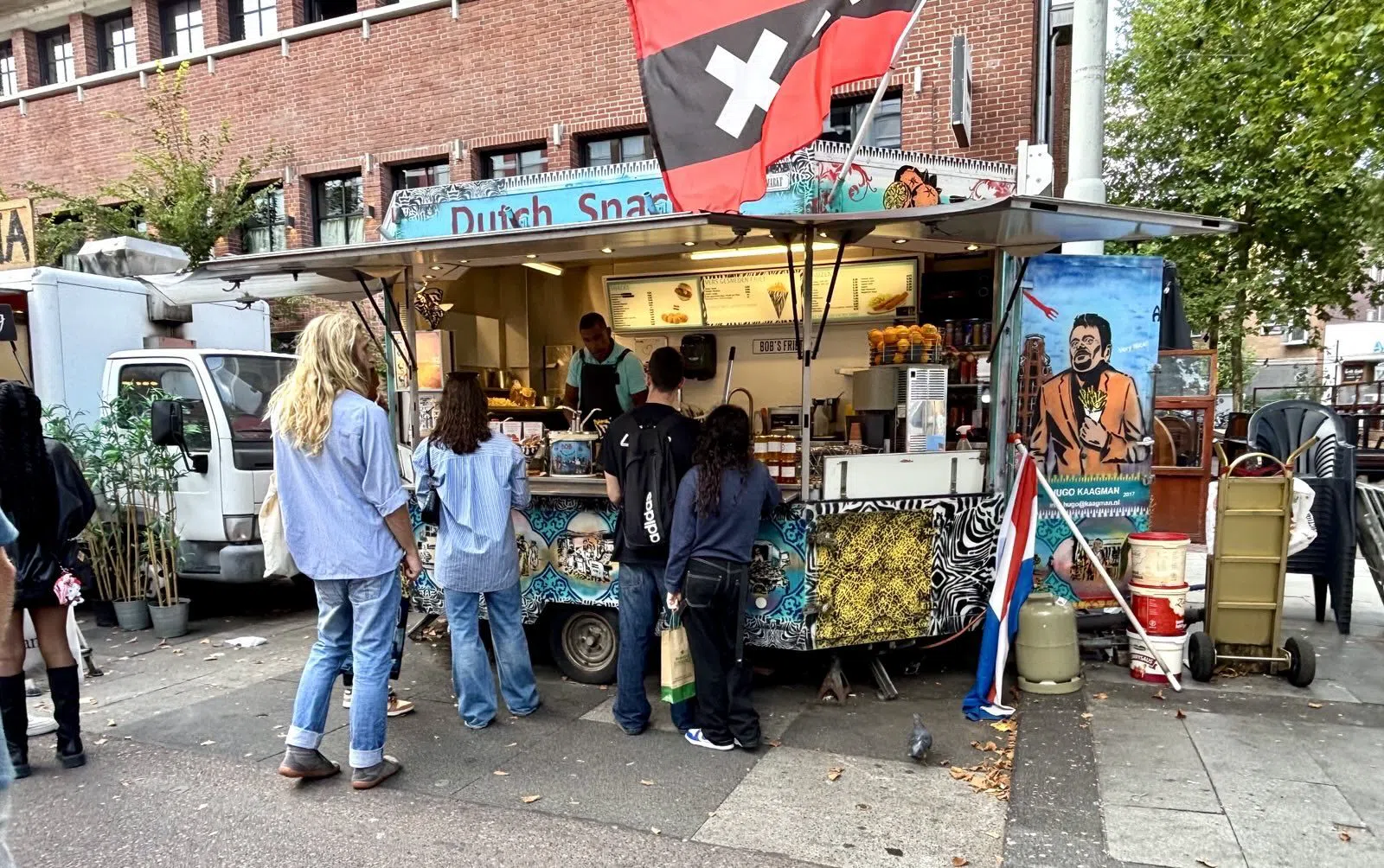
Vlaams Friteshuis Vleminckx (a two-minute detour from Koningsplein) has been frying since 1957. A cone is about €4 to €6 plus sauce, the potato is thick-cut and properly double-fried, and the outside stays crisp for the length of the walk back to the canal. There is no seating and no ordering ahead: you stand in the street, the line moves in frying batches, and there is no way round it. Mid-afternoon is its own peak, so go in the first hour after it opens at 11:00 and you will wait minutes rather than a quarter of an hour.
Van Stapele Koekmakerij (Rokin 17, three minutes east) sells one thing: a dark chocolate cookie with a white chocolate centre, about €2.50 to €3, best eaten within about ninety seconds of it leaving the tray. Use that address, because the shop left the cramped Heisteeg alley in April 2024 and plenty of older directions still send people to the wrong door. Trays come out fresh every half hour, which is why a group does get served, but it runs daily from 10:00 until sold out and late arrivals genuinely find nothing left. It also shuts for renovation from 21 September to 5 October, so check before you make it the plan.

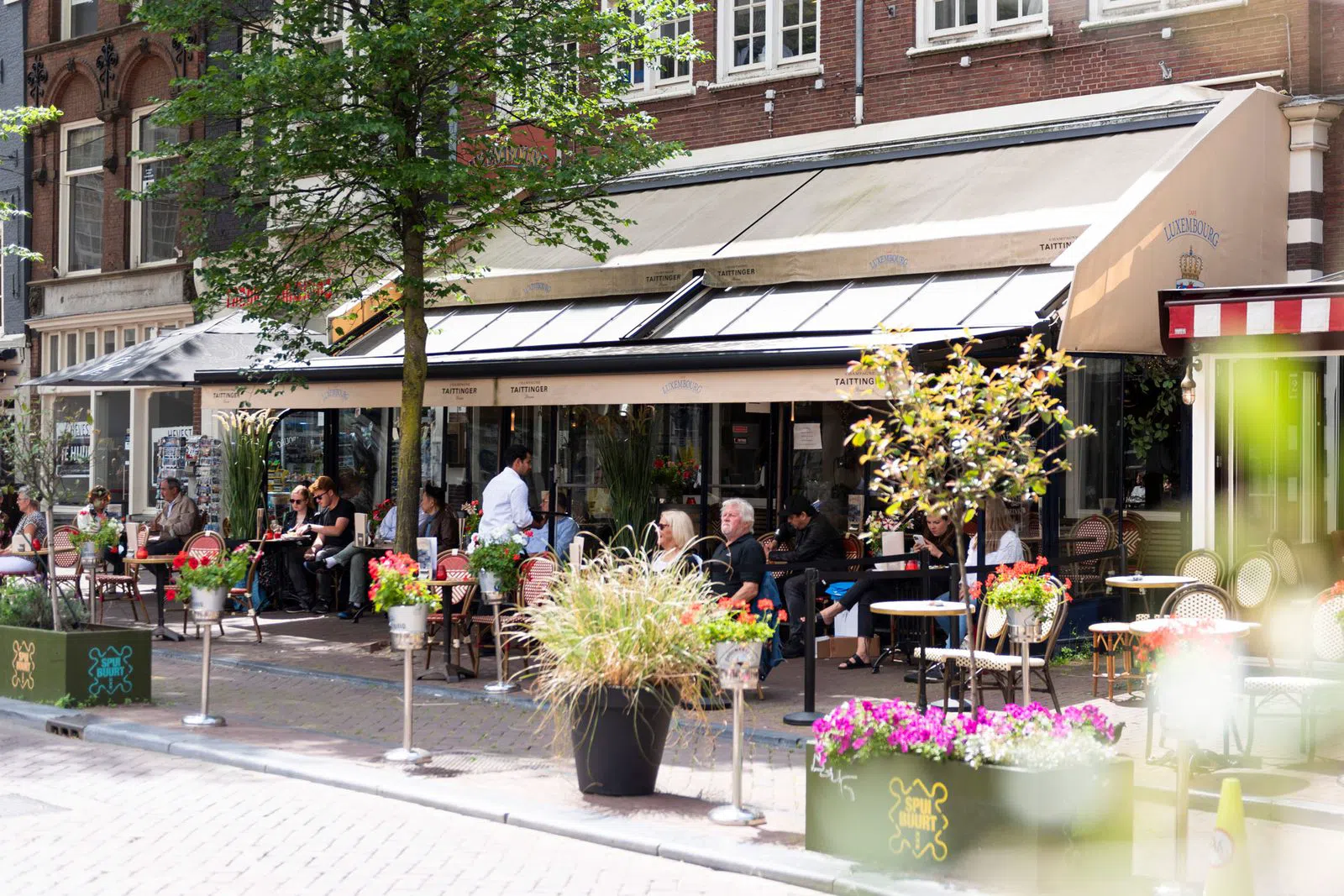
For a proper sit-down meal, Café Luxembourg (on the Spui, five minutes from the stalls) opens daily from 09:00 and runs late at weekends. Mains are about €18 to €30. Order the shrimp croquettes at €15 to €20, two to a plate, crisp shell and sweet North Sea shrimp rather than filler. It is also the one address nearby that will hold a booked group of any size: the rear section can be reserved exclusively, and the whole venue goes private for events.
Somewhere to sit with the market underneath you
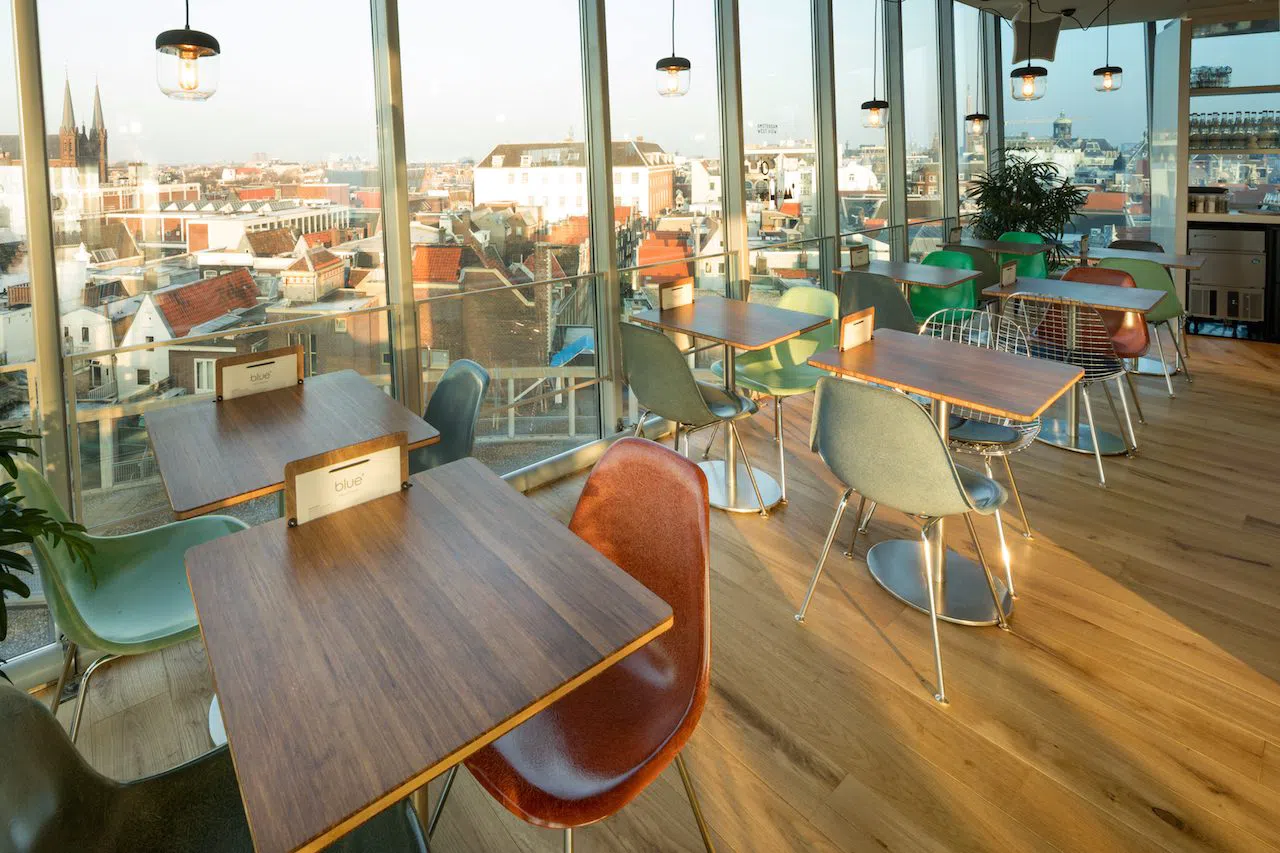
Blue Amsterdam (glass-walled, above the Kalverstraat shopping centre) is the only indoor spot that looks straight down on the market. Coffee and cake run about €5 to €12 and lunch €12 to €20, fair for what the windows deliver, though you come for the view and the sandwich rather than for a great kitchen. It takes reservations only for before 12:00; after that it is walk-in. It handles daytime groups of up to 40 on weekdays and the whole space can be rented in the evening, which makes it the obvious rest stop when you are herding people.
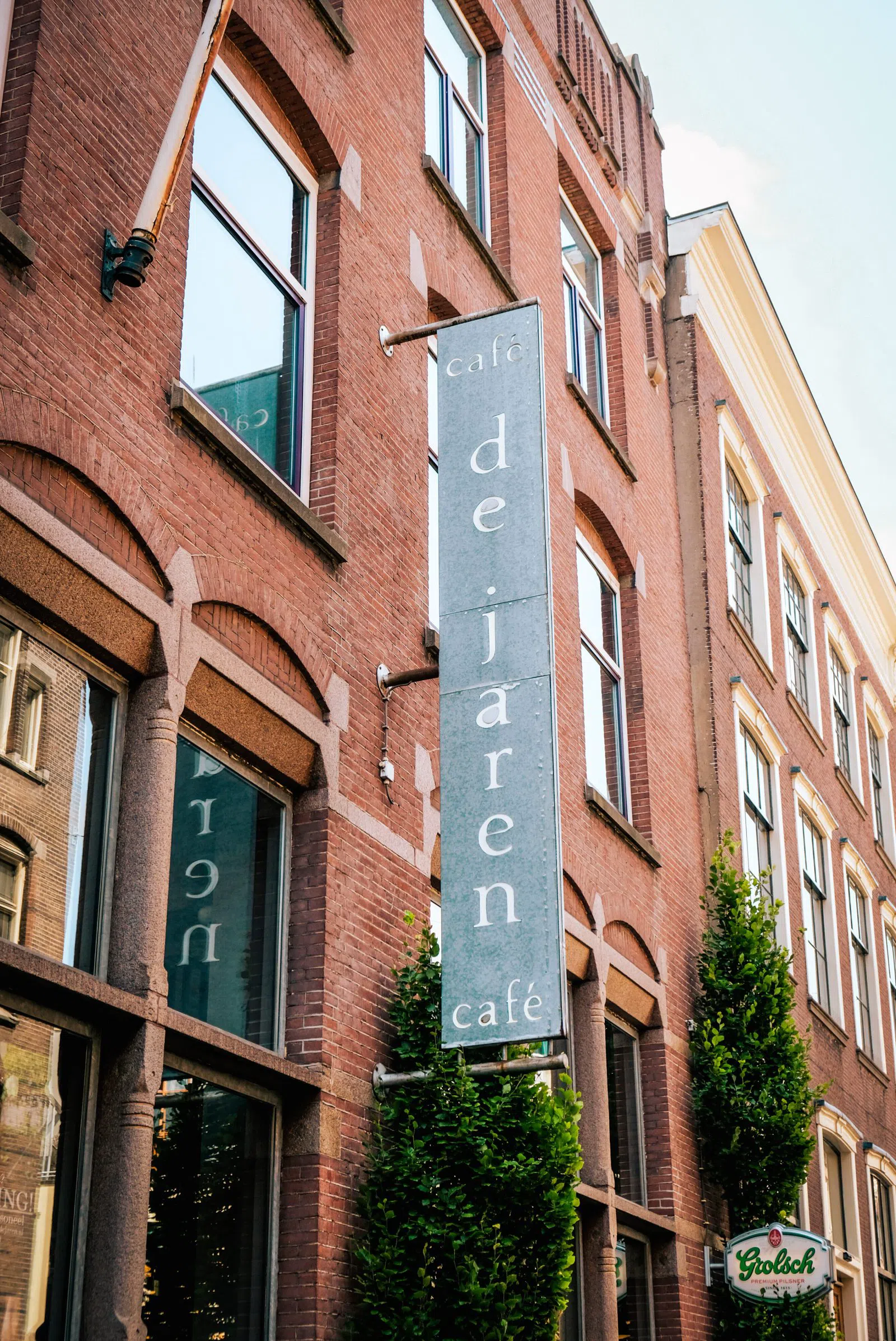
When it is full, and on a wet Saturday it will be, walk three minutes east past the Munttoren to Café de Jaren (Nieuwe Doelenstraat, on the Amstel). Around 300 seats inside plus two large waterside terraces mean it absorbs walk-in groups better than almost anywhere in the centre. Coffee is about €3.50 to €5 and lunch €10 to €18, which is the best-value water view in this part of town.
The museums that tell the story the market dropped
Amsterdam Tulip Museum (western canal ring, about 20 minutes' walk) costs €7 for adults, or a €15 family package covering two adults plus under-15s, and is open daily 10:00 to 18:00. It takes under an hour and it is where the story the stalls no longer tell actually lives: where the bulbs came from, how a flower became a speculative asset, why anyone came looking for tulips here at all. The rooms are small, so a coach group will not fit. The shop is free to enter.

Next door, Amsterdam Cheese Museum (same street) is free every day from 09:00 to 22:00, Sundays to 21:00, with tastings downstairs. Those late hours cover the dead gap after the flower stalls shut, which makes the two of them the most efficient pairing in the area. The basement is small but groups manage.
Museum of the Canals (Het Grachtenhuis, Herengracht, ten minutes away) is about €17.50 for adults and free with a Museumkaart or an I amsterdam City Card. It runs Tuesday to Sunday 10:00 to 17:00 and Mondays from 12:00, closed 25 December, 1 January and King's Day on 27 April. Timed multimedia rooms mean groups move through in waves rather than clumps. It answers the question the Singel itself raises: why the canal is this shape, and why a market ended up floating on it.

The courtyard five minutes away, and its rules
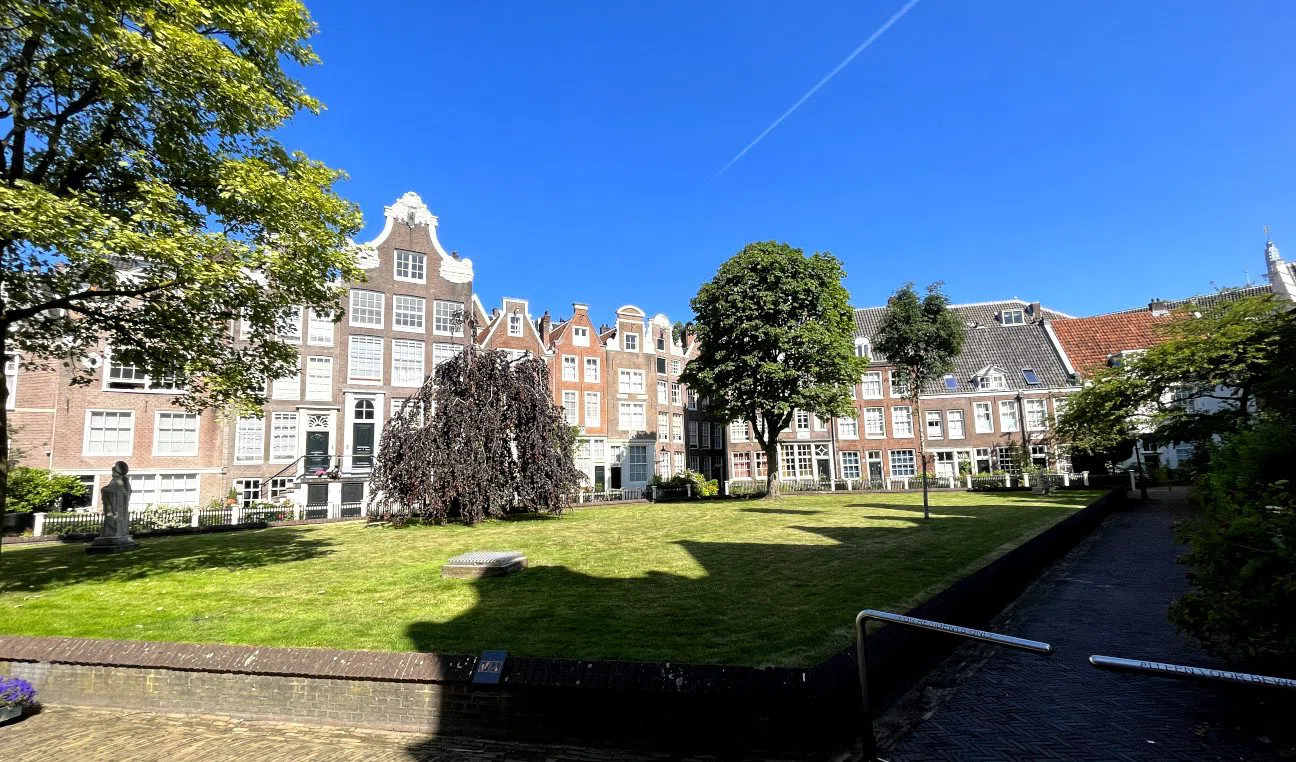
Begijnhof (through a low door off the Spui) is free, and it is the strongest contrast to the market within five minutes: a silent green courtyard of old houses behind a street that never stops. Say this plainly, because visitors get it wrong daily. This is private property and people live here. Tour groups over 12 are not officially permitted. No bikes, no dogs, no wheeled suitcases, no eating or drinking, and silence is requested. On busy days hosts stand at the gate and direct visitors. Go in twos, keep your voice down, do not photograph through anyone's window.
Where to buy actual flowers
If what you wanted was an armful of fresh tulips rather than a boxed bulb, the honest answer is south. Albert Cuyp Markt (De Pijp, about 20 minutes from the Singel) runs Monday to Saturday 09:00 to 17:00, closed Sundays and major Dutch public holidays. It is free to enter, open street, any group size, and a large bunch of fresh tulips goes for roughly €5 to €8, well under the Singel stalls, among people doing their weekly shop.
On a Friday there is a closer consolation. Spui Book Market (on the Spui, five minutes' walk) runs Fridays 10:00 to 18:00, free and open-air, with books from about €2 and antique prints between €10 and €50. It is a genuinely local market rather than a souvenir one, and it is the right thing to bolt on when the flower stalls turn out thinner than you hoped.
Is it worth it
Yes, with the expectations set correctly. The market costs nothing, takes half an hour, and is the only one of its kind. If you want bulbs, this is a convenient, legitimate place to buy them from someone who knows what they are selling. It suits couples, solo wanderers and anyone building a loop through the old centre. It does not suit a group of fifteen arriving together, and it will not fill a morning on its own.
You do not need a ticket and there is nothing to book for the market itself. If you would rather have the area walked with you, a guided option exists and is attached to this page. Those run seven days a week and start from 92 USD per person, so weigh that against a free stroll plus a €7 museum. For what it is worth, there are 14,440 traveller reviews across the bookable tours here, with the top one rated 5.0 out of 5 from 6,408 reviews. Either way, the stalls themselves stay free.
Practical
Getting there is easy. Trams stop at Koningsplein at the market's west end and Muntplein at the east, so you can step off and be at the first stall in under a minute. From Centraal Station it is a flat 15-minute walk down the Damrak and Rokin. Cycling is possible but pointless: there is nowhere sane to leave a bike on the Singel quay at midday.
On money, budget €0 to walk it, €5 to €15 for bulbs or wooden tulips, €7 for the tulip museum and nothing for the cheese one. Cards work in the established shops. Keep a few coins for a cone of fries, where the queue moves faster if you are not fumbling.
On timing, aim for 10:00 to 11:00 on a weekday for empty aisles, Saturday 14:00 to 15:00 if you want the carillon, Friday if you want the book market, and not Sunday if you want De Pijp's flower stalls too.
A sensible half-day runs like this: stalls at 10:00, bulbs at Stins, cheese tasting, Delftware under the tower, cookie on the Rokin, fries just after 11:00, coffee above the market or on the Amstel, Begijnhof for twenty quiet minutes, and the tulip museum if the weather turns. For everything beyond this stretch of canal, the wider Amsterdam guide picks up where the Singel ends.
Before you go
Does the Bloemenmarkt actually float?
Yes. The stalls stand on pontoons moored against the Singel quay, though you enter them from the street and only really see the water from the bridges at either end. It is the only floating flower market of its kind, but it does not look dramatic from the aisle.
How long should I spend there?
Twenty to thirty minutes for the stalls themselves. The last true floating florist sold up in 2019, and most of the roughly fifteen units now sell packaged bulbs and souvenirs, so give the market a 90-minute loop with a café, a shop and one small museum rather than a whole morning.
Can I take tulip bulbs home on a plane?
It depends on which country you are flying to, and the rules differ. Buy from a proper bulb seller such as Stins Flowermarket and ask at the counter whether the pack is cleared for import to your destination, because they field the question every day. Bulb packs start around €5 and mixed assortments run €10 to €20.
Where do I buy fresh cut tulips instead of bulbs?
Albert Cuyp Markt in De Pijp, about twenty minutes south, where a large bunch goes for roughly €5 to €8, well under Singel prices. It runs Monday to Saturday, 09:00 to 17:00, and closes on Sundays and major Dutch public holidays.
Is the Bloemenmarkt suitable for a group?
Only if you split up. The stalls are single-file narrow inside, so browse in twos and regroup on the quay. For sit-down space nearby, Café de Jaren has around 300 seats plus two waterside terraces and takes walk-ins, Blue Amsterdam takes daytime groups up to 40 on weekdays, and Café Luxembourg can reserve its rear section exclusively. Begijnhof does not officially permit tour groups over 12.