The Amsterdam issue
Inside the Royal Palace on Amsterdam's Dam Square
A working royal building that opens about 230 days a year. What €13.50 gets you inside, how long to allow, and the closures nobody warns you about.

By Robin HaasThe slow way through Amsterdam's canals, courtyards and back streets

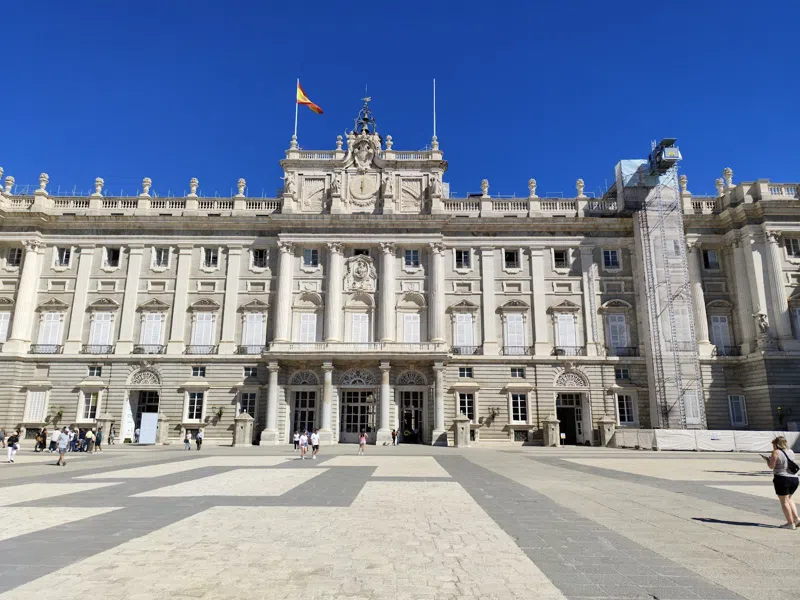
From the square, the palace reads as a long grey wall with a modest pediment, easy to walk straight past on the way to the shops. Inside, one room changes that: the Citizens' Hall runs almost the full depth of the building, its floor inlaid with the two hemispheres and the northern sky, so people instinctively stop and look down rather than up. It is a working royal building rather than a museum, which is also why, on some days, it is simply shut.
A city hall that turned into a palace
Royal Palace Amsterdam (Koninklijk Paleis) stands on the west side of Dam Square in the Centrum, and for the first century and a half of its life it was not a palace at all. Jacob van Campen designed it as the city hall, finished in the 1650s when Amsterdam's merchant fleet was the richest thing afloat, and it was built to make that point to anyone who walked in off the square to pay a tax or hear a verdict. Louis Napoleon, installed as King of Holland by his brother, took it over as a royal residence in 1808 and furnished it in the Empire style, which is why the palace now holds one of the largest collections of that furniture anywhere.

The royal family has not lived here for generations. The state still uses the building for state visits, investitures, award ceremonies and receptions, and the visitor calendar is fitted around that diary: roughly 230 open days a year, with the remainder closed for official use or preparation. That matters more than tickets, queues or timing. The official calendar is the only reliable check before you go, and a state event can close the doors at short notice even on a day that was previously listed as open.
Plan your Amsterdam trip
Live prices from our booking partners.
Free cancellation on many rooms. We may earn a commission when you book.
What you actually see in there
The route is short and mostly on one floor. You start low, in the Tribunal, the vaulted chamber where death sentences were once pronounced in public view of the square outside, a cold and deliberate bit of civic theatre that sets up everything above it. Then you go up to the main floor and into the Citizens' Hall, which is the reason to buy a ticket. It is a vast, bright, marble-lined room with Atlas carrying the globe at one end, allegorical sculpture worked into the walls, and those hemisphere maps set into the floor. Amsterdam put the known world under its citizens' feet and was not subtle about it.
Off the hall run the rooms the state still uses: the Council Chamber, the Throne Room, a sequence of galleries hung with large canvases from Rembrandt's circle, including work by Ferdinand Bol and Govert Flinck, plus chandeliers, clocks and case after case of Empire furniture. An audio tour is included in the admission price and is worth taking, because without it the rooms are handsome and mute.
There is no bedroom with a hairbrush on the dresser, no kitchen, no private apartments, no lived-in wing. It is a suite of grand ceremonial rooms in good condition, and the pleasure is architectural rather than domestic. If you want a palace that feels inhabited, this will disappoint you at any price.
How long to allow
Sixty to ninety minutes is the honest range. A brisk walk through, stopping only at the Citizens' Hall and the Throne Room, takes about forty minutes. Listening to the audio tour in full and actually reading the floor maps pushes you towards two hours. There is no timed route to keep up with and nobody moving you along, so the building absorbs a slow visitor better than most attractions of its size. For most people it is a half-morning, not a day.
Tickets, the door and booking ahead
Adult admission is €13.50 and a student ticket is €9. Under-18s go free, and so do Museumkaart and ICOM holders, which matters if you are already a few museums into a city break, because it turns this into a free hour. The palace is cashless, with no exceptions worth planning around, so bring a card and expect to tap.
Queues are not the problem here. The palace is not a capacity-crushed blockbuster and walk-up tickets are usually available on an open day, with the worst case being a short wait at the desk in wet weather or during school holidays. Booking ahead buys certainty about the date, which is the thing that can go wrong. Check the calendar the morning you plan to go, not the week before.
Groups have their own arithmetic. Self-guided groups from fifteen people are handled by arrangement rather than by simply turning up together. A guided tour needs a minimum of ten people, is booked in advance, and is priced for the whole group at €105 on a weekday or €135 at the weekend. Confirm when you book whether admission sits on top of that, because the group rate and the individual tickets are quoted separately. For two people, neither option applies and you take the audio tour.
If you would rather have the square and the building explained out loud by a person, guided walking options do exist and are attached to this page as a separate card. The bookable tours here carry 11,814 traveller reviews between them, and the top-rated one holds 5.0 out of 5 from 6,408 of those reviews and runs seven days a week. Those numbers describe a busy, well-trodden guided market around Dam Square rather than a palace that sells out.
Access and the rules
Open days generally run from mid-morning to late afternoon, and the last admission is a set time before closing rather than a soft cut-off, so do not arrive at the desk twenty minutes before the doors shut. There is lift access to the main floor, but this is a seventeenth-century monument with thresholds and stone floors, and if you are bringing a wheelchair or a pushchair the palace's own access page is the right place to confirm the day's arrangements. Bags of any size go in the cloakroom. Photography without flash is normally fine, though rooms can be restricted at short notice when the state has been using them. And, again, no cash.
Is €13.50 worth it
Yes, with conditions. For anyone who likes buildings, civic history or the strange Dutch habit of making a town hall grander than a church, it is the best-value large interior in the centre and an hour well spent. For a Museumkaart holder it is an obvious stop. For a family it works as a contained hour rather than an afternoon, and for a rainy morning it is one of the few central interiors big enough to walk off bad weather in.
It is not worth it if you are expecting royal domestic life, a costumed re-enactment, or a long visit that fills a day. It is also the wrong pick as your only indoor stop in the city. Pair it with something, and the rest of this piece is about what.
Best time to go
Go on a weekday morning in the first hour after opening. The Citizens' Hall is the one room where other people genuinely change the experience, because the floor maps want an uninterrupted view, and early on a Tuesday you can stand in the middle of it more or less alone. By midday the square's foot traffic has found its way indoors.
Winter and the shoulder months are better than high summer, and not only for crowds. This is an interior attraction, so a grey January day costs you nothing, while a warm July day spent inside marble halls is a poor trade against the canals. The flip side is that the state's ceremonial season brings closures, which fall unpredictably rather than in a neat block, so the calendar check matters more in spring.
On 27 April the city belongs to King's Day and the centre is not a sightseeing proposition. On 4 May the national remembrance ceremony closes the square entirely in the evening, which is worth knowing in advance whether or not you intend to attend. If you want the facade itself, come back to the square in late afternoon when the light is on the west side and the building finally looks like the thing it was built to be.
The rest of Dam Square
De Nieuwe Kerk Amsterdam (Dam Square, attached to the palace) is the coronation church of Dutch monarchs, and it is also, in day-to-day practice, an exhibition hall. Admission is €25 for adults, €15 for youth aged 12 to 17 and students or CJP holders, free under 11, and free on several city passes, so what you get for €25 depends entirely on which show is up. Look that up before you commit; a great exhibition in that space is memorable, a thin one is expensive. It closes on 27 April, 3 to 5 May, 25 December and 1 January.
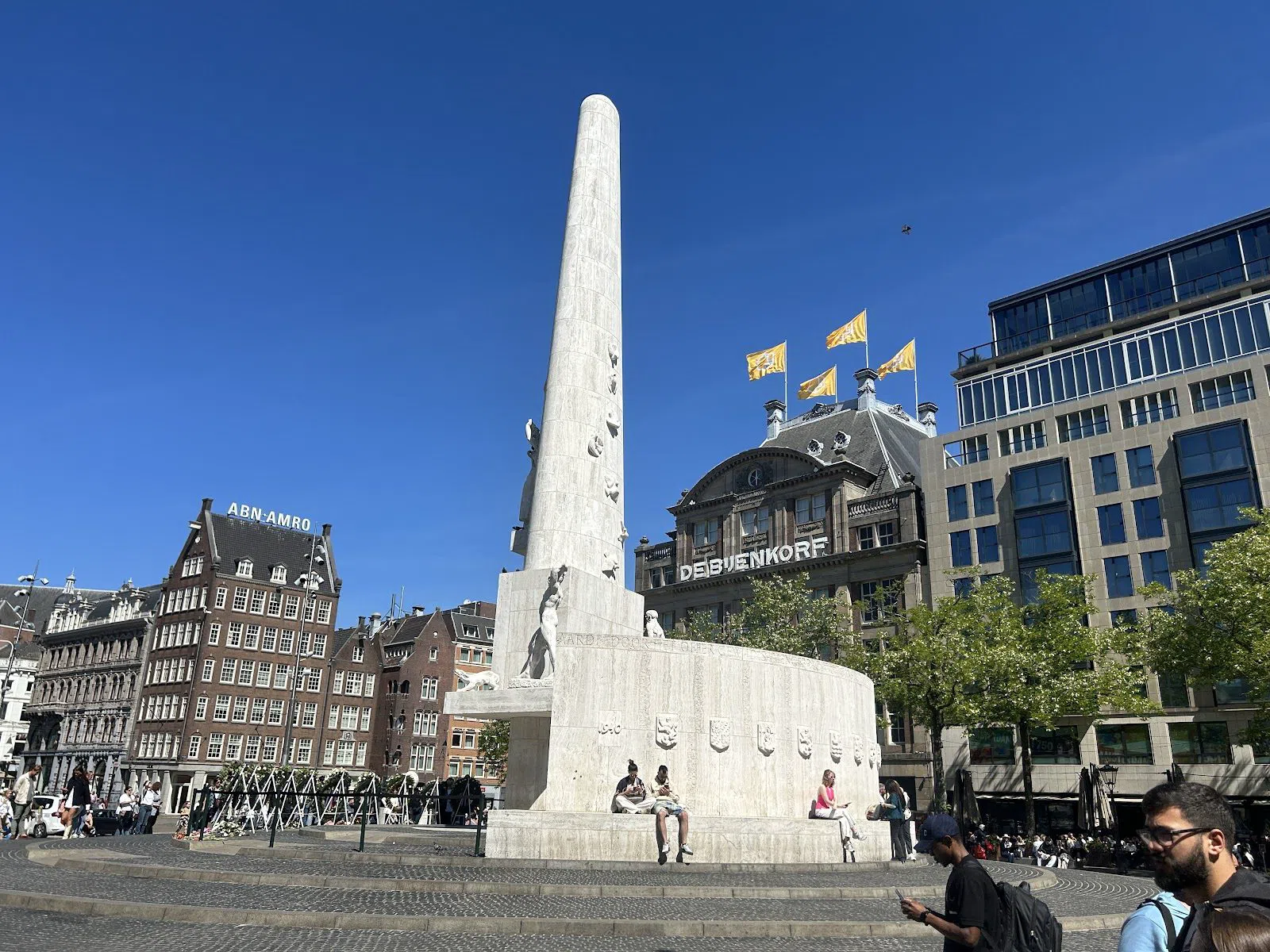
Nationaal Monument op de Dam (Dam Square) is free, open, and the best place to stand to read the palace facade as a whole rather than in slices. It is also where walking tours form up, so expect clusters of raised umbrellas. Remember that it is the national war memorial, not a bench, and behave accordingly, especially in early May.
Madame Tussauds Amsterdam (Dam Square) is the obvious counterweight if you are travelling with teenagers who have just endured an hour of Golden Age marble. Online tickets run from about €19 to €20.50 against roughly €26.50 to €27 at the door, so booking is the difference between two coffees and none; late weekend tickets start from about €16 after 18:00. Timed entry keeps larger parties moving.

de Bijenkorf Kitchen (Dam Square, top of the department store) is the cheap way to get above the square. Walk in, no reservation, no minimum spend, plates roughly €10 to €25, and a roof terrace in warm weather on a first-come basis. It is a food court with a good address; set expectations there and it does its job.

Where to eat and drink within five minutes
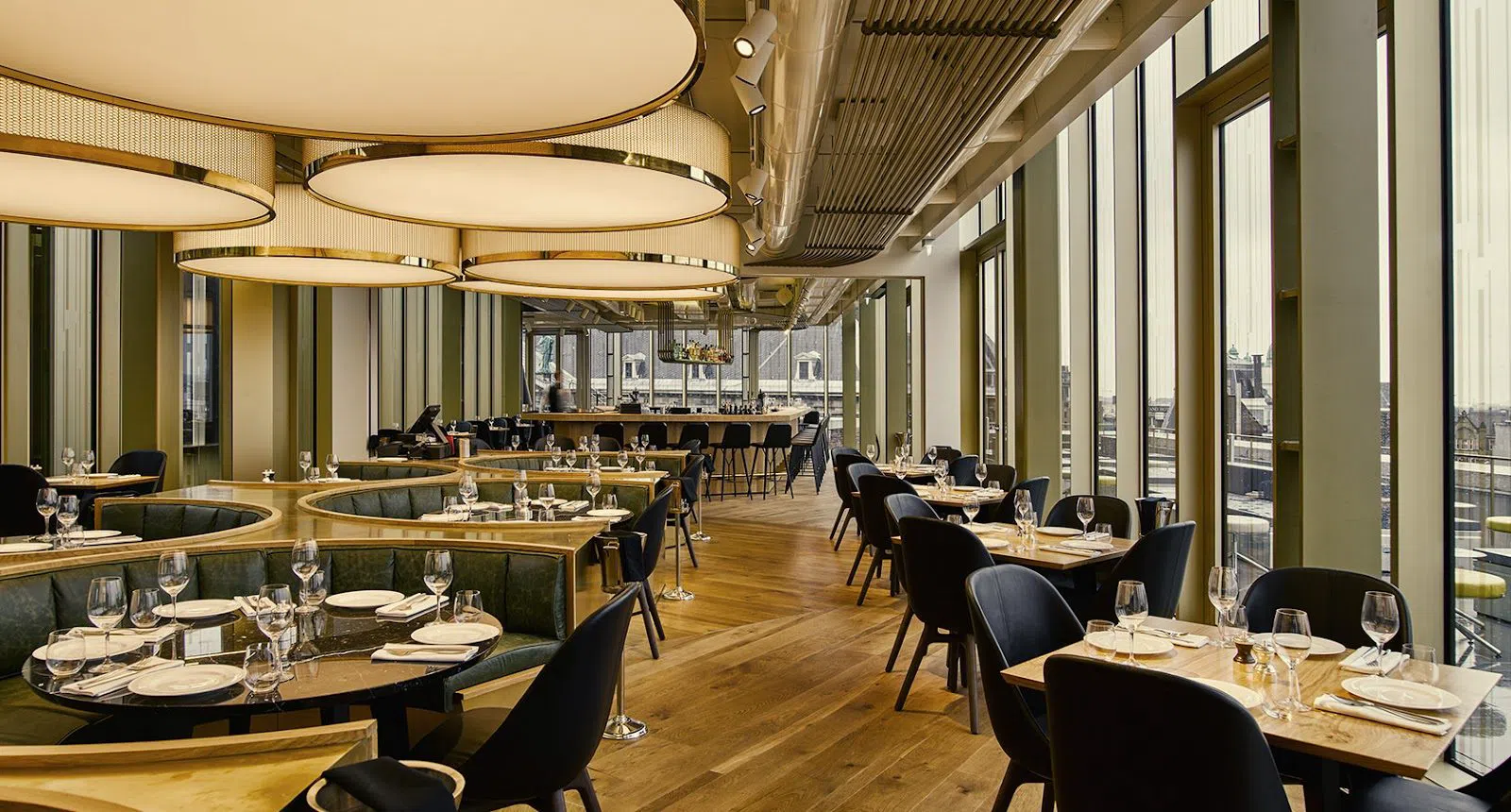
MR PORTER (W Amsterdam) (Spuistraat, two minutes west of the square) gives you the one thing the palace interior cannot: the best elevated view of the building from outside it. Mains run roughly €30 to €60 and cocktails €16 to €20, the terrace needs a reservation, and the bar takes walk-ins if you only want the view. The adjoining W Lounge terrace is seasonal, roughly May to September.
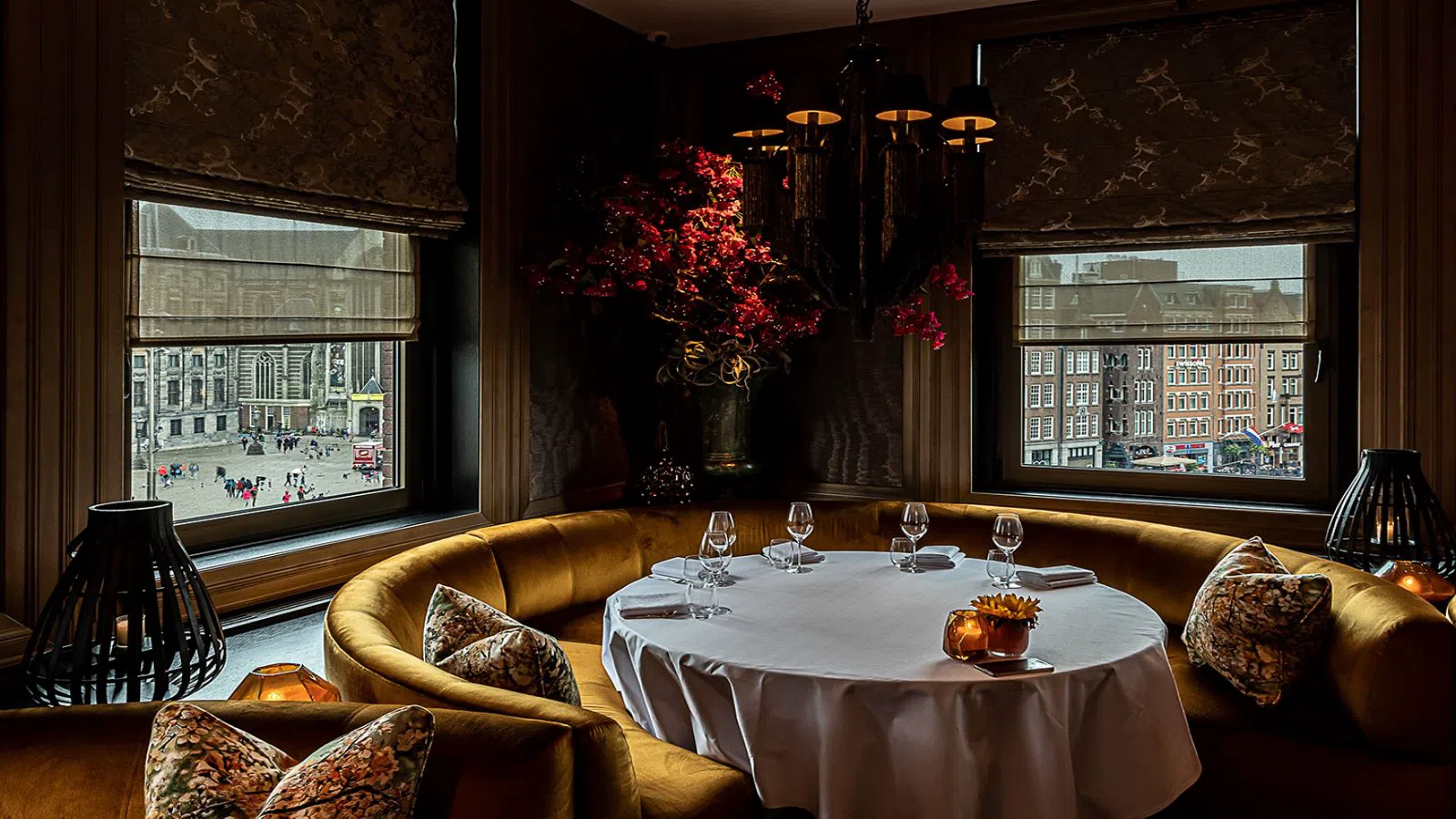
Restaurant Bougainville (Hotel TwentySeven) (Dam Square) is the grown-up version of lunch near the palace: one Michelin star, tasting menus roughly €100 to €150 a head before wine, windows over the square. Small groups by reservation and private dining are possible, but it is not a drop-in for a large party and it is the one place here you should book weeks out.
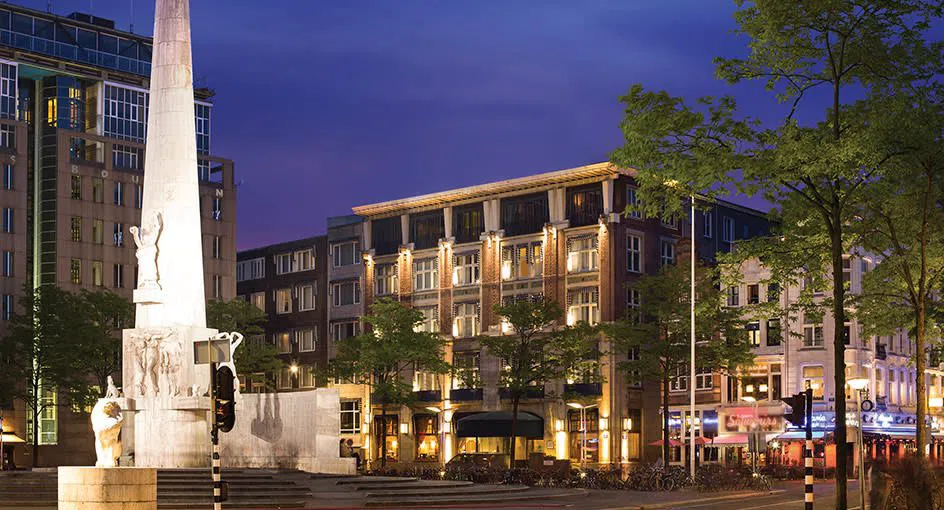
Wintergarden at Anantara Grand Hotel Krasnapolsky (Dam Square) is across from the palace and one of the few interiors in the city that matches it for sheer volume. The glass roof is the reason to come, not the menu; breakfast and themed brunches land around €45 to €75 and the room handles big tables if you book.
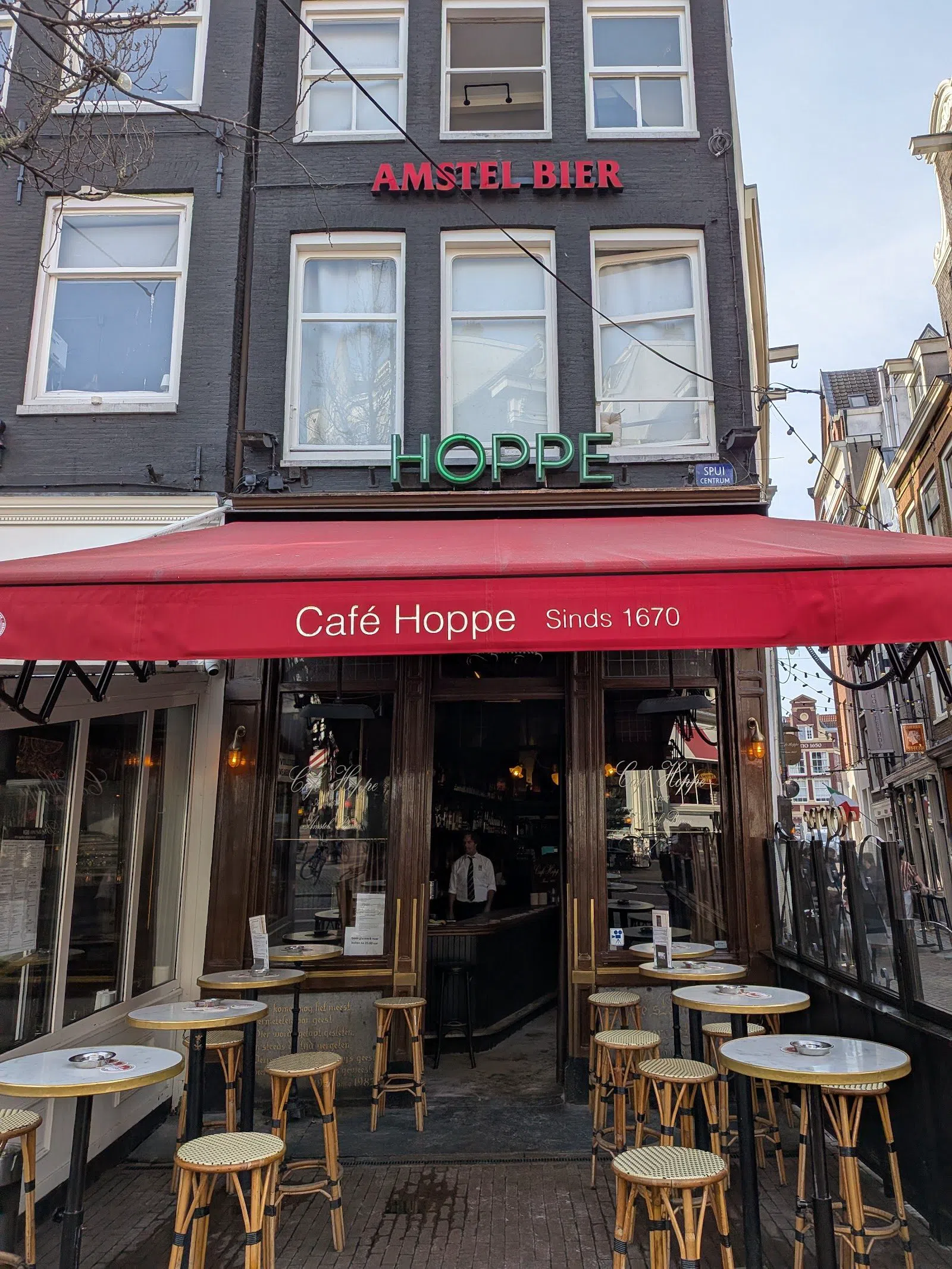
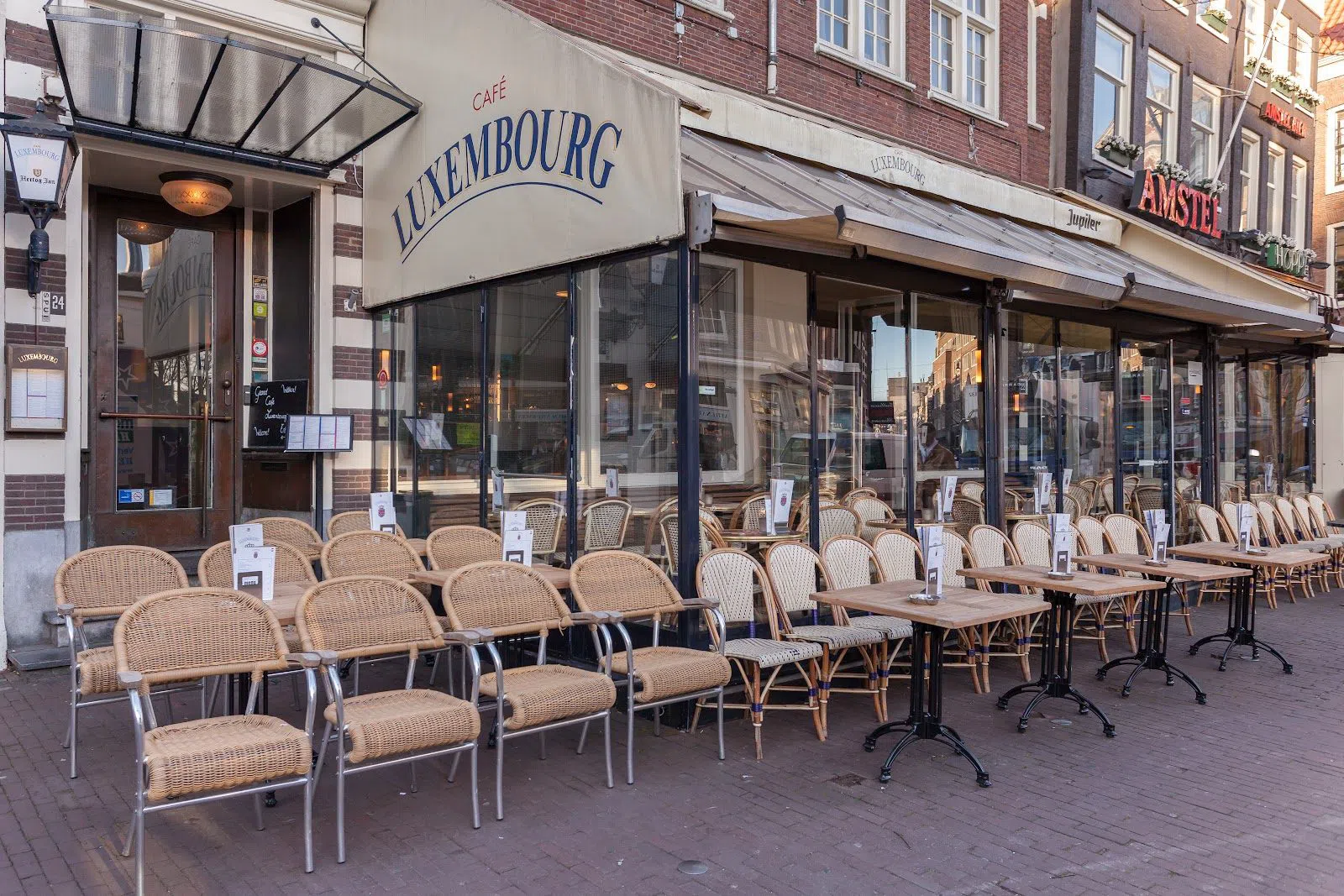
Café Luxembourg (Spui, five minutes south) is the reliable sit-down between the palace and the Begijnhof, with mains roughly €15 to €30 and a glazed terrace, which means a group is not at the mercy of Dutch weather. Café Hoppe (Spui) is next door in spirit and a different century in practice, trading since 1670, mostly standing on the old side, beers and bitterballen roughly €5 to €15. It is the genuine brown café rather than a reproduction, it is often packed, and a large group should aim for the terrace or the seated room rather than the bar. Order the bitterballen.
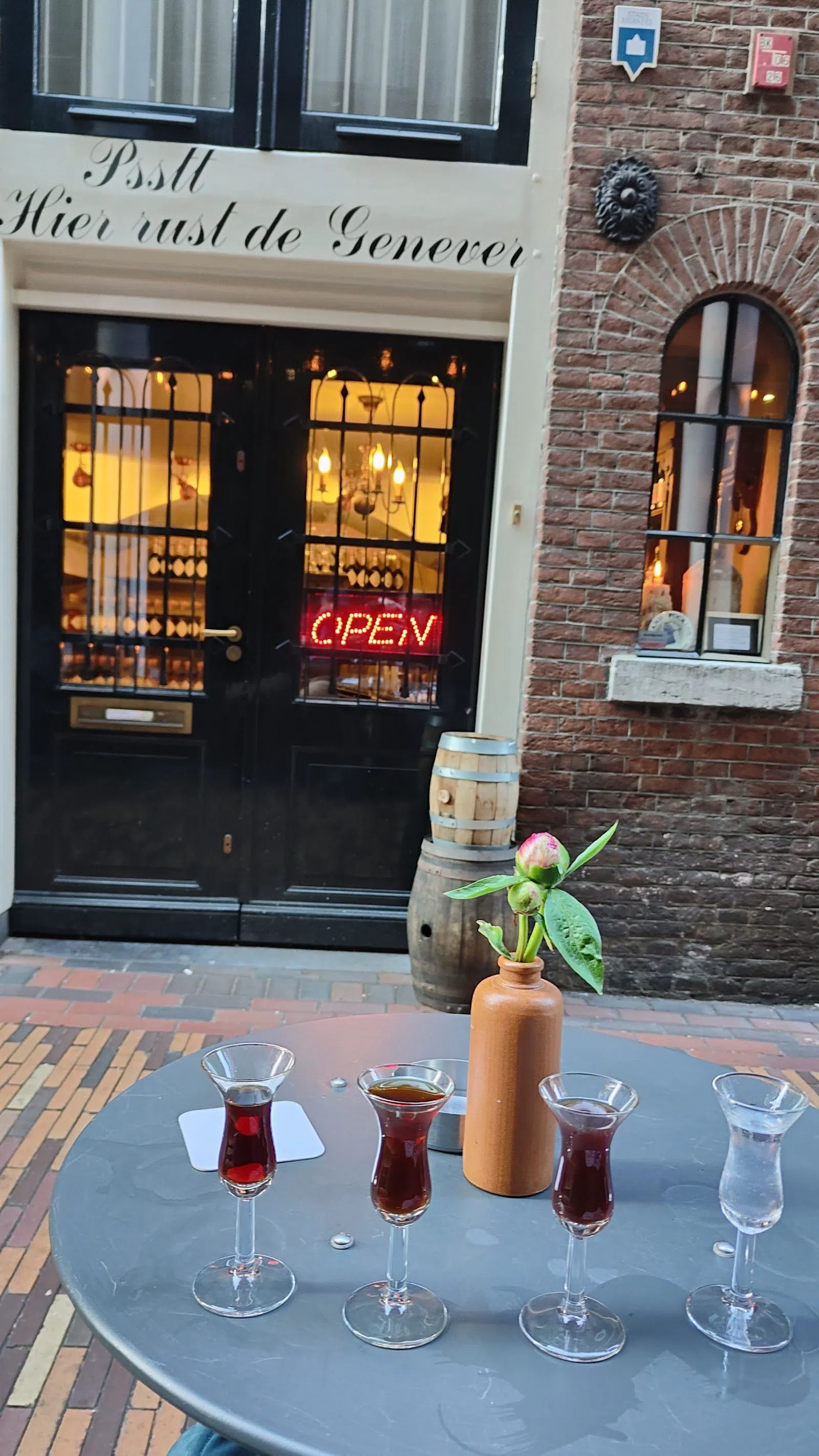
Proeflokaal Wynand Fockink (Pijlsteeg, a two-minute walk from the palace door) has been pouring since 1679 and keeps more than seventy Dutch jenevers and liqueurs. Shots are roughly €5 to €7, it is standing room only and genuinely tiny, fine for a handful of people and hopeless for a coach party, though tasting sessions can be booked for organised groups. It opens afternoons and evenings only, so it is an after-visit stop by definition.
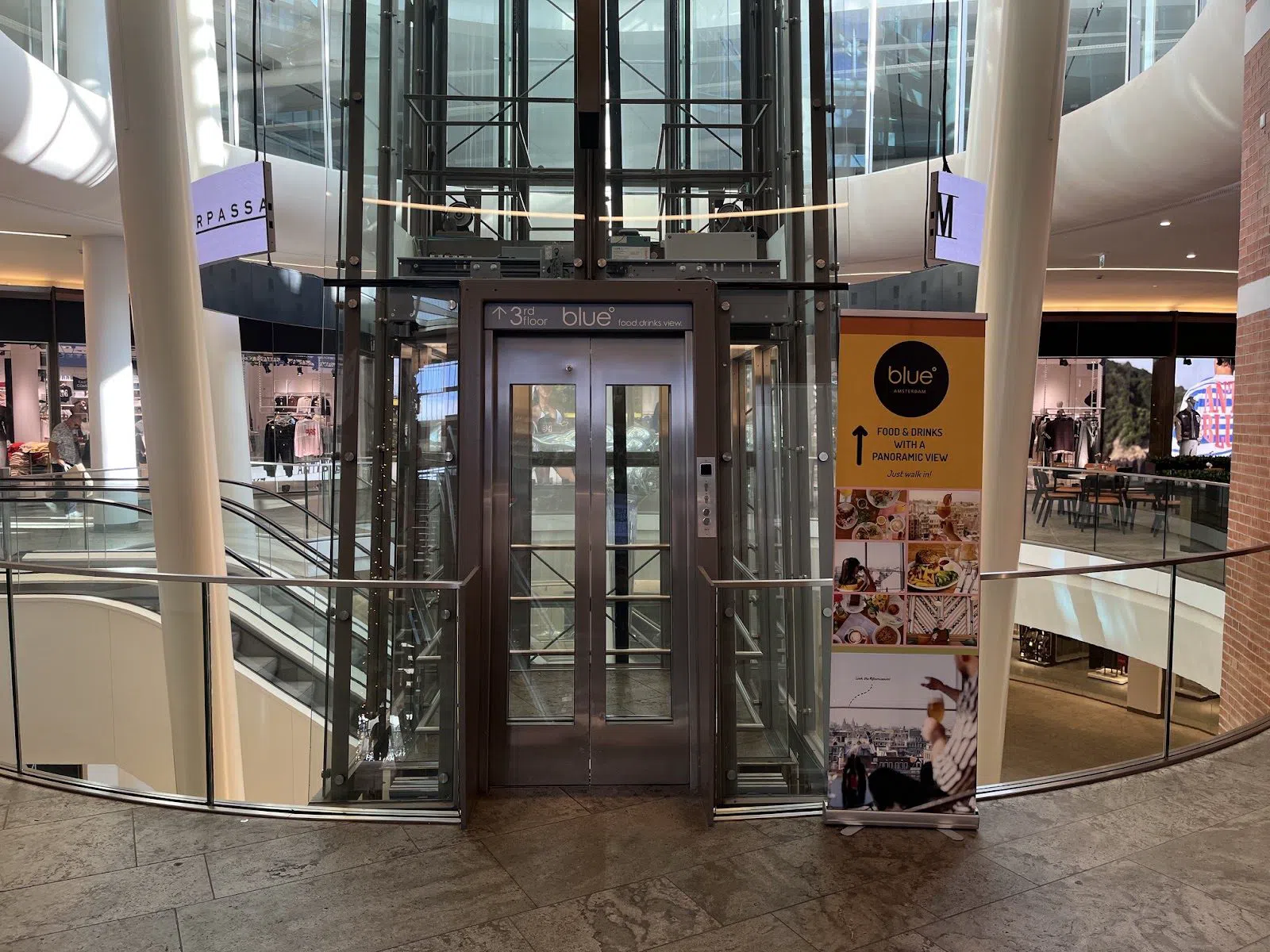
Van Stapele Koekmakerij (Rokin 17) sells one cookie, done properly, since 2013. It is a queue rather than a venue, with counter service and no seating, and the shop's own advice is to come between 10:00 and 12:00 to miss the worst of the line. Note the address: it moved from Heisteeg to Rokin in 2024, and old directions still circulate. Blue Amsterdam (Kalverstraat) is the cheapest high vantage point near the square. Walk in seven days a week with no reservation and no ticket, pay €5 to €20 for coffee or lunch, and get the panorama thrown in.

Three pairings that make sense in a day
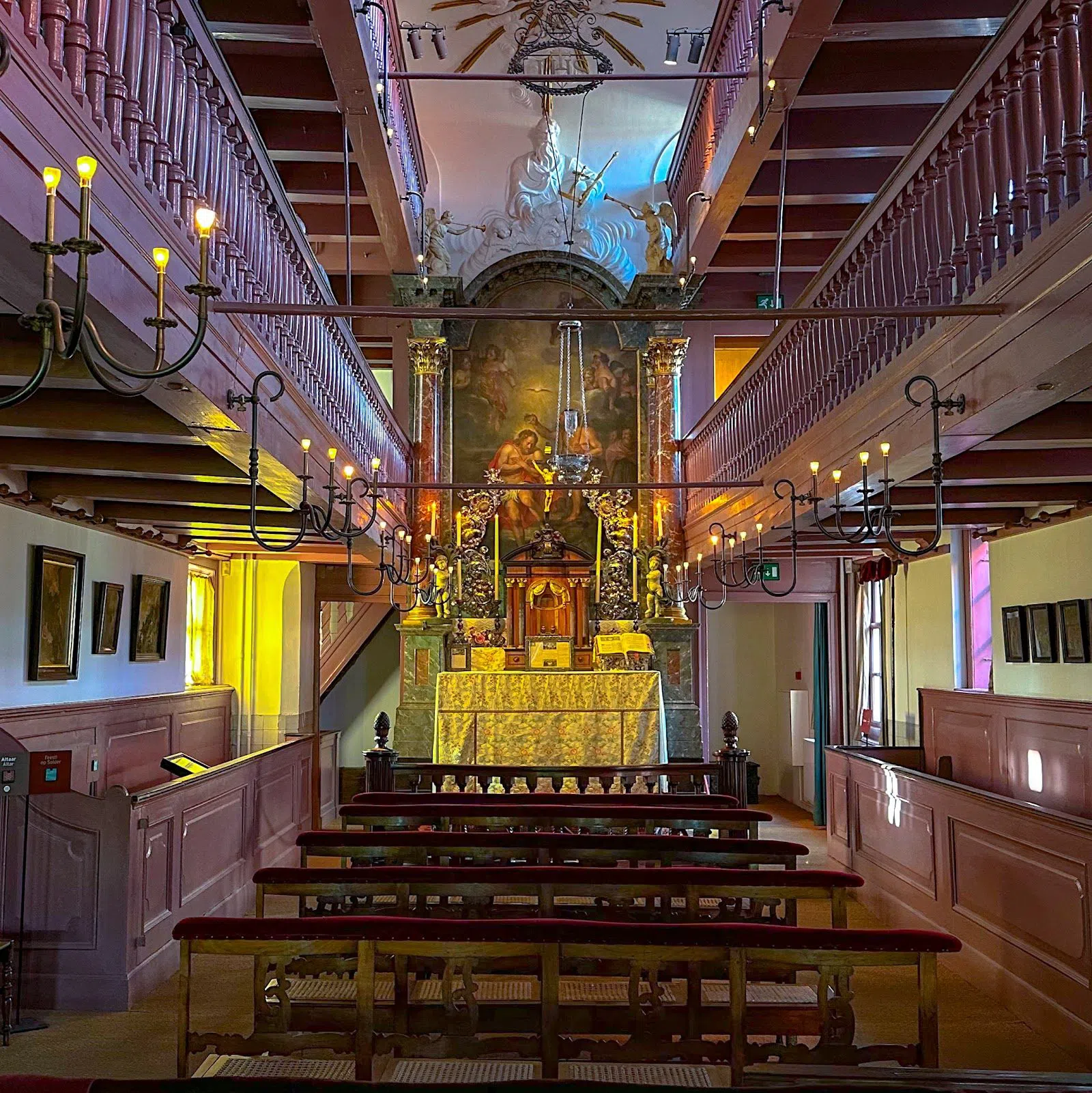
Museum Ons' Lieve Heer op Solder (Oudezijds Voorburgwal, ten minutes east) is the best single pairing with the palace, same century, opposite ambition. One building was made to overawe; this one, a Catholic church hidden in the attic of a canal house, was made to go unnoticed. Admission is around €18 with reductions for students and children, entry is timed, and the stairs are steep and narrow, so it is small groups only and genuinely unsuitable for anyone who cannot manage them.
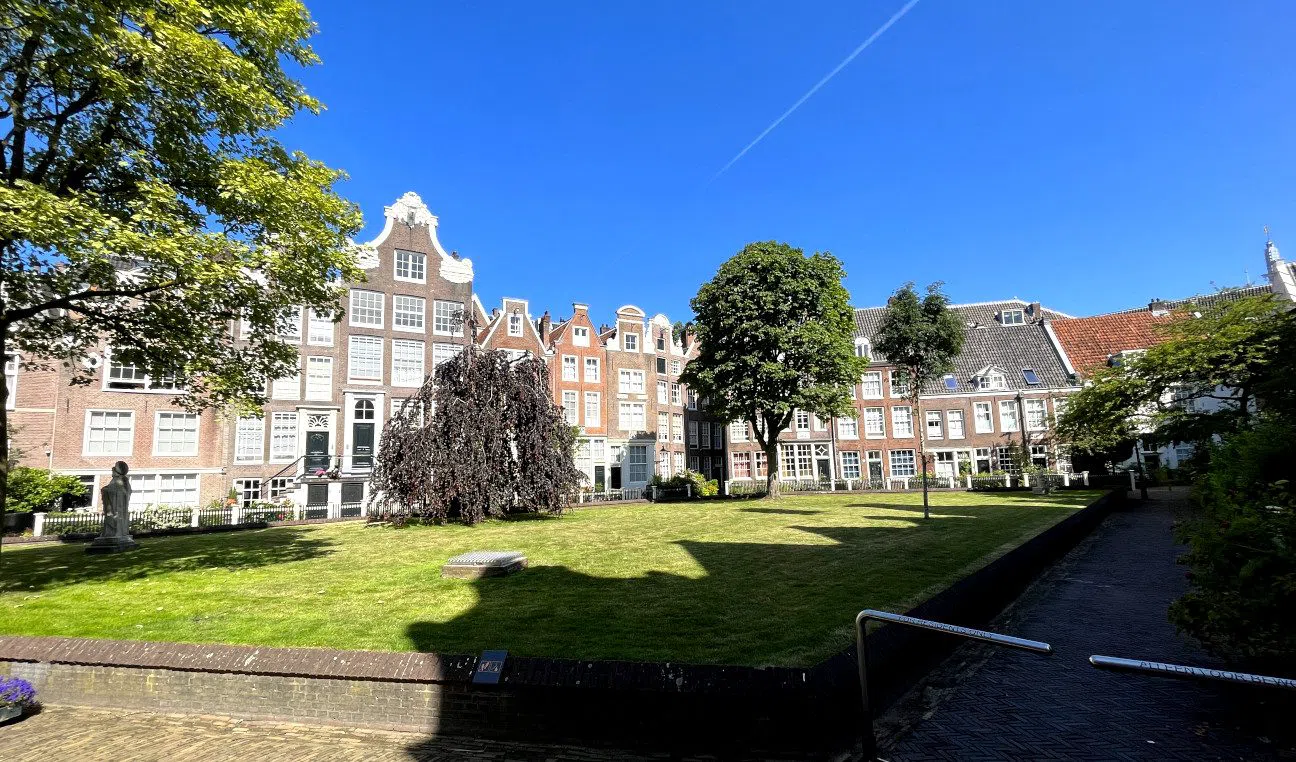
Begijnhof (off Spui, five minutes from the square) is the strongest free contrast to the palace and the quietest place in the centre. People live here. Security limits numbers and moves noisy groups on, large parties are discouraged outright, and the rule is simple: go in twos and threes, keep your voice down, and keep the camera off the windows.
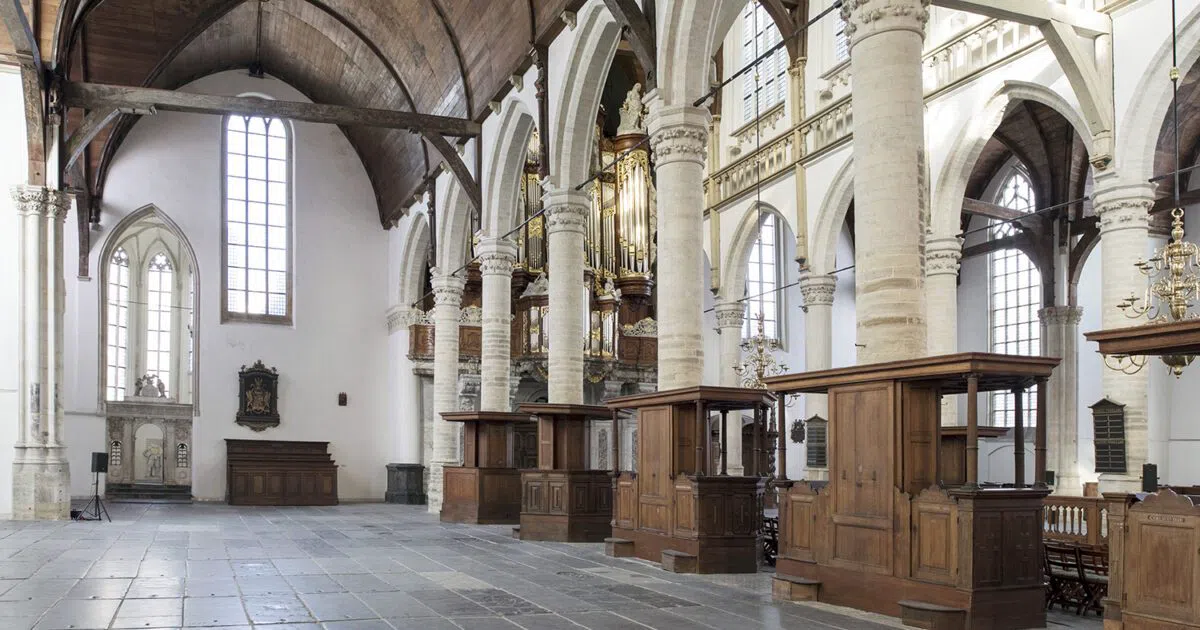
Oude Kerk (De Wallen, ten minutes from the square) is the oldest structure in the city and now runs as a contemporary art institute, which is a stranger and better experience than it sounds. Admission is €13.50 for adults, €7 for students and those aged 13 to 17, €3.50 for ages 6 to 12 and free under 6, with the tower climb charged on top. Tower tours are guided, small-group and seasonal, running roughly from late April to the end of October, and must be combined with a church ticket, so a big party has to split across slots. For more of this kind of sequencing, the wider Amsterdam guide sets out how the centre fits together.
Practicalities
Trams 2, 12, 13 and 17 stop on Dam Square itself, and from Centraal Station it is about a ten-minute walk down the Damrak, often faster than waiting for a tram. A GVB hour ticket costs a little over €3, but tapping a contactless bank card in and out is simpler and works on trams, buses and the metro. The palace entrance is on the square, to the left of the main facade as you face it.
Carry a card, not notes. The palace is cashless, and so is most of the centre now; a €50 note is more likely to cause a conversation than a coffee. Budget roughly €15 per person for the palace alone with a coffee afterwards, about €40 if you add De Nieuwe Kerk, and €25 to €35 for a decent sit-down lunch nearby. A Museumkaart pays for itself quickly if you are pairing the palace with the attic church and the old church in the same trip.
Check the official calendar that morning, arrive in the first hour, allow ninety minutes, and come back to the square in the late afternoon for the facade. If you are still choosing where to sleep, the centre puts all of the above inside a ten-minute walk (see the Amsterdam hotel search), but a canal-side room fifteen minutes out is usually quieter and cheaper for the same access.
Before you go
How much is a ticket to the Royal Palace, and can I pay cash?
Adult admission is €13.50 and a student ticket is €9. Under-18s enter free, as do Museumkaart and ICOM holders. The palace is cashless, so bring a bank card. There is no cash option at the desk.
Is the Royal Palace open every day?
No. It is a working royal building and opens to visitors for roughly 230 days a year, with the rest closed for state use. It can also shut at short notice for a state event, so check the official calendar on the morning you plan to go, not the week before.
How long do I need inside?
Sixty to ninety minutes suits most people. A quick pass through the Citizens' Hall, the Throne Room and the galleries takes about forty minutes; taking the included audio tour in full pushes it closer to two hours.
Do I need to book ahead, or can I turn up?
Walk-up tickets are usually available on an open day. It is not a sell-out attraction, and the worst case is a short wait at the desk in bad weather or school holidays. Booking ahead mainly buys certainty about the date. Groups are different: self-guided groups from 15 people go by arrangement, and a guided tour needs a minimum of 10 people, booked in advance at €105 for the group on a weekday or €135 at the weekend.
Can I combine the palace with De Nieuwe Kerk next door?
Yes, they are physically attached, but they are separate tickets and separate experiences. De Nieuwe Kerk is the coronation church of Dutch monarchs and runs as an exhibition hall, so what you see depends on the current show; adult entry is €25, €15 for youth 12 to 17 and students or CJP holders, free under 11, and free on several city passes. It closes on 27 April, 3 to 5 May, 25 December and 1 January.