The Amsterdam issue
Watching the Amsterdam Marathon from Park, River and Track
Where to stand, eat and drink on 18 October 2026: the two Vondelpark passes, the Amstel hours, the Wibautstraat wall and a free seat in the stadium for the finish.
By Robin HaasThe slow way through Amsterdam's canals, courtyards and back streets
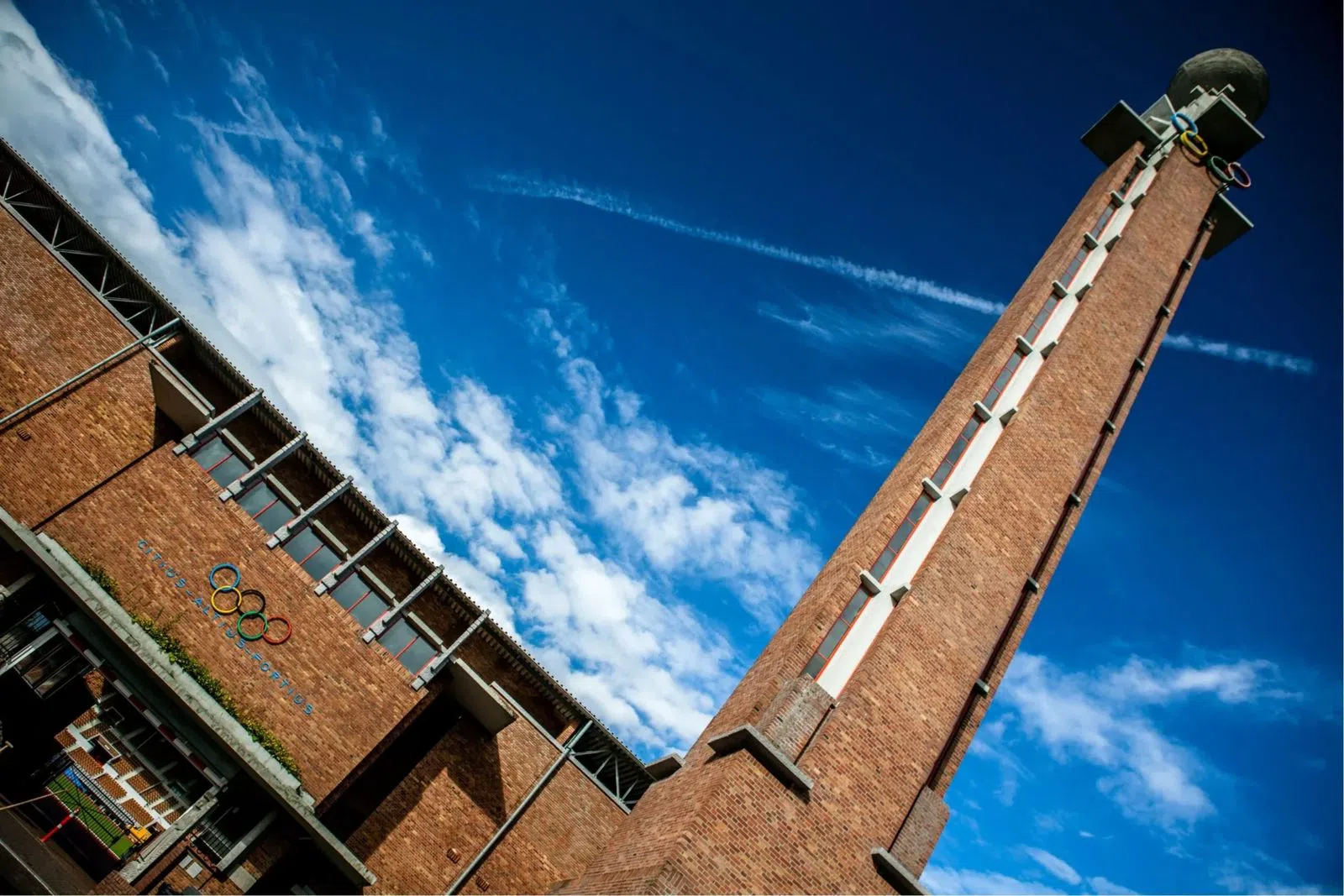
The Amsterdam Marathon finishes on a running track. That sounds like a footnote until you are sitting in the grandstand of the Olympisch Stadion with a coffee, watching someone you know come out of the tunnel onto the red surface with 400 metres left, the commentary calling their name and the whole stand able to see them coming. Around that finish the course loops through Vondelpark twice and runs the Amstel out to a village and back, which means a spectator on foot can catch the same runner three times before lunch, and a spectator on a bike can manage four. Race day is Sunday 18 October 2026.
The bib only exists at the expo
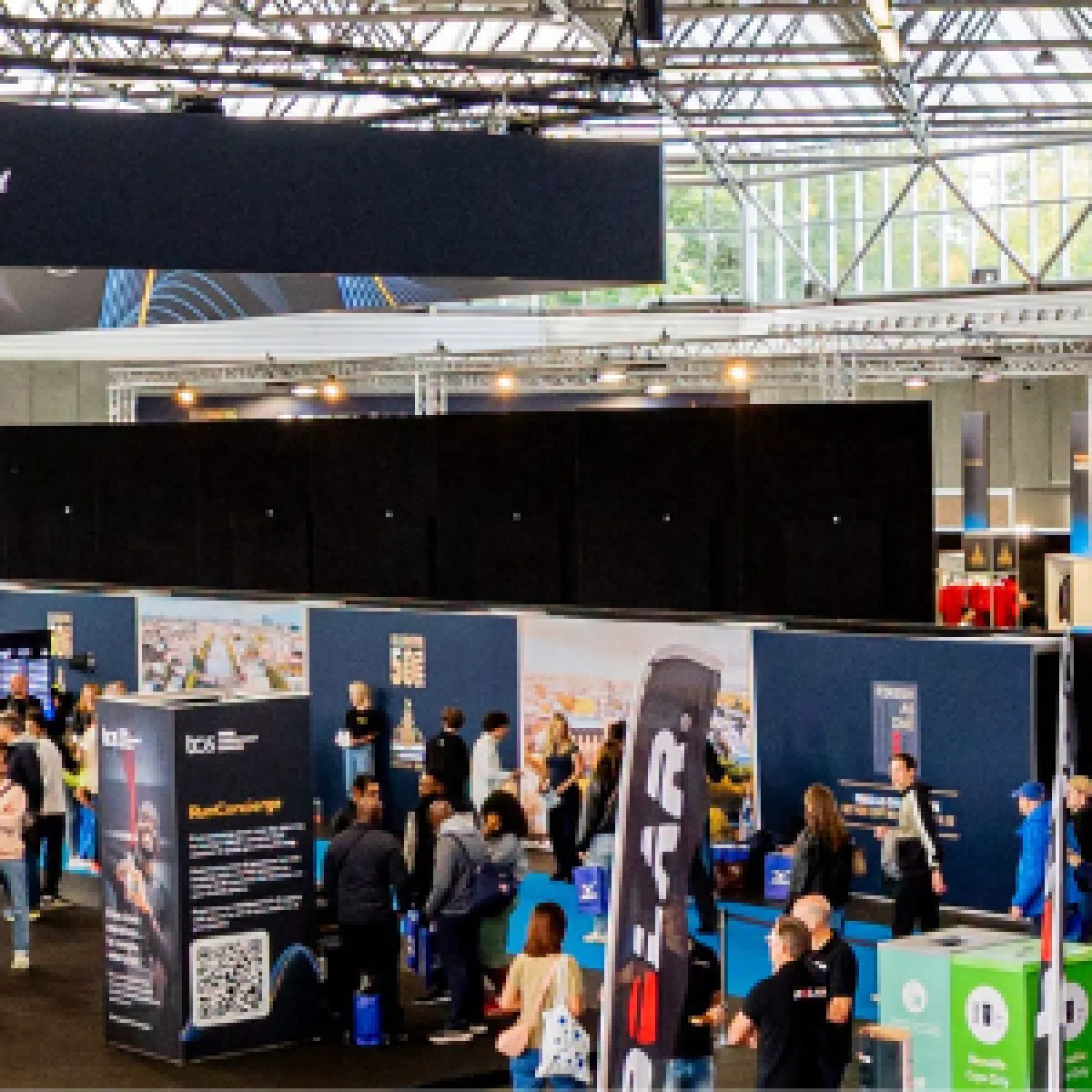
Marathon Expo Amsterdam at RAI Amsterdam (Europaplein, in the south of the city) is where every entrant collects their number, and it is the only place it can be done. There is no race-morning pickup. Turn up at the stadium on Sunday without a bib and you do not run, whatever your confirmation email says.
The hours are Thursday 15 October 13:00–20:00, Friday 16 October 10:00–20:00 and Saturday 17 October 09:00–19:00. Walking the floor is free, there is no group limit, and the space is big enough that nobody is turned away.
Two practical points. First, the expo moved to the RAI for 2026, from Sporthallen Zuid, so anyone navigating from memory of a past year will end up at the wrong building with a queue of one. Second, timing: Saturday from late morning to mid-afternoon is when most of the field arrives at once and the aisles stop moving. Thursday afternoon and the first hour on Friday are quiet. If you are running, go early in the week, spend forty minutes, buy nothing you then have to carry, and leave. Standing around an expo the day before a marathon is a well-known way to arrive at the start line already tired.
The RAI sits directly on the metro at Europaplein, a few stops from the centre, and nothing that happens on Sunday affects that line. It is also the easiest place all weekend to fall into conversation with a running club, if you have come alone.
Plan your Amsterdam trip
Live prices from our booking partners.
Free cancellation on many rooms. We may earn a commission when you book.
Getting in when the race is already full
Entries for a field this size close months ahead, and the follow-up questions are always the same: is there a resale, can I buy someone's place, is there a back door.
Be careful with that. A number bought privately stays registered to the original entrant. The timing chip, the emergency contact and the medical details on the reverse all belong to somebody else, and that is exactly the information that matters if you go down at 35 km. Organisers void transferred bibs when they find them, and the medical risk sits with you either way. The legitimate routes are the official waiting list or any transfer window the organisers open themselves, charity places, and tour operators who buy blocks with accommodation attached.
If none of those land, spectate this year and enter early for the next one. Amsterdam is a better city to watch a marathon in than most, because of the shape of the course.
Book the room before you sort the rest. The weekend takes a real bite out of the city's beds and the useful areas are Oud-Zuid and De Pijp, both close enough to the finish to walk home in a foil blanket; the Amsterdam hotel search is the place to start.
What the course does with your morning
The shape is what makes spectating here easy. Runners hit Vondelpark at around 2 km, cross Stadhouderskade by the Rijksmuseum at about 4 km, then head south and spend a long stretch on the Amstel, roughly 14 km to 26 km, out to the turnaround village of Ouderkerk aan de Amstel at about 20 km and back. They come north through the east, over the Torontobrug and along Wibautstraat at around 37 km, pass the Rijksmuseum again near 38 km, re-enter Vondelpark close to 40 km, and finish in the stadium.
That gives you paired viewpoints. Vondelpark and Stadhouderskade each serve you a fresh field and, hours later, a hurting one from the same square metre of pavement. Do the arithmetic on your runner's pace before you leave the hotel: someone aiming for 3:30 covers 2 km in about ten minutes and reaches 40 km around three hours and twenty minutes later. Write both times on your hand. Phone tracking is useful but the network in a crowd of that size is not.
Vondelpark at two kilometres and again at forty
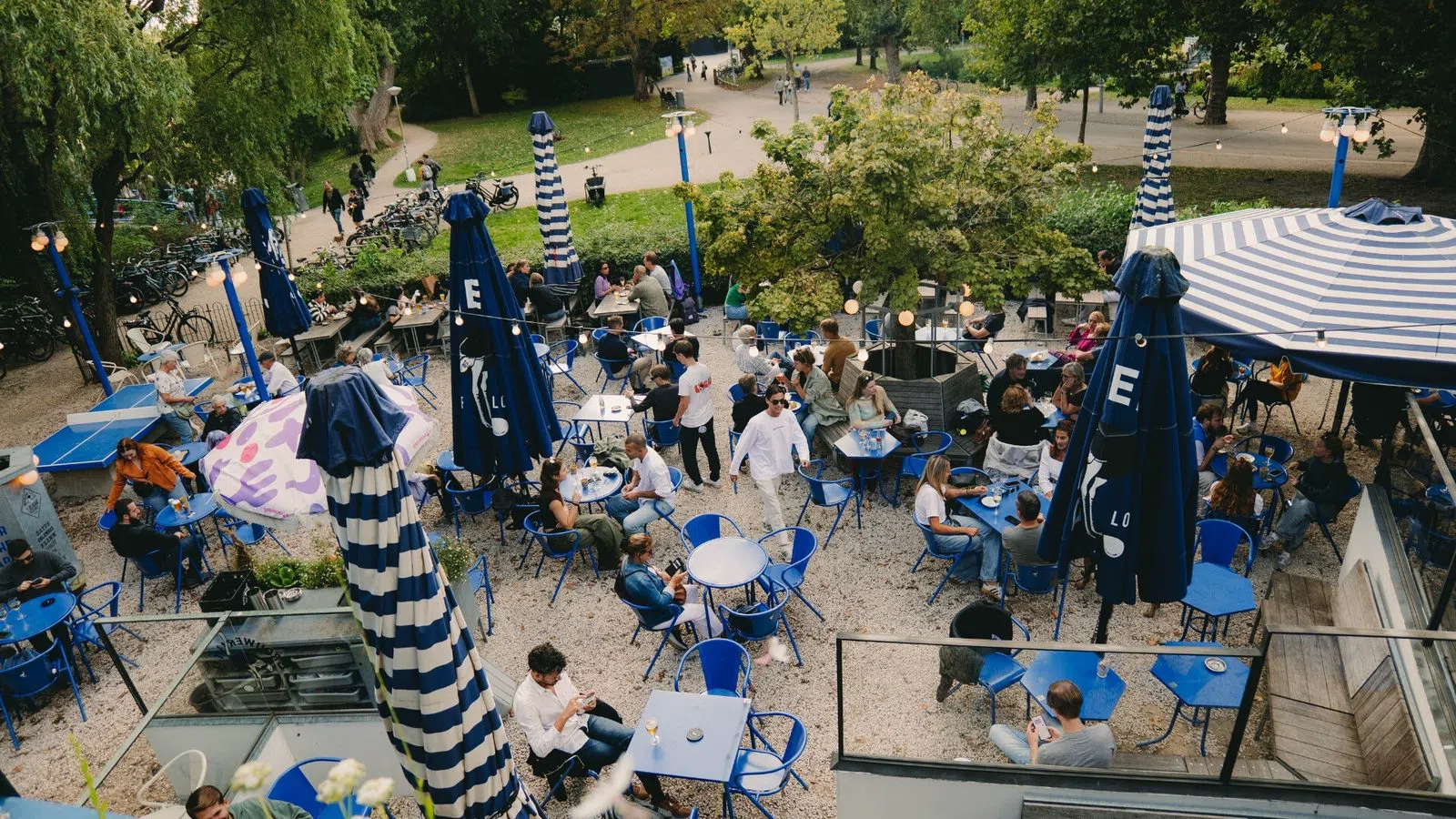
't Blauwe Theehuis (Vondelpark, Oud-Zuid) is the obvious base and now runs as a Brouwerij 't IJ tasting room, so the beer is properly made rather than incidental (€5–7, snacks €6–12). The ground-floor terrace is large enough to absorb a group without anyone negotiating, there is no door policy and no booking, and the course passes twice within a short walk. You can cheer, sit down with a beer for two hours and cheer again without changing location, which is the whole argument for spectating here.
With children, go to Groot Melkhuis (Vondelpark, Oud-Zuid) instead. It has one of the largest terraces in the city, part of it covered and heated, which is not a luxury in a Dutch October, when the day can be still and bright at nine and horizontal rain by eleven. The playground occupies the children through the three-hour gap between the two passes, lunch plates run €10–18, and you should book ahead for eight or more. Below that, walking in on a Sunday morning is usually fine.
The photograph everyone wants at the Rijksmuseum
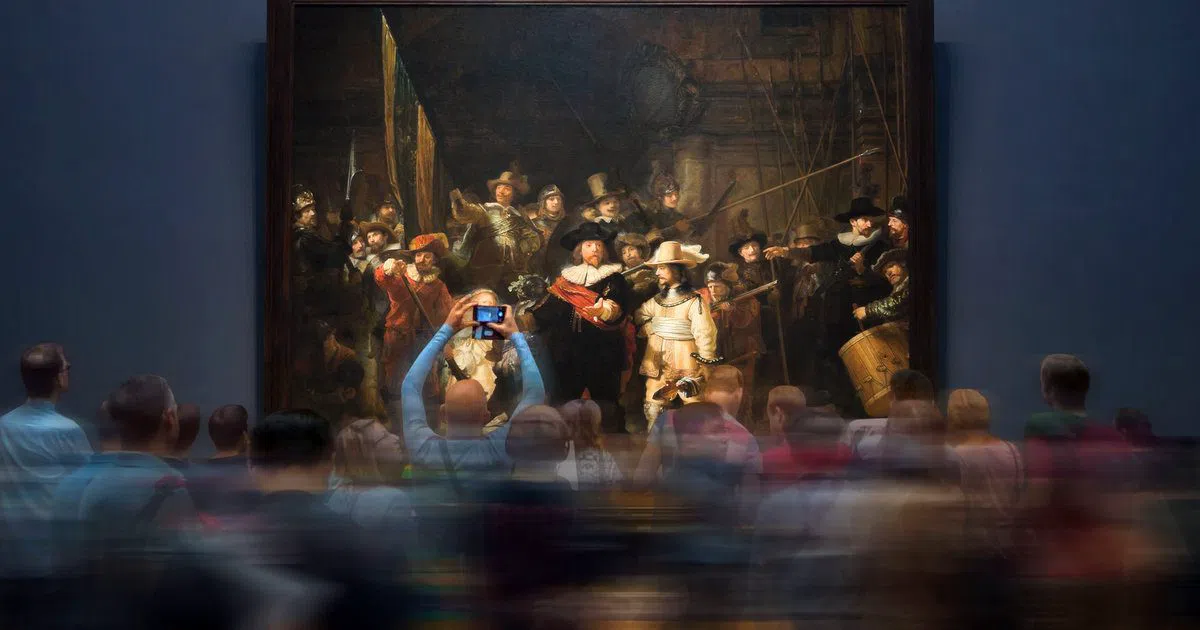
The Rijksmuseum passage on Stadhouderskade (Museumkwartier) is public street, free, and open to any size of group, but the tunnel mouth itself gets three deep and the people at the front arrived long before you. Stand further along Stadhouderskade or up on Museumplein and you will still get the building in frame with a moving field in front of it, and you will actually be able to see your runner rather than the back of a coat.
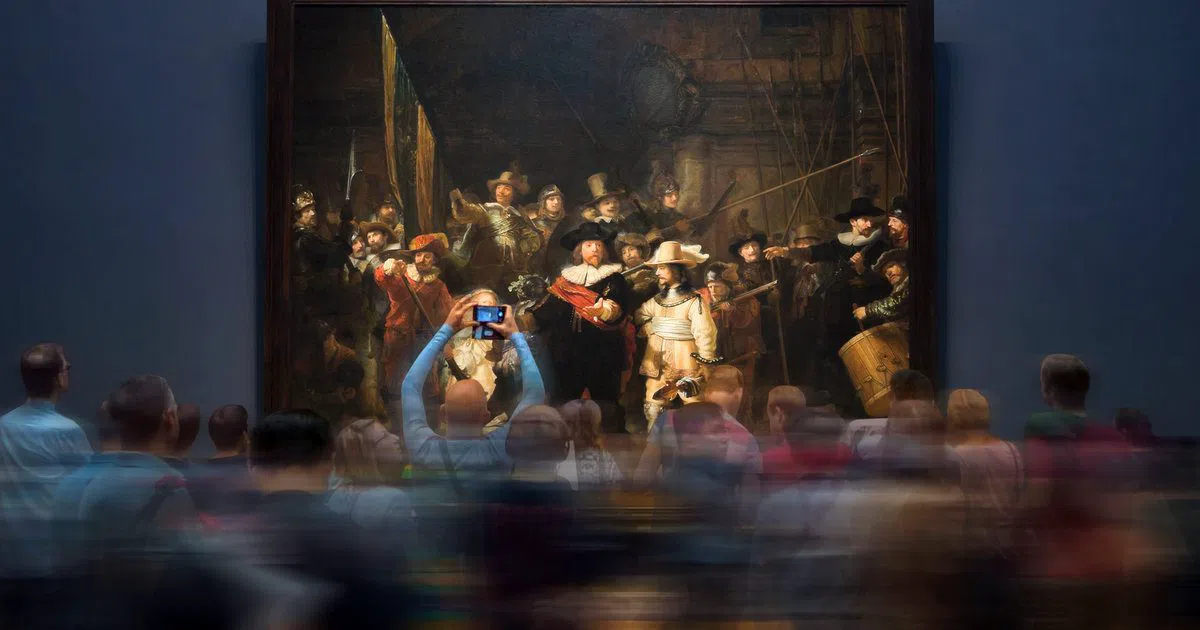
This is the other double: about 4 km on the way out, about 38 km on the way back, and the difference in how people are running is stark enough to be worth staying for. The museum behind it keeps normal hours, which makes this the one spot where a non-spectating member of the group has somewhere to go for two hours.
The long river hours
The Amstel stretch is where the middle of the race disappears for most spectators, and where it is quietest and most pleasant to watch.
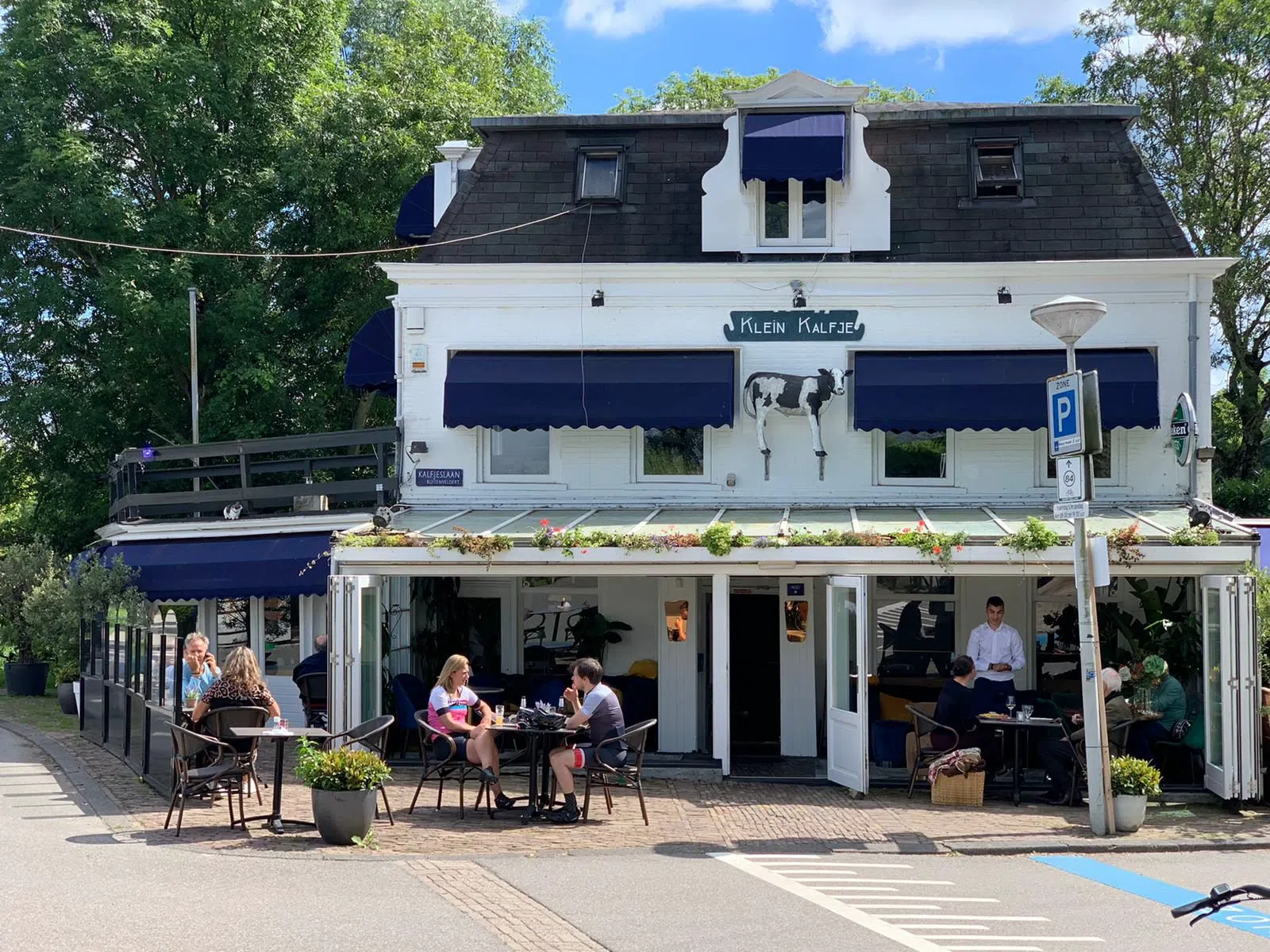
Klein Kalfje (Amsteldijk, on the southern river edge) sits on the section runners cover twice between roughly 14 km and 26 km, and it is the only point on the river with proper food rather than a water table. It is split into a water terrace, an indoor room and an outdoor terrace, so a group can be seated together. Booking is essential on race day and the bill is not small: fish mains run €28–45.
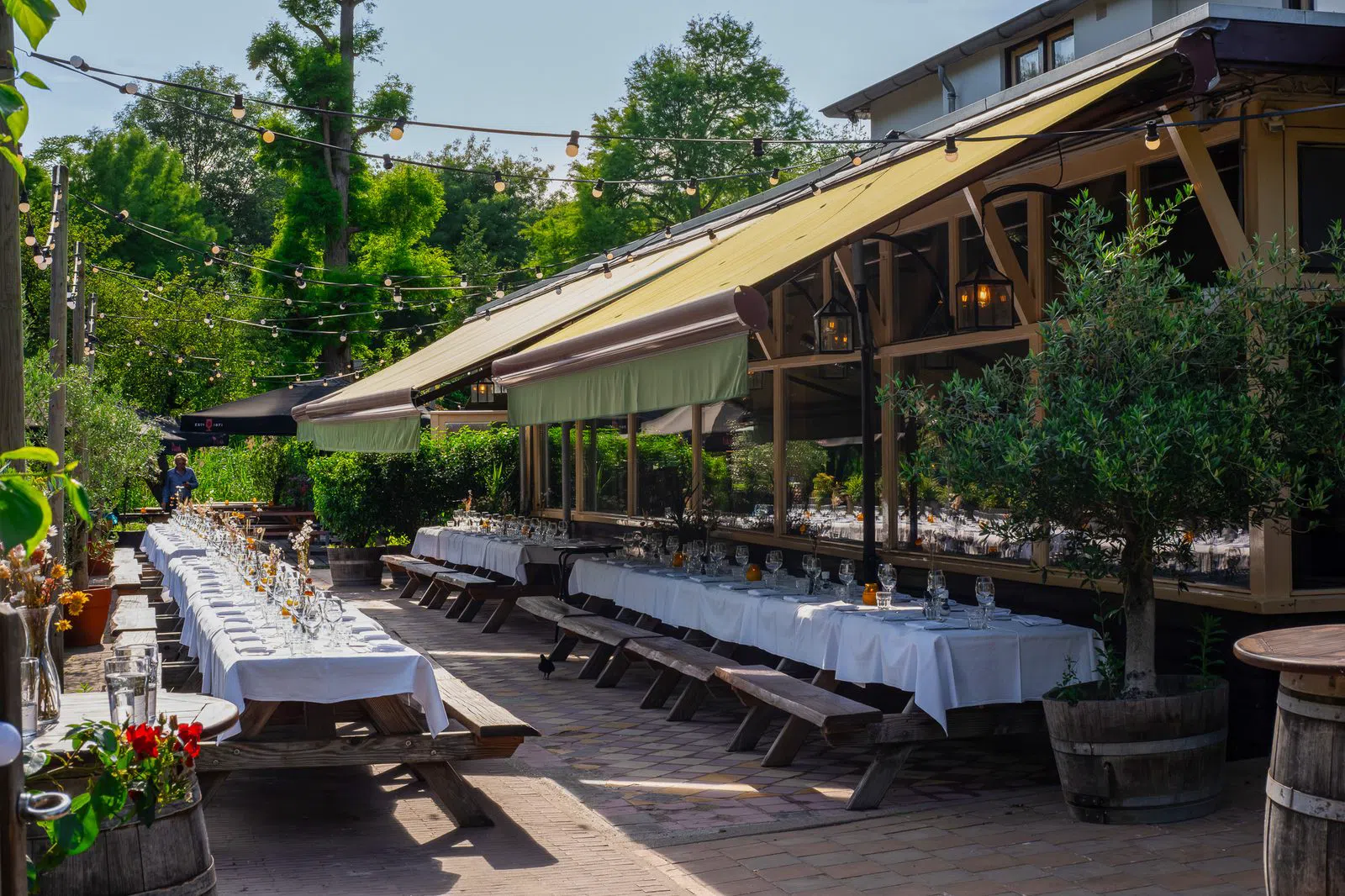
Further out, Brasserie Paardenburg (Ouderkerk aan de Amstel) sits in the turnaround village at about 20 km. This is the prettiest and emptiest place to watch the whole race (cows, water, almost no crowd), and the brasserie is open 09:00–22:00 daily, built for groups and boat parties, mains €20–30. Reserve for race weekend. The catch is access: you need a bike or the bus to get out and back, and if your runner is quick you will be watching them at 20 km and then racing them to the finish. Plan to stay put and meet at the stadium afterwards instead.
Where the race actually hurts
Come back north for the last hour, because 35 km to 38 km is where the day is decided and where support does the most work.
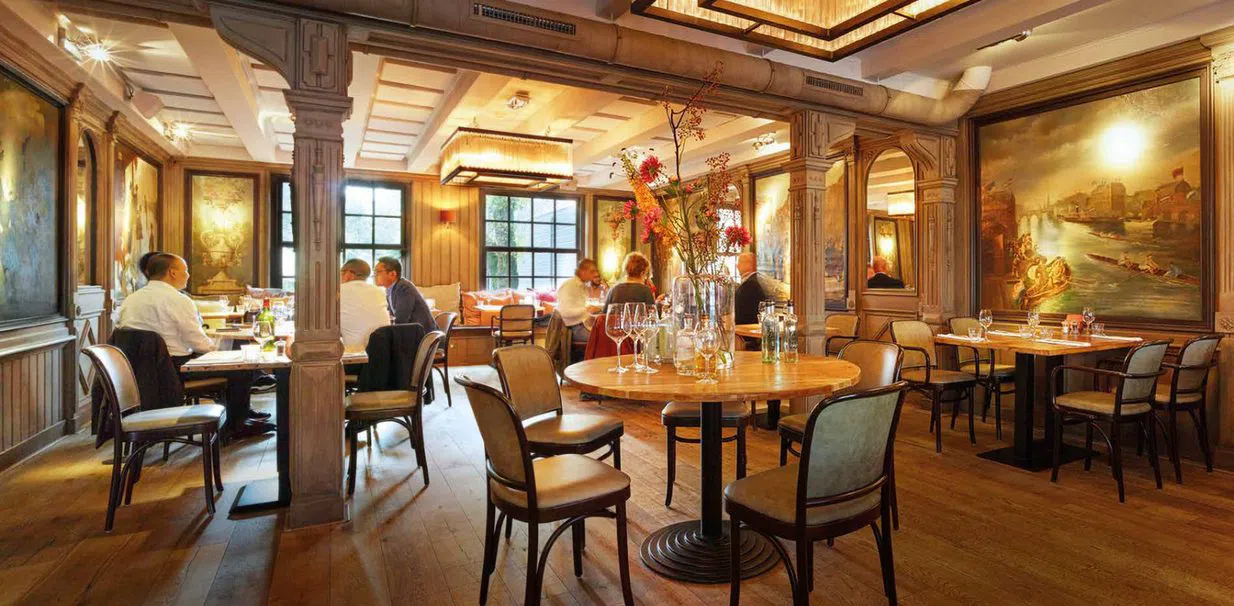
De Ysbreeker (Weesperzijde, Oost) opens at 08:00 and has a long river terrace a short walk from the Torontobrug climb at roughly 37 km. You can eat breakfast from €8, watch the hardest stretch of the race go past, and slide into lunch (mains €18–28) without ever standing up. Groups are fine but reserve; it is the obvious spot for a considerable distance in every direction.
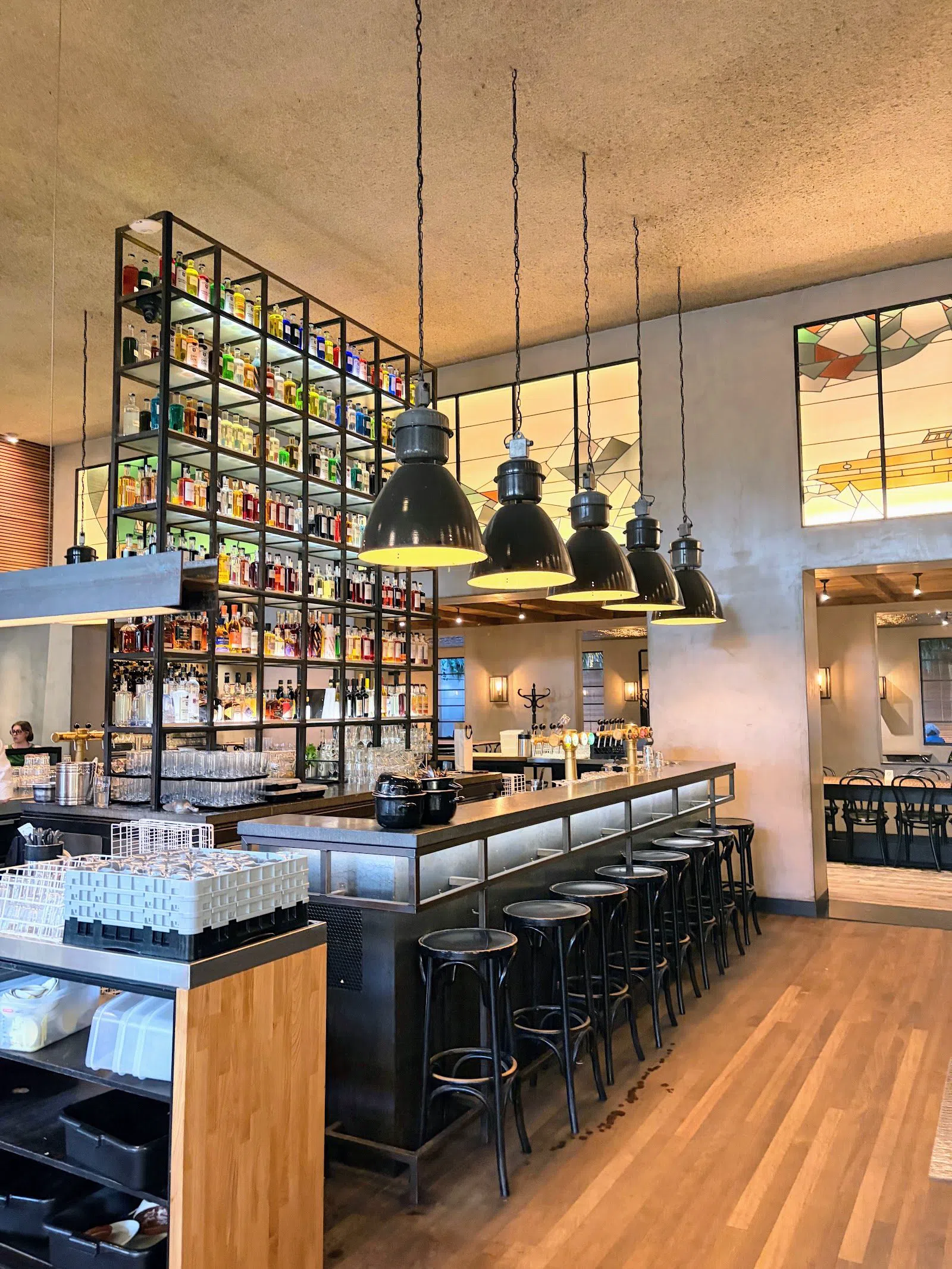
Canvas at Volkshotel (Wibautstraat, Oost) is the other option, directly above the Wibautstraat section near 37 km and reached by the metro stop of the same name. Height is the point: from the rooftop you see runners approaching for a long way, which makes spotting one particular person realistic rather than lucky. It is walk-in by day and takes groups, cocktails are €12–15, breakfast and lunch €10–20, and the rooftop hot tubs are a fair lure for anyone in the party who has no interest in the race. On Friday and Saturday nights it turns into a dance floor with free entry, fine if nobody in your group is racing and a bad idea if they are.
Inside the stadium
The Olympisch Stadion (Stadionbuurt, Oud-Zuid) is the reason to build the day around the finish. Spectators walk into the grandstand and bleachers free on race day (no ticket, no booking, no group limit), and you get commentary, music and a proper athletics-meet finish rather than a view over a street barrier.
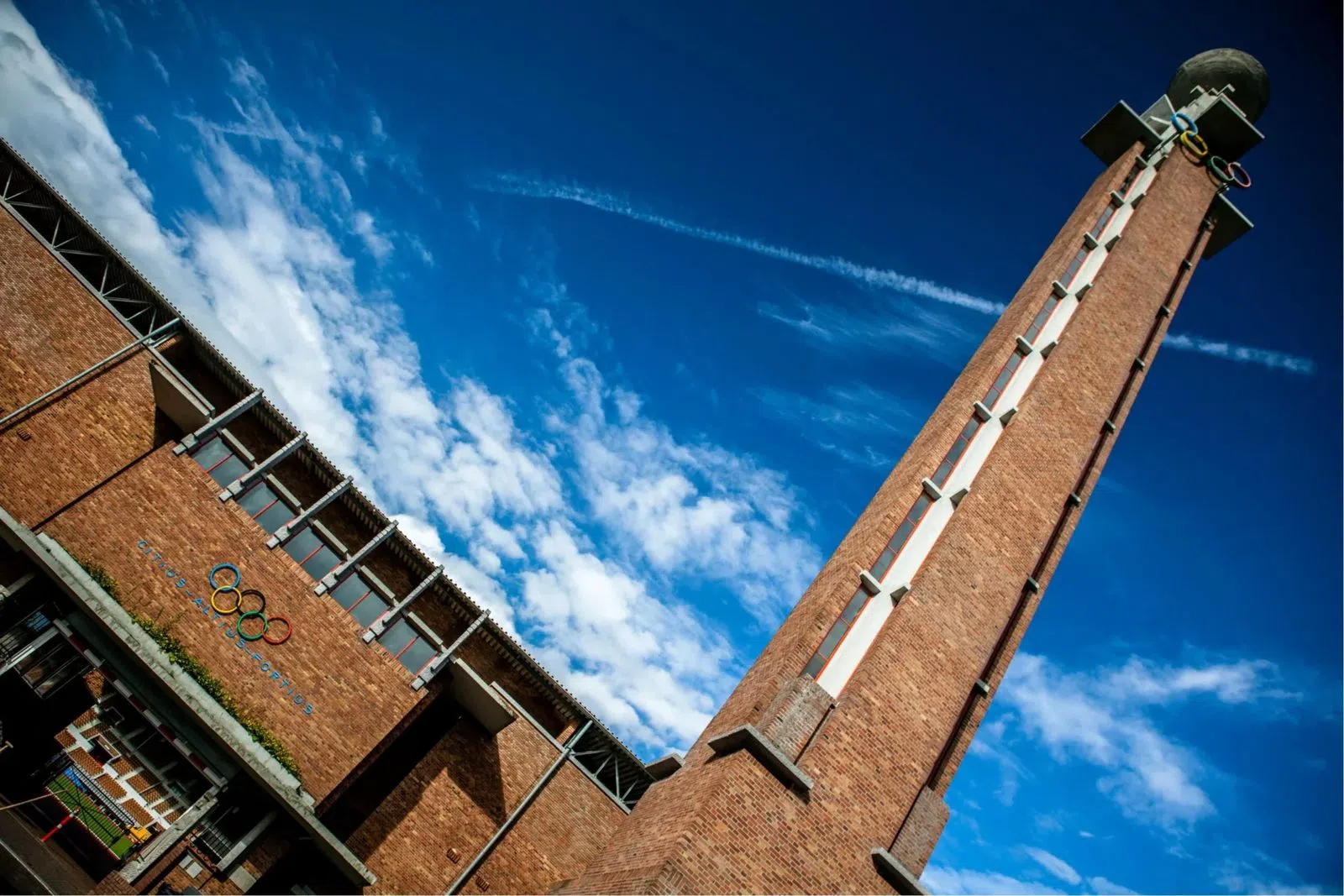
Arrive early if you want a seat on the finish straight; the stand fills from the middle of the morning and does not empty, because everyone who has seen one finish stays for the next. Agree a meeting point outside the stadium before you split up, and make it a physical object rather than a gate number. Thousands of people are doing the same thing with the same three phone networks.
Feeding runners and everybody else
Café Loetje (Johannes Vermeerstraat, Oud-Zuid) is the post-race meal, ten minutes from the stadium: one dish, steak at around €22–28, done properly and served until 22:30. The original branch does not really do reservations, so go early or split a large group across tables and accept that you will not all sit together.
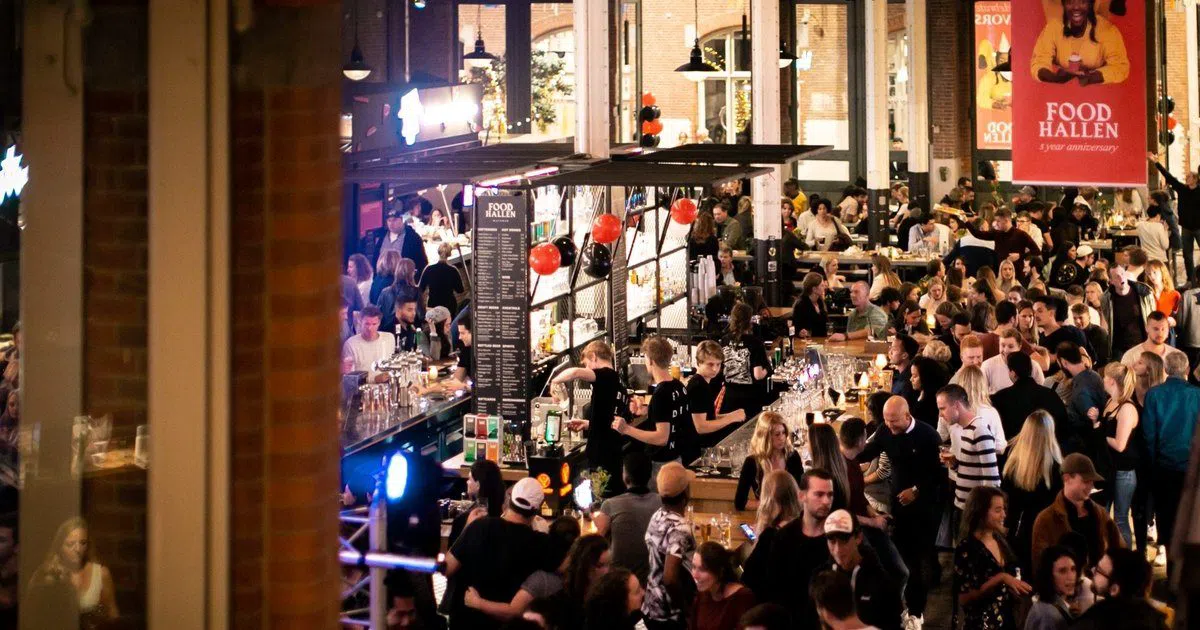
For a mixed party, Foodhallen (Oud-West) removes the argument entirely: nineteen stalls, plates €6–14, open 12:00–23:00 daily, near the western end of Vondelpark. It is genuinely rammed on a Saturday evening, so use it on Sunday, when the crowd is people who have just run and are eating early.
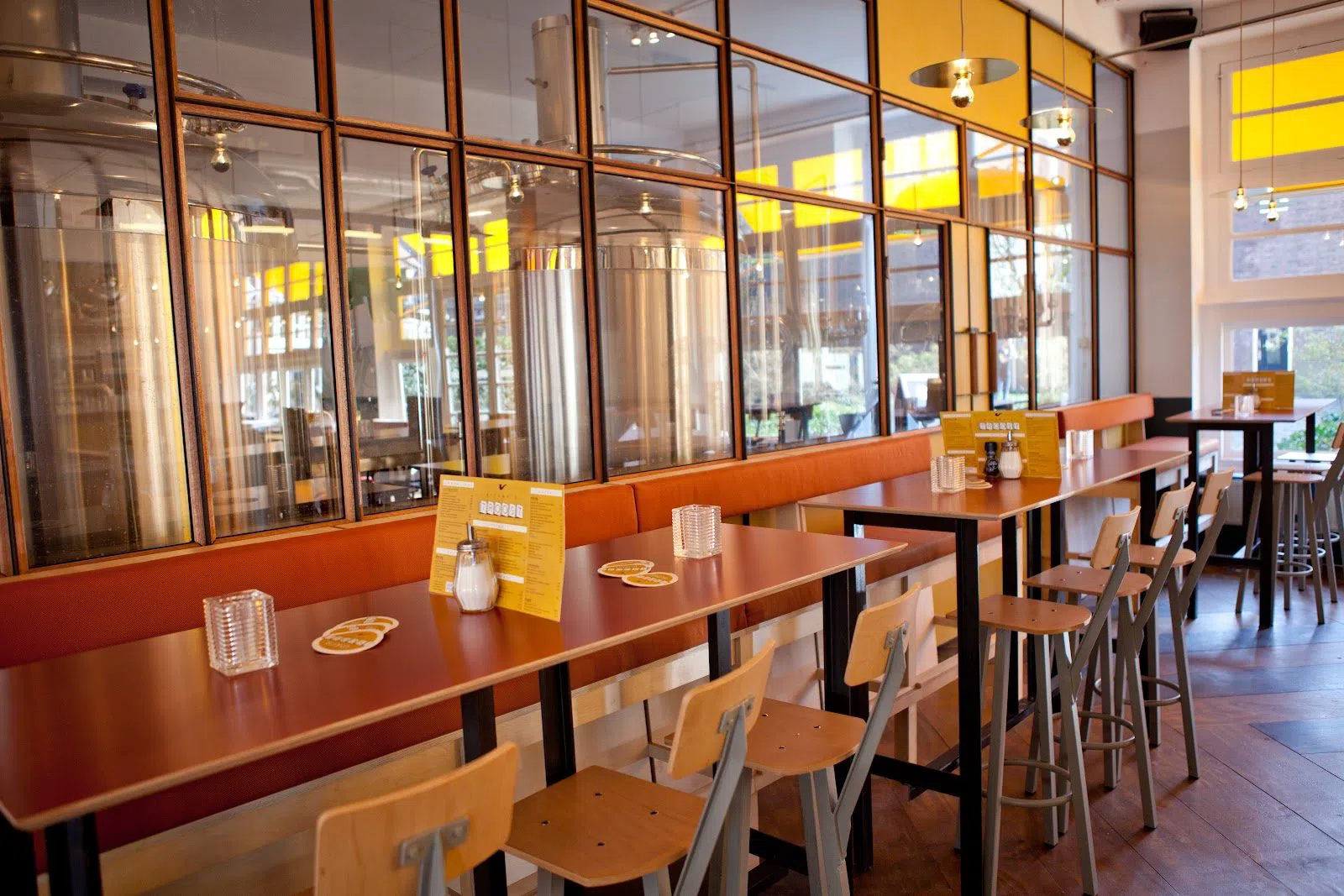
A whole running club needs a room that can take one, and Brouwerij Troost De Pijp (De Pijp) is it: a large hall brewing small-batch beer on site, open until 01:00 with the kitchen to 22:30, beers €5–7, burgers €15–19. You can land a dozen people there without booking, and it is walkable from both the stadium and the Stadhouderskade section.
The slow end of the day
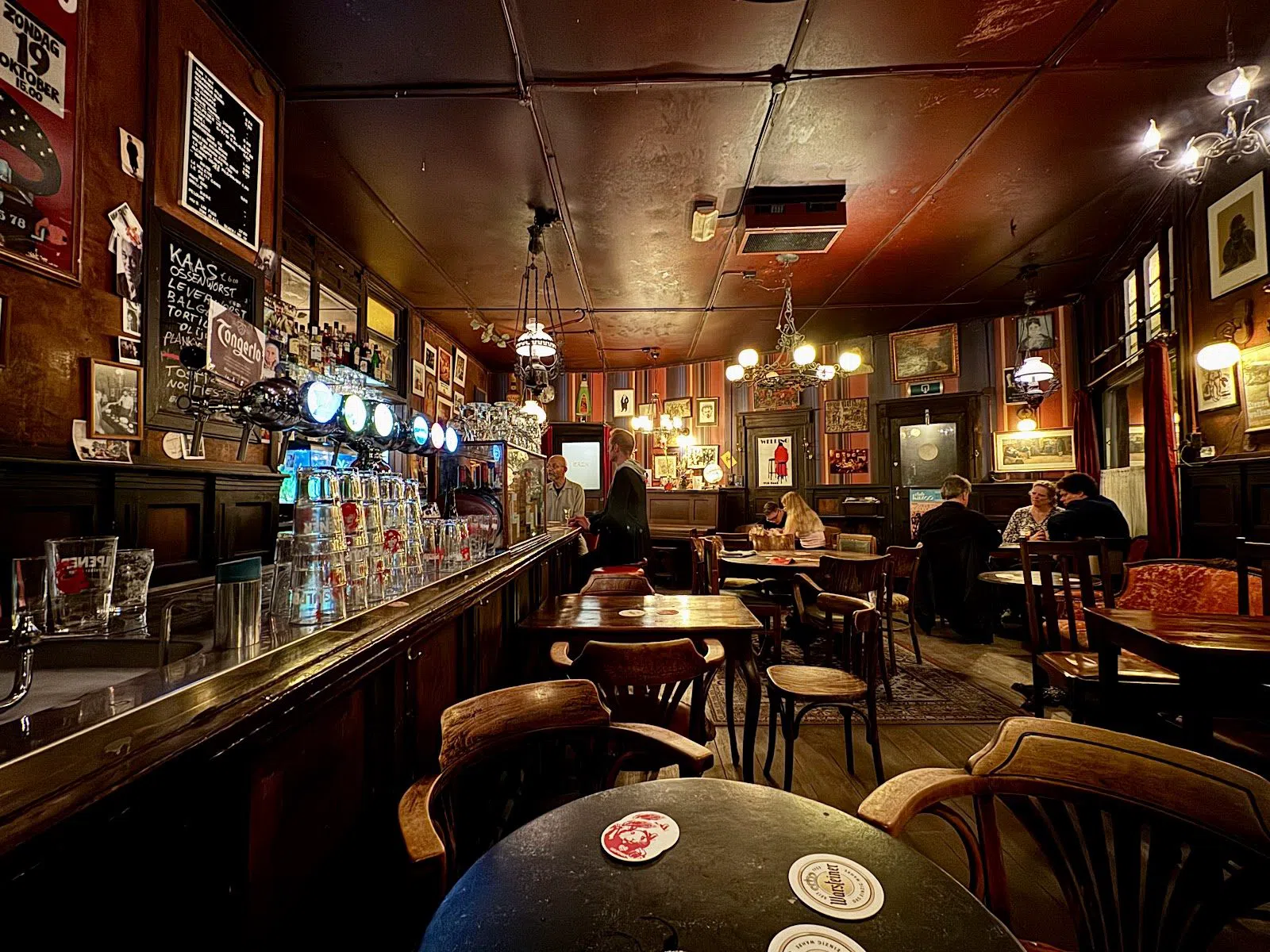
If a stadium full of foil blankets is not what you want, Café Welling (Oud-Zuid) is five minutes from the finish and the exact opposite of it: a small brown bar with house-distilled jenever at €5, beers €4–6, ossenworst on the counter and no music. It opens at 15:00 on Sunday. Six or eight people is right; twenty would ruin it for everyone already in there, including you.
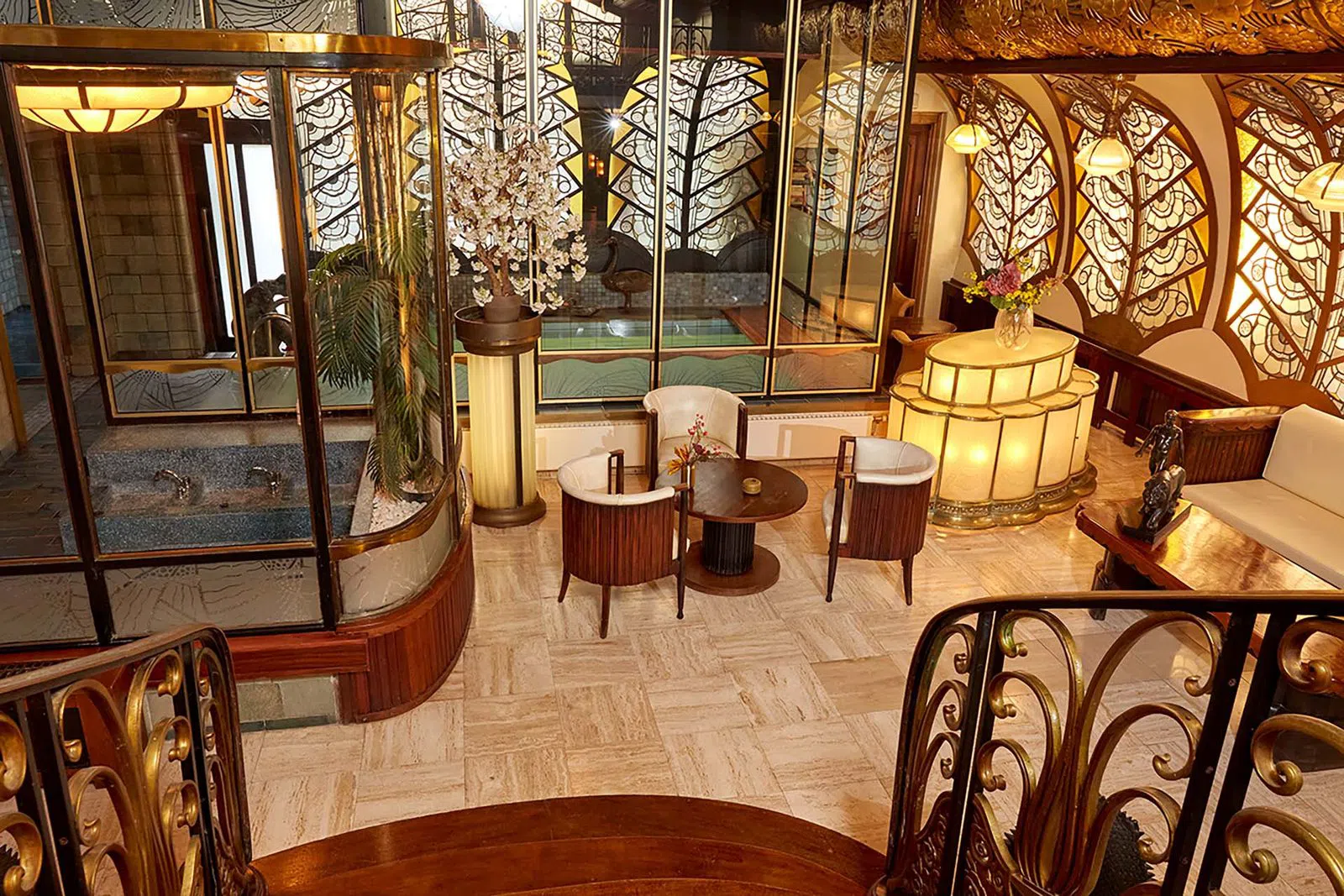
For the runner, Sauna Deco (Centrum) is the best recovery in the middle of the city and opens 13:00–19:00 on Sunday, which fits a marathon finish almost exactly. It is intimate, mixed-gender and textile-free, entry is around €25–30, and it suits two to four people rather than a group. Book ahead for the Sunday specifically; the slots go to people who thought about it on Friday.
A bike is the whole trick
MacBike (branches at Centraal Station East, Leidseplein, Waterlooplein and Marnixstraat) rents standard bikes at €13–16 a day with a €50 deposit, and the fleets are large enough for a whole spectating group, so book online for race weekend rather than turning up.
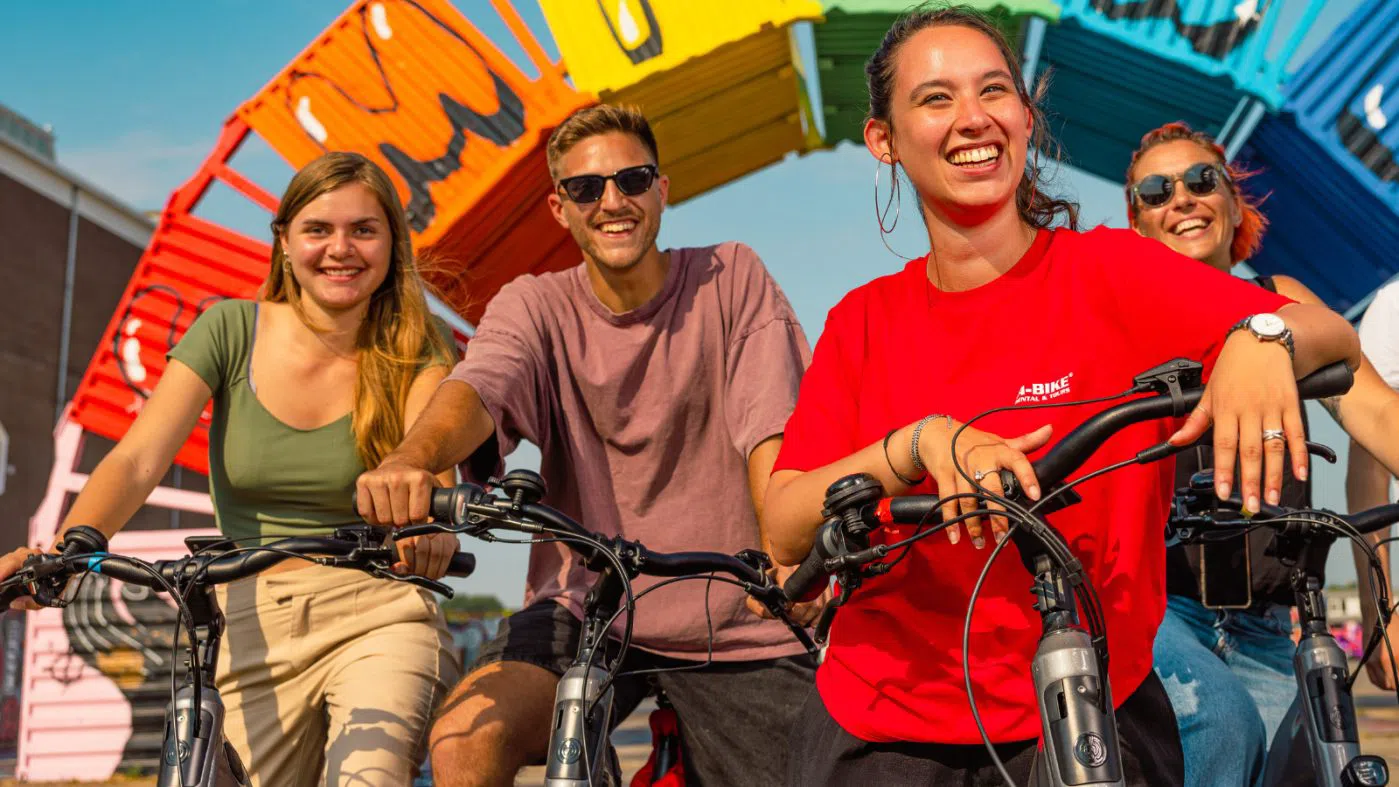
This is the single thing that changes the day. Roads close to cars, but the cycle network stays usable, and a bike means you can see your runner in Vondelpark at 2 km, get down to the Amstel for the middle section and still be in the stadium stand before they finish. On foot you will get two of those three. Ride sensibly around crossing points and follow the marshals; the course has right of way and arguing with a marshal in Dutch is a losing game.
Planning the day
The metro is the reliable spine on race day, Europaplein for the expo and Wibautstraat for the east, while tram routes that cross the course get diverted or suspended for the morning. Check the operator's race-day map before you set off rather than standing at a stop that is not being served. A bike beats all of it for spectating.
The Netherlands runs on cards and PIN. Plenty of cafés and bars are card-only, and some take Dutch debit but not foreign credit cards, so carry a card you have tested plus €20 in cash as a backstop.
Collect the bib Thursday or Friday. Be in position for the 2 km pass fifteen minutes before your runner is due, not on the minute. Leave the last viewpoint before they pass it if you want a stadium seat.
A full spectating day (bike, two café stops, a stadium finish and a steak afterwards) lands around €60–80 a head. Halve it by drinking in the park and eating at the food hall; double it with a river lunch at the Amsteldijk.
Mid-October here means anything between 8°C and 17°C, often in the same morning. Waterproof, hat, and a bag that closes.
For the rest of the city (the museums the runners go past, where to stay, what to do on the Monday when nobody can walk down stairs), the Amsterdam guide covers it.
Before you go
When and where is the 2026 Amsterdam Marathon?
Sunday 18 October 2026, starting and finishing at the Olympisch Stadion in Oud-Zuid. The course loops through Vondelpark at about 2 km and again near 40 km, crosses Stadhouderskade by the Rijksmuseum at roughly 4 km and 38 km, and spends the middle of the race on the Amstel between about 14 km and 26 km.
Do I need a ticket to watch the finish in the stadium?
No. Spectators walk into the grandstand and bleachers of the Olympisch Stadion free on race day, with no ticket or booking needed and no limit on group size. Arrive early if you want a seat on the finish straight, because the stand fills through the morning and people stay put once they are in.
The race is sold out — can I buy someone else's bib?
Don't. A privately bought number stays registered to the original entrant, so the timing chip, emergency contact and medical details belong to somebody else, and organisers void transferred bibs when they find them. Use the official waiting list or transfer window if one opens, a charity place, or a tour operator selling entry with accommodation.
Where do I collect my race number?
Only at Marathon Expo Amsterdam at the RAI: Thursday 15 October 13:00 to 20:00, Friday 16 October 10:00 to 20:00 and Saturday 17 October 09:00 to 19:00. There is no race-morning collection. The expo moved to the RAI for 2026 from Sporthallen Zuid.
Can I see the same runner more than once?
Yes, and easily. On foot you can manage two passes, Vondelpark or Stadhouderskade early, then the stadium finish. Rent a bike and three or four becomes realistic, because roads close to cars but the cycle network stays open: park at 2 km, ride to the Amstel for the middle section, then get to the stadium before they come off Wibautstraat.