The Amsterdam issue
Your First Amsterdam Lunch Belongs in a Market Hall
Nineteen counters in Oud-West, a herring stall by a bridge and six street markets that only exist on certain days: how to eat lunch in Amsterdam without wasting an afternoon.
By Giulia MarchettiEating Amsterdam one market stall and brown café at a time
A raw herring from a pavement stall costs €4 to €7, arrives chopped with raw onion and a toothpick stuck in it, and tastes of cold sea and salt, with no sauce and no bread to soften it. That is the register most of the good lunches in this city work in: a counter, a queue, a paper tray, change from a ten-euro note. Amsterdam's food halls and street markets are where a first visit should be eating, and the only real skill is knowing which of them exists on which day of the week.
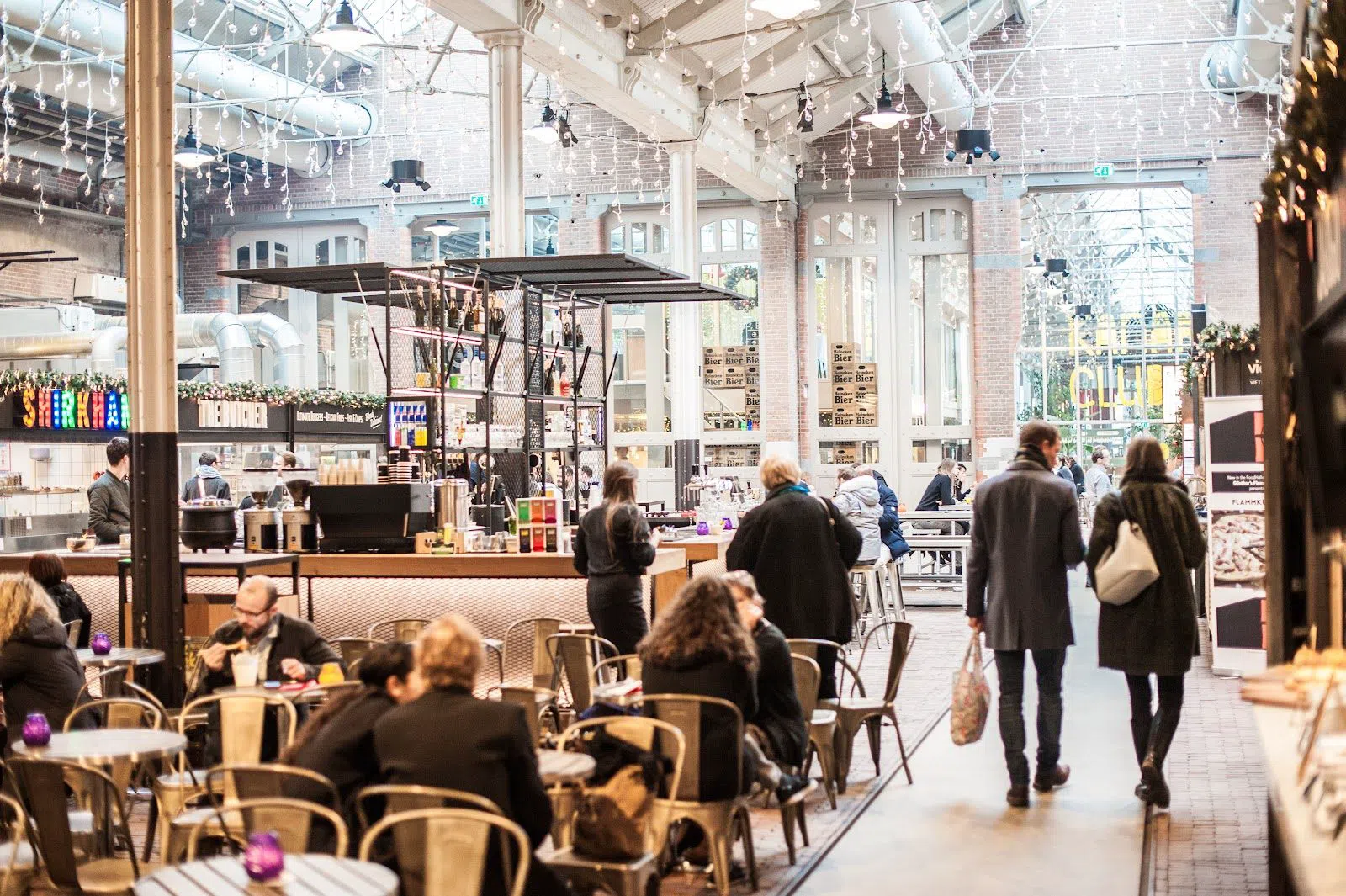
The flagship hall and the newest one
Foodhallen Amsterdam (Oud-West) is the easiest first stop in the city for a group with no plan and no agreement. Nineteen counters and three bars sit under one roof, dishes run €5 to €15 with most plates between €8 and €12, and the portions are small on purpose: you eat in relays, one person queuing while another holds a seat. It is open daily, 12:00 to 23:00, 364 days a year, which makes it the answer on a wet afternoon, on a public holiday when half the city has pulled the shutters down, and on a Sunday when almost every market in this article is closed.
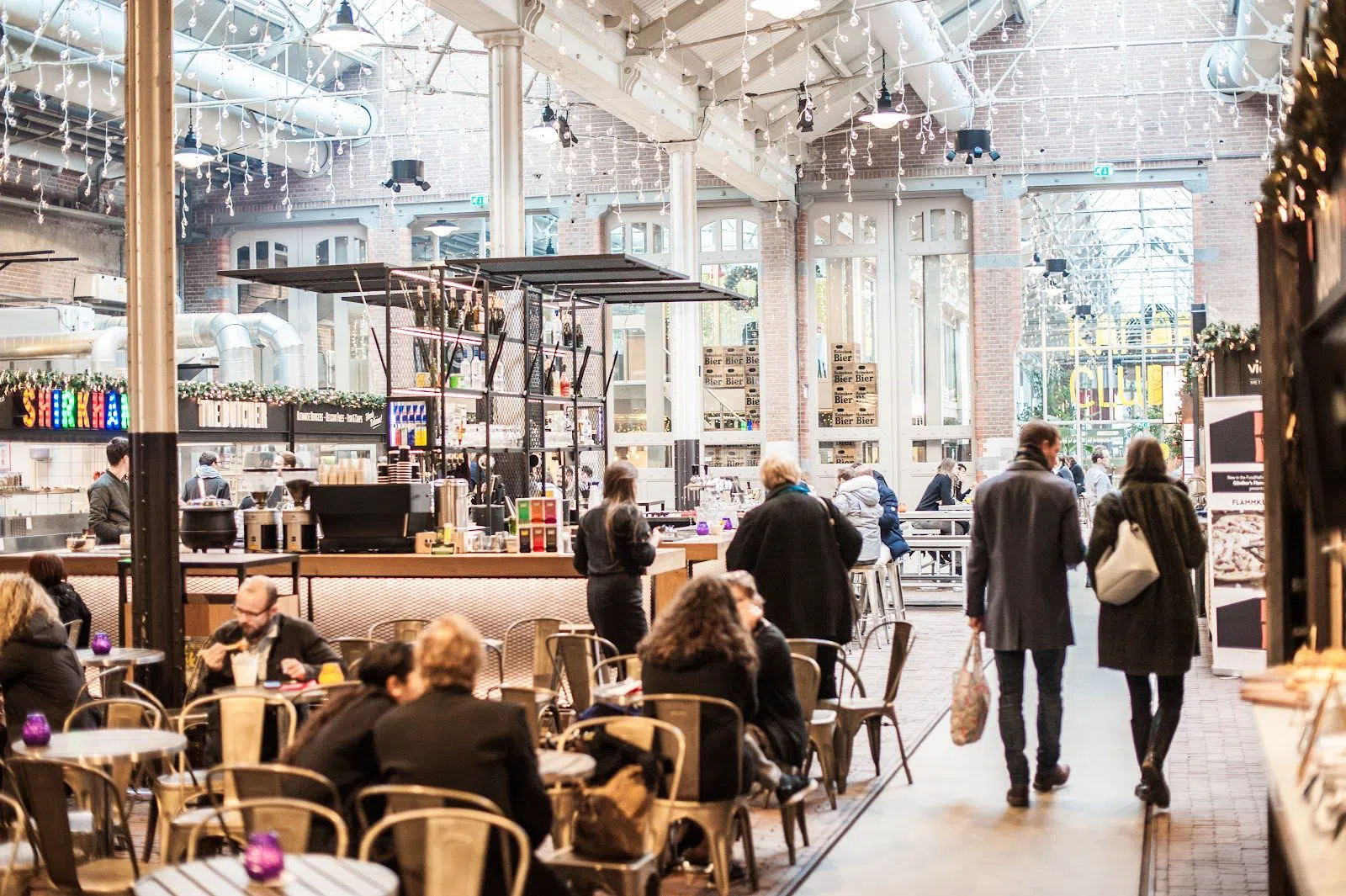
There are no reservations for the hall itself. You walk in, and a group simply spreads out along the communal tables. Seating is the honest catch: after 18:00 at a weekend it is a scrum, and you will stand holding a tray waiting for strangers to finish. Arrive at 12:30 or at 17:00 and the problem disappears. An events team handles private hire of sections, which is the only way to guarantee space for a large party, worth knowing if you are twelve people rather than four. It is loud and it is busy, and the pleasure is in ordering four things you would never have ordered on your own rather than in lingering over any of them.
Amstel 1 (city centre, in the ground floor of the city hall) is the newest market hall in town, in the most surprising building it could have happened in. The council opened the ground floor to the public, and the result is a fresh-produce street several days a week plus tenants including Anchovybar, De Boule, The Blue Marble and Sam's Koffie. Items run €4 to €15. It is still filling out its 25 units, so the line-up shifts. Go with an appetite rather than a fixed order in your head, and see what is trading on the day.
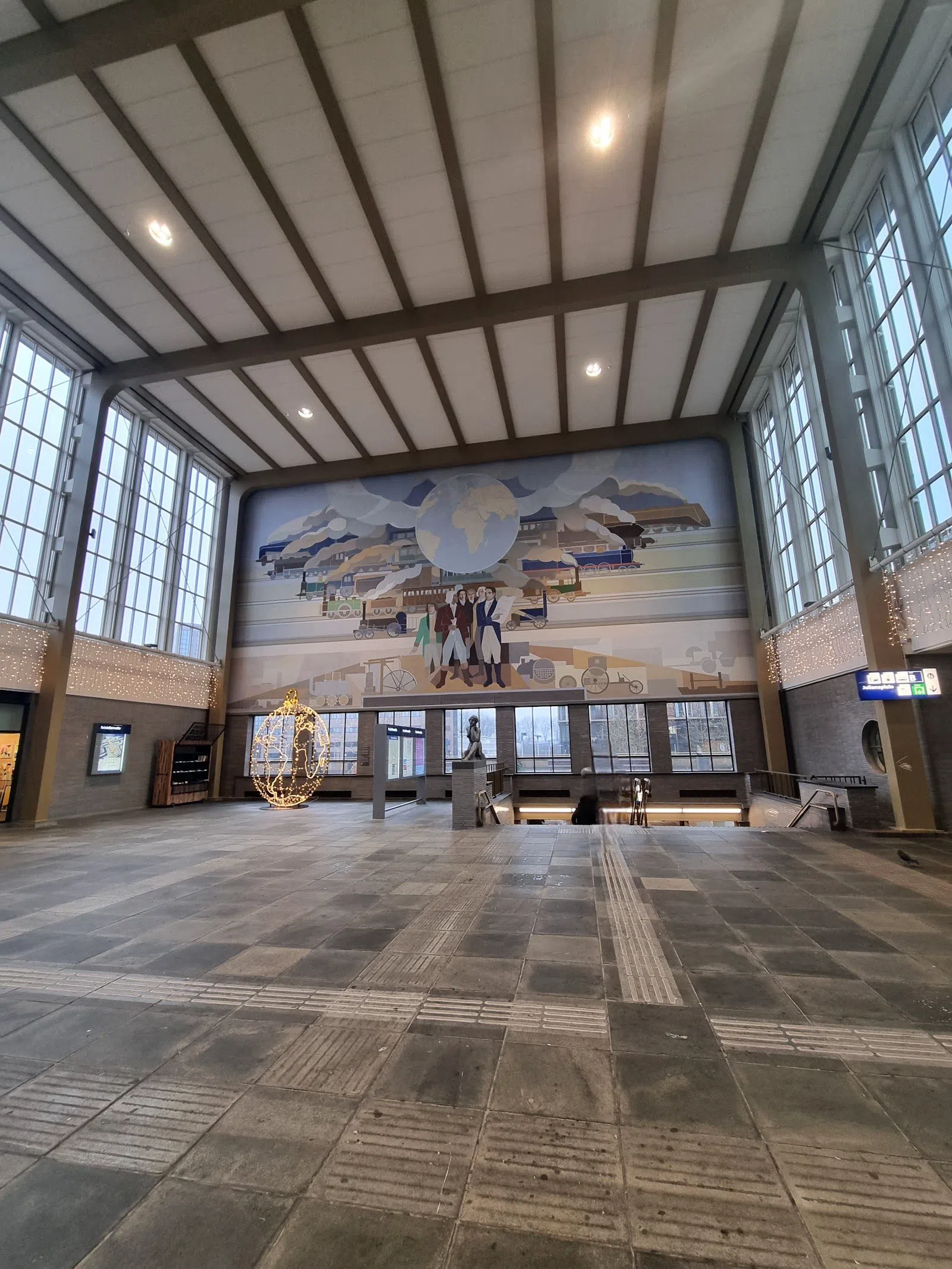
What it does better than anywhere else on this list is space. It is fully public with no door policy, the circulation is wide, and there is courtyard seating, so eight of you can sit down together without negotiating for a bench. Foodhallen is where you go to eat well in a crush; Amstel 1 is where you go when someone in the group has had enough of crushes.
Plan your Amsterdam trip
Live prices from our booking partners.
Free cancellation on many rooms. We may earn a commission when you book.
Two street markets running six days a week
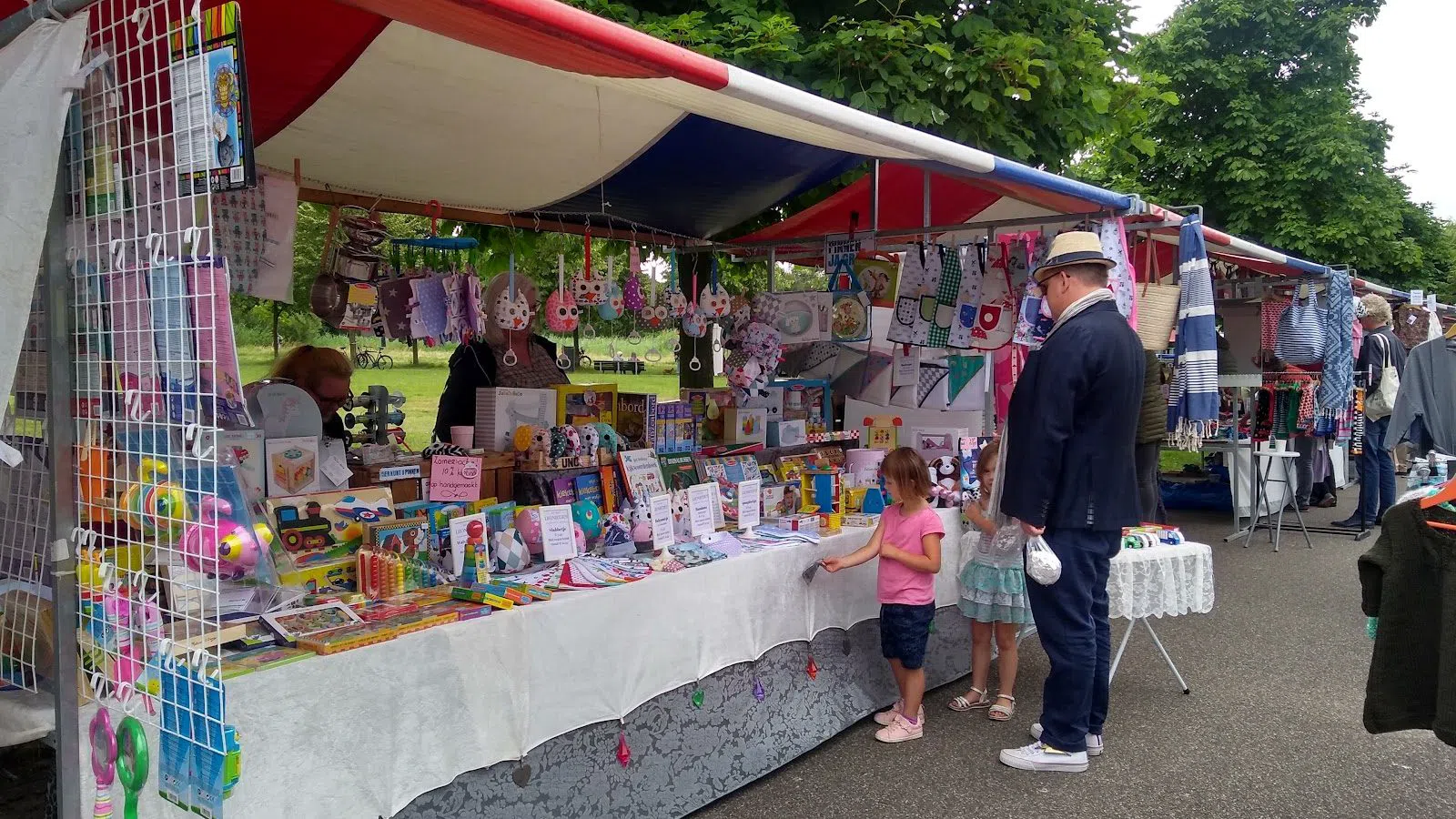
Albert Cuypmarkt (De Pijp) is the biggest and oldest street market in Amsterdam, Monday to Saturday, 09:30 to 17:00, closed Sundays. Snacks cost €2 to €8: stroopwafels pressed warm to order and folded into a paper bag, poffertjes under a snowdrift of icing sugar, kibbeling in a tray with sauce, eaten standing up with the tram going past your elbow. It is touristy at the Ferdinand Bol end and noticeably more local as you walk towards Van Woustraat, so walk the whole length before you buy anything and eat at the far end.
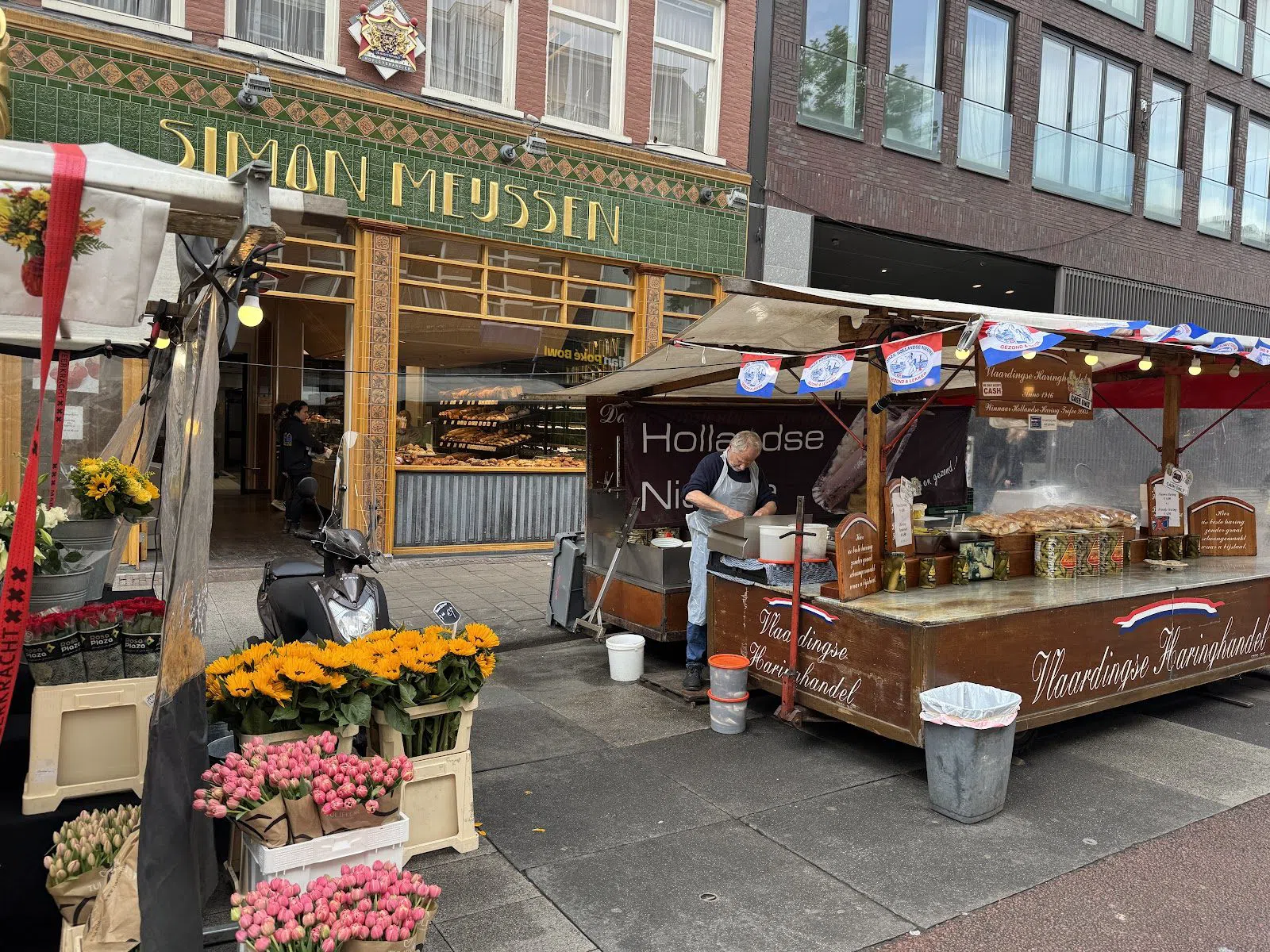
At midday it is a single-file corridor, and a group of more than six will lose each other within two minutes. Agree a meeting point at one end before you start, and let people graze at their own speed rather than trying to move as a block.
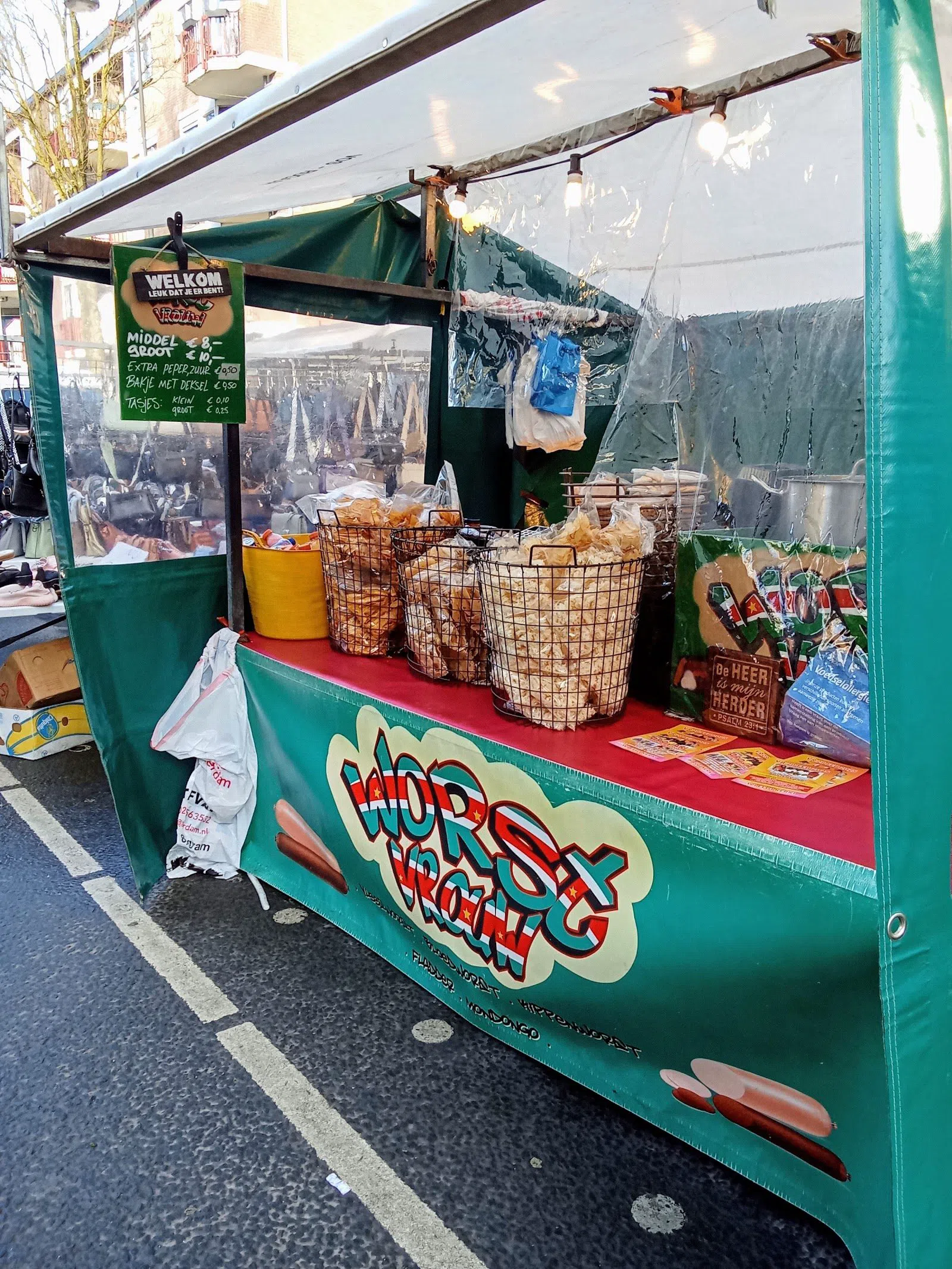
Dappermarkt (Dapperbuurt, east) is the local one, Monday to Saturday, 09:00 to 17:00, and the same €2 to €8. Middle Eastern, North African and Surinamese traders dominate, there are almost no tour groups, and the street is wider than Albert Cuyp so a group moves comfortably instead of shuffling. What surrounds it is the other advantage: Oosterpark and the Tropenmuseum are on the doorstep, so buy lunch from three different stalls and eat it on the grass rather than hunting for a table that does not exist.
Saturday is the best market day in this city
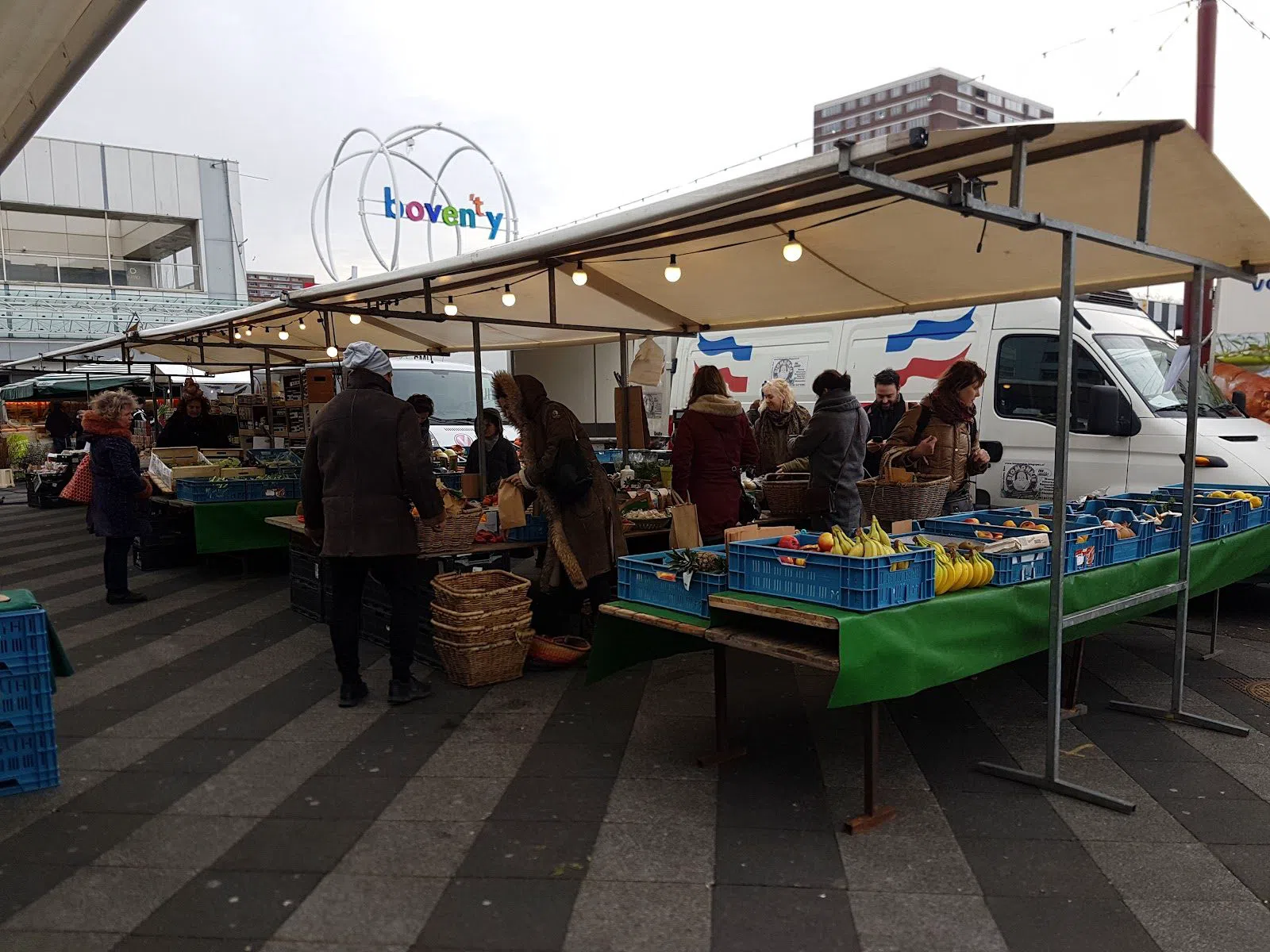
If you only get one morning, make it Saturday and make it the Jordaan. Biologische Noordermarkt (Jordaan) runs every Saturday, 09:00 to 16:00, and is the country's first organic farmers' market, founded in 1987. Around thirty growers and producers, €3 to €12 for lunch, and the best place in Amsterdam to build a meal by hand: a wedge of cheese, a loaf, tomatoes that smell of tomato, something pickled. Because it sits on a square rather than a street, a group can stand still in one place, which sounds trivial until you have tried it on Albert Cuyp.
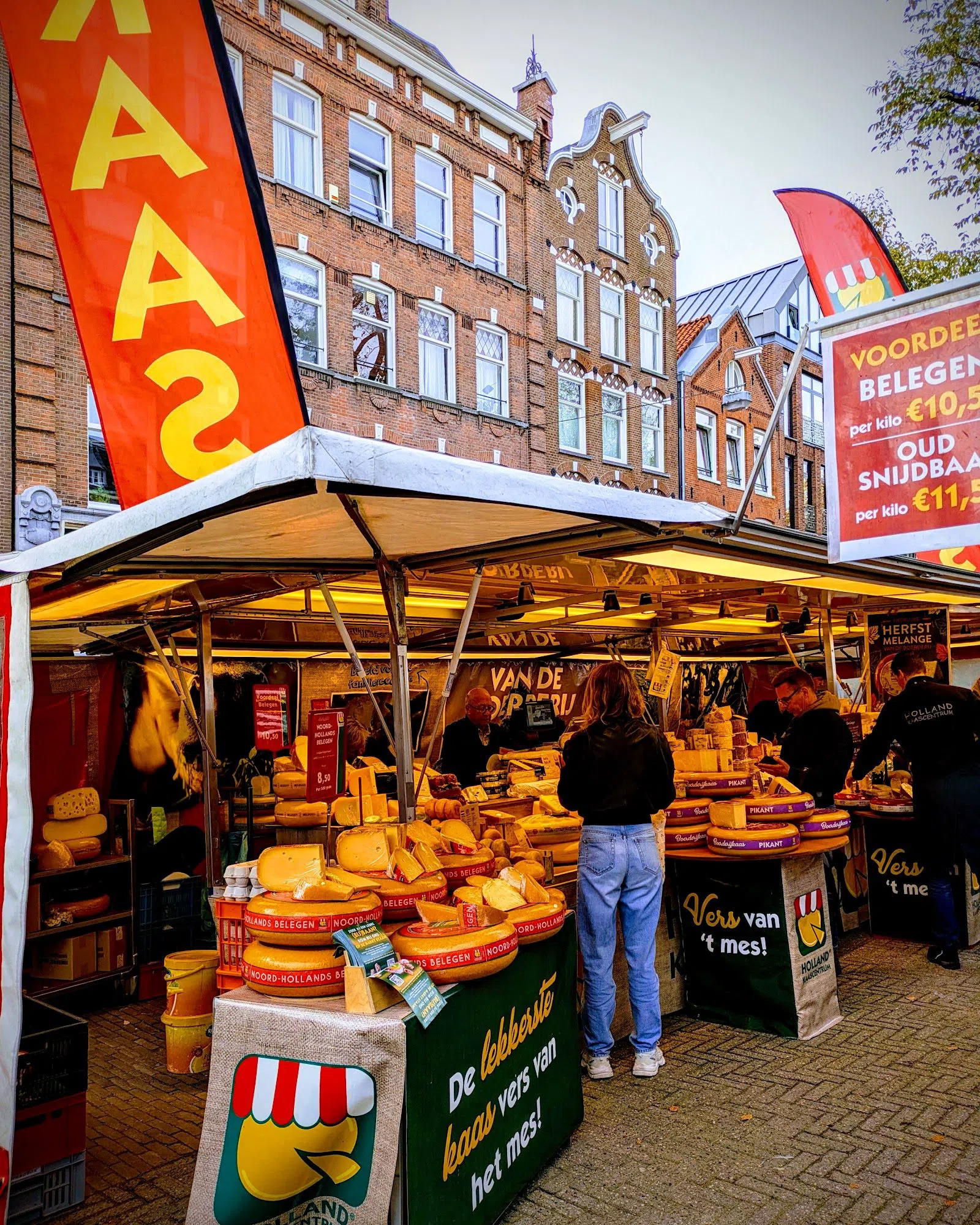
Five minutes away, Lindengracht Markt (Jordaan) takes over on Saturday only, 09:00 to 17:00, and is bigger, cheaper and far less curated than its organic neighbour: €2 to €10, long and linear, made for grazing from one end to the other. Do the two together and you have a complete Saturday morning without a single tram ride.
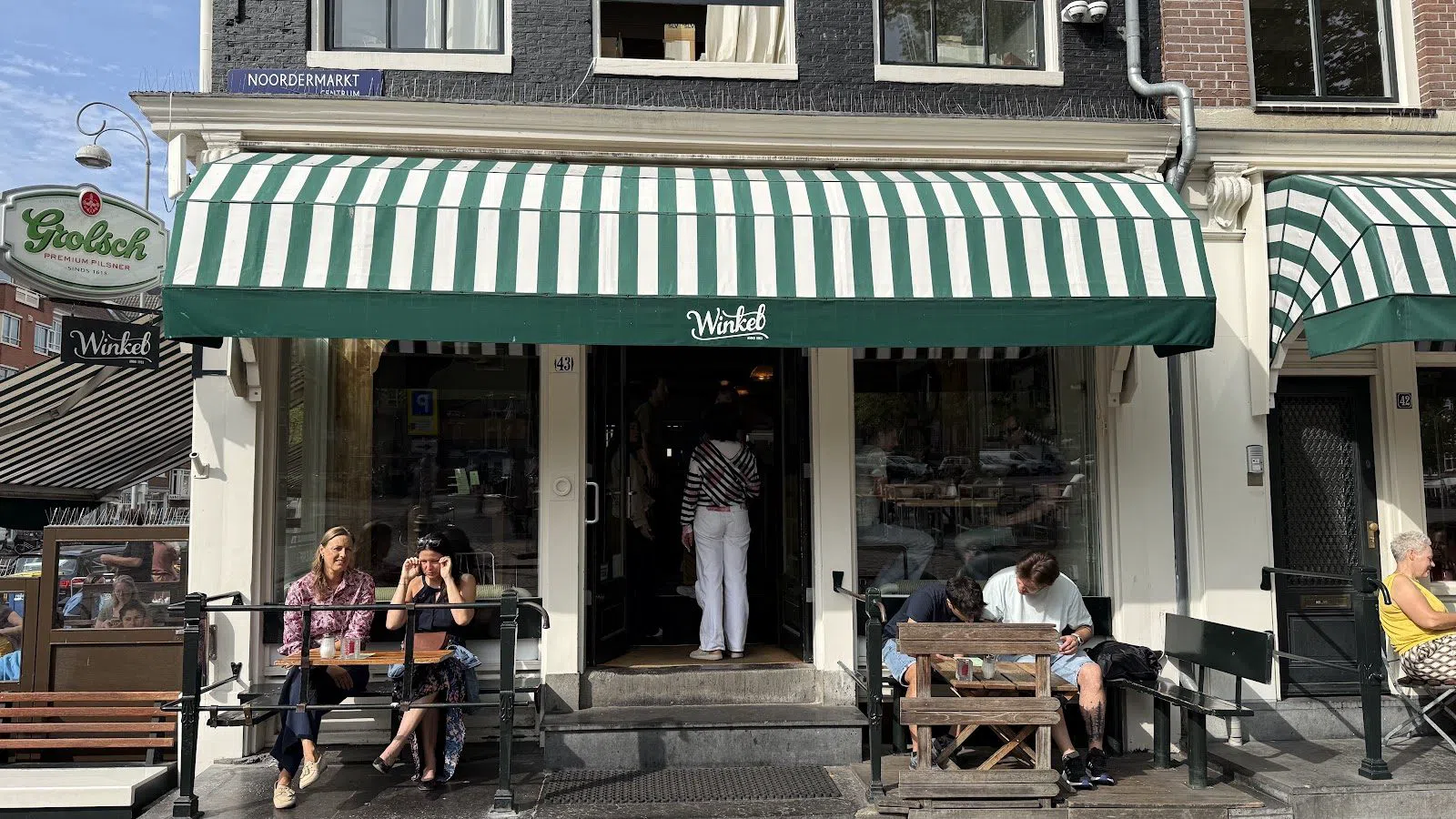
The anchor for all of it is Winkel 43 (Jordaan, on the Noordermarkt itself), which opens at 07:00 on Mondays and Saturdays for the market crowd. A slice of the apple pie is €6 to €8 and lunch is €8 to €14. The pie is the entire reason to be there: tall, packed with fruit, more substantial than pretty. There are no reservations and the room is small and tightly packed, fine for two to four and painful for six, so the terrace is the better bet in any weather you can tolerate. Eating a slice at eight in the morning while the stallholders are still unloading crates is the version of this that works.
The most central market lunch
Nieuwmarkt organic farmers' market (Nieuwmarkt, city centre) is a small produce, flower and cheese market Monday to Friday, and then the whole square turns over to organic growers on Saturday. Lunch is €3 to €12 and it is ten minutes' walk from Centraal, which makes it the sensible move on an arrival day when you have a bag and no energy. The square is ringed with terraces, so a group that needs to sit has somewhere obvious to go.
North of the IJ, at an address older guides get wrong
Pekmarkt (Noord) trades on Wednesday, Friday and Saturday, roughly 09:00 to 17:00, with the Friday edition run as a farmers' market, and prices at €2 to €8. It is uncrowded in a way no market in the centre is, so groups are comfortable and stallholders have time to talk to you.
It has moved back to Mosveld for at least three years while Van der Pekstraat is rebuilt. Guidebooks and older blog posts will send you to the wrong street and you will stand on a building site wondering what happened. Cross on the free ferry from behind Centraal and walk to Mosveld, not to Van der Pekstraat.
The Surinamese counters that are the other half of lunch here
Surinamese cooking is part of how Amsterdam eats, and two counters make the case better than any restaurant will.
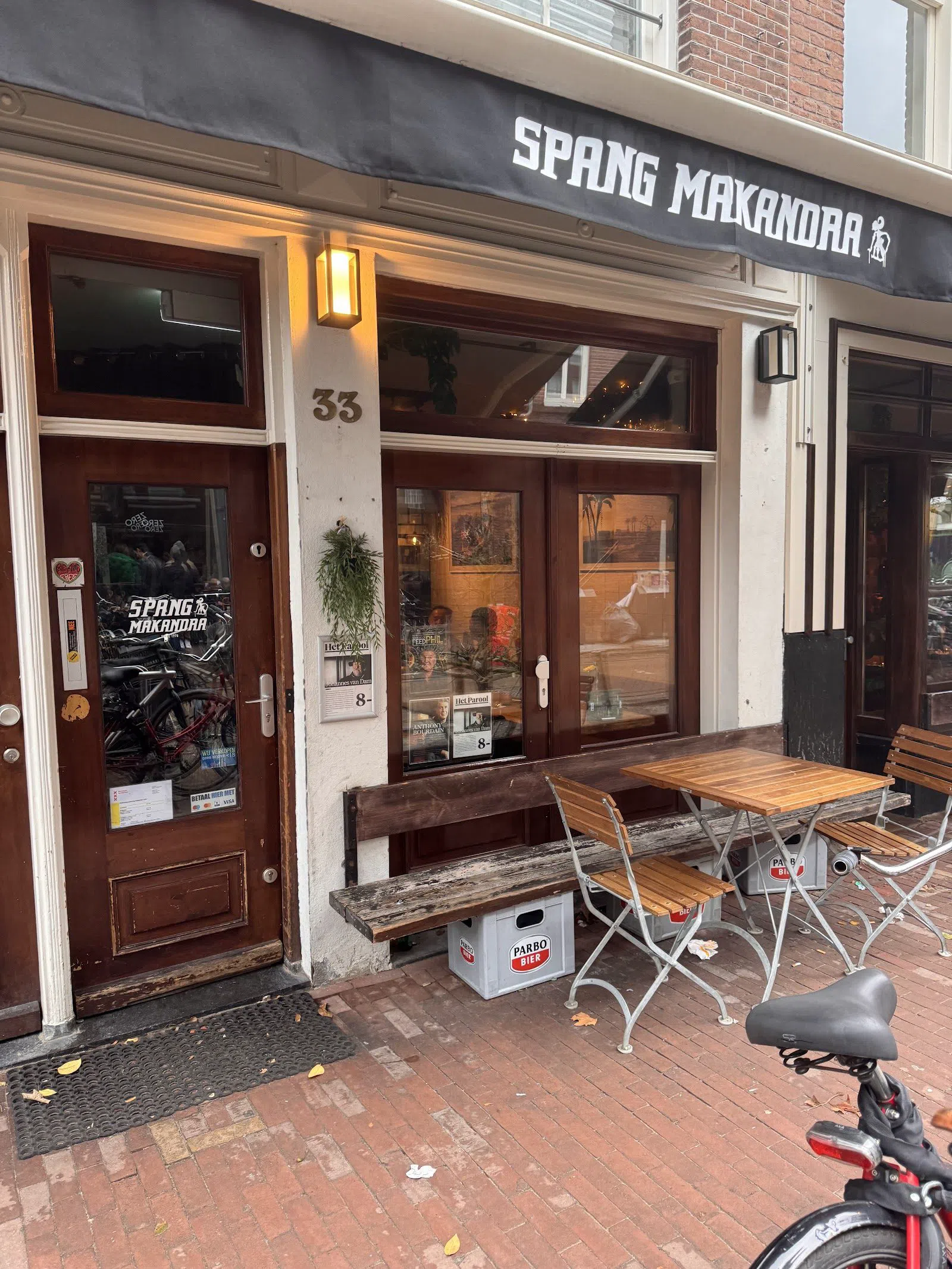
Warung Spang Makandra (De Pijp) has been family-run since 1978 and sits one street off the Albert Cuypmarkt, which makes it the obvious sit-down after a morning of eating standing up. Roti (flatbread with curried chicken, potato and long beans), saoto soup and moksi meti are all done properly, and almost everything is under €15, market-stall money for a plate you eat with a fork at a table. It takes reservations and does takeaway, but the room is small: book ahead for more than four, or accept that you will wait on the pavement.
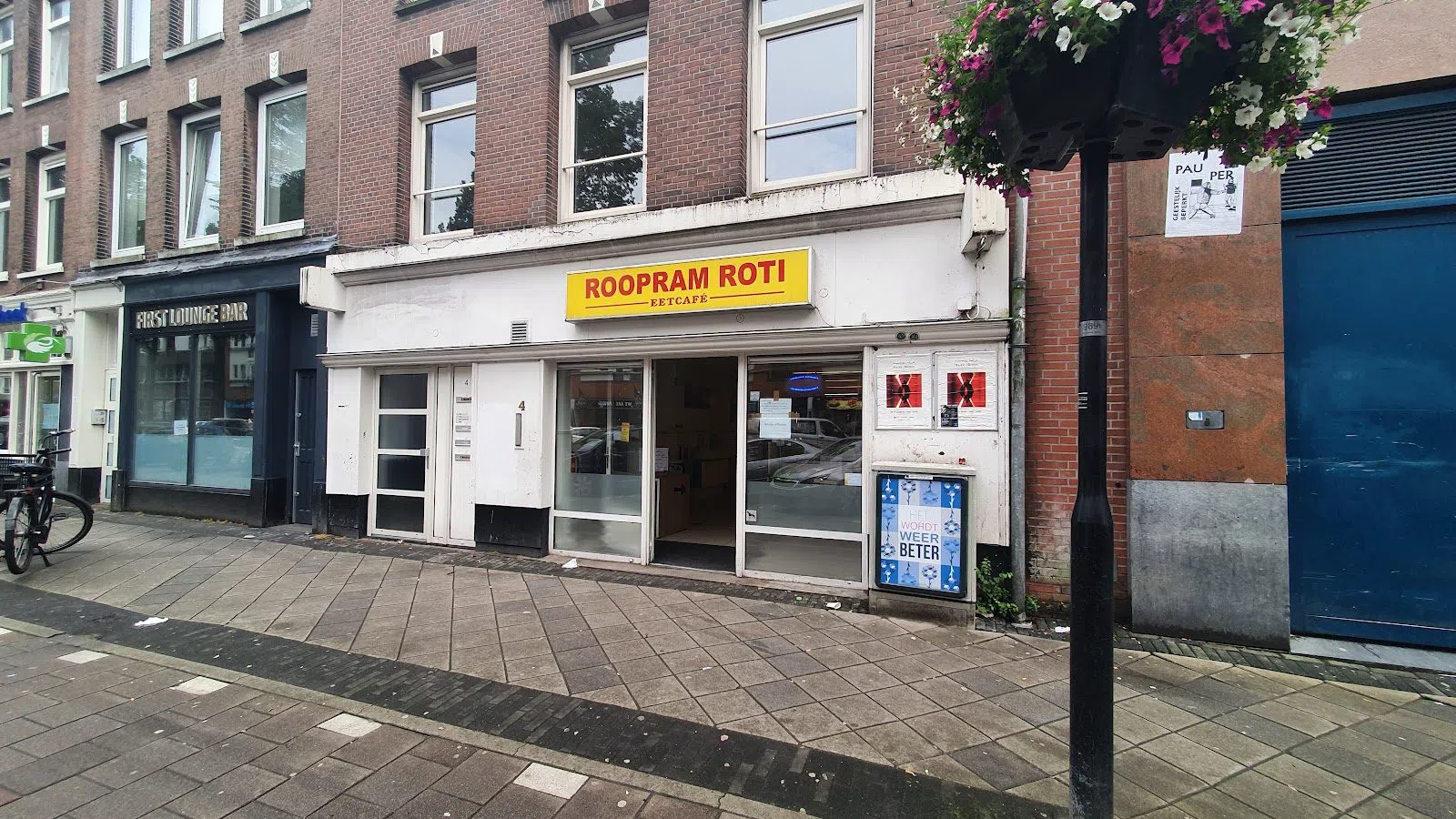
Roopram Roti (Dapperbuurt) is the east branch of a Surinamese institution, a minute from the Dappermarkt, at €8 to €12. It is tiny and counter-led with no reservations, so a group is much better off taking the food to Oosterpark and eating it on a bench. It is closed on Mondays and does not open until 14:00, so it is a late lunch, never an early one. The pairing that works is the Dappermarkt at eleven for snacks, the Tropenmuseum or the park in between, then roti at two.
Fries and herring, eaten on the street
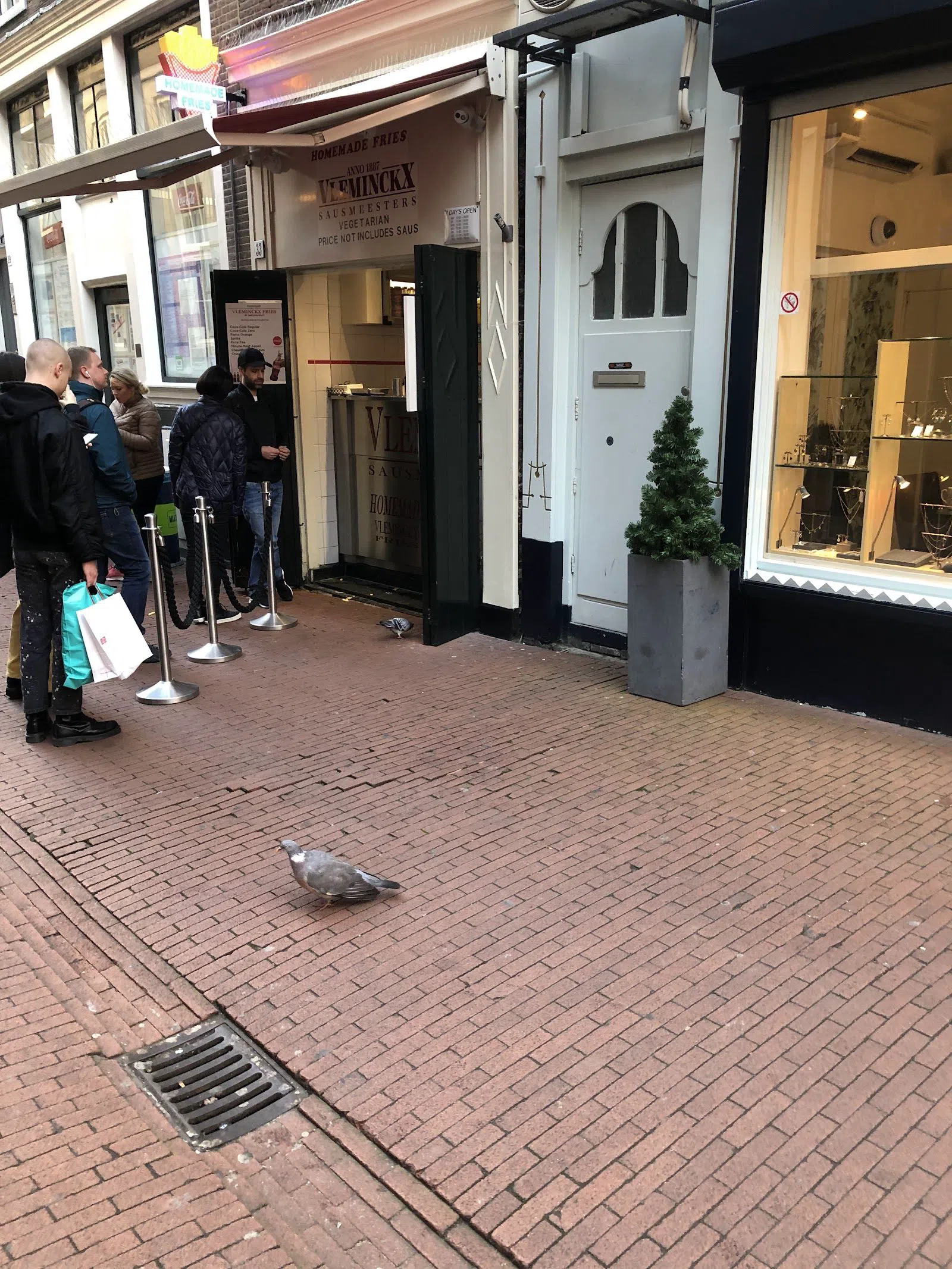
Vlaams Friteshuis Vleminckx de Sausmeester (city centre) has been frying since 1957 and is still the benchmark, at €4 to €7, open daily 11:00 to 19:00 and to 20:00 on Thursday. There is nowhere to sit, no ordering ahead, and the queue is part of the deal. You order, you get a paper cone with the sauce spooned over the top, and you eat it standing on the street with your back against a wall. A group queues together and eats together on the pavement, so do not go looking for a table, because there isn't one.
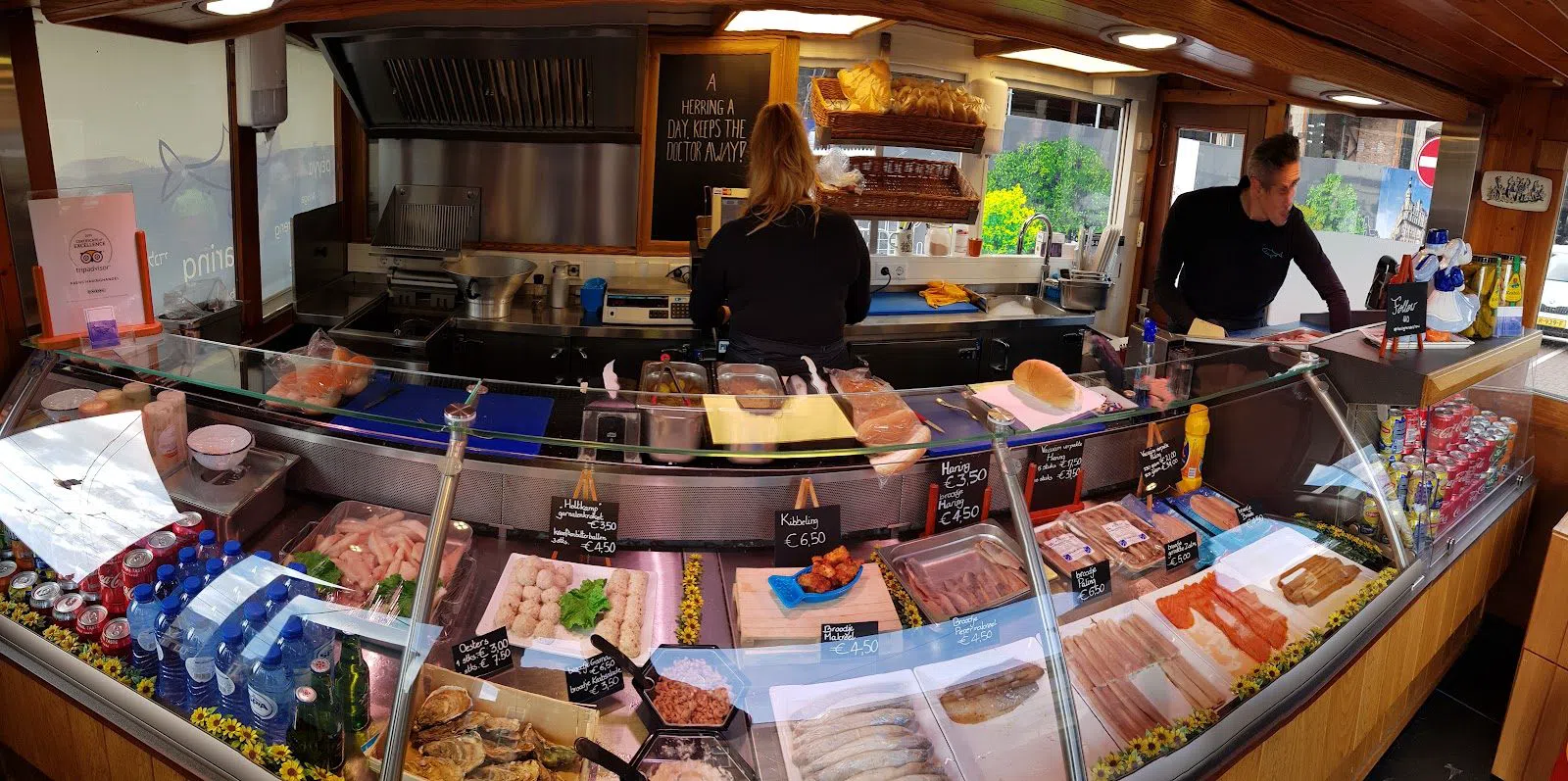
Stubbe's Haring (city centre, five minutes' detour from Centraal) is a century-old herring stand in arguably the best-sited spot in Amsterdam, open Tuesday to Friday 10:00 to 17:00 and Saturday until 18:00, at €4 to €7. It is a pavement stall with no seating, so a group orders one at a time and eats on the bridge. Sunday and Monday are out, which catches a lot of weekend visitors on their last morning. It is the most Dutch thing you can eat standing up, and it takes four minutes end to end.
One Sunday a month, in a park
Pure Markt Park Frankendael (Watergraafsmeer, east) runs almost every last Sunday of the month, though not in January, February or December, from 11:00 until 17:00 or 18:00, with plates at €5 to €15. Small-batch producers cook on site and you eat on the grass, and it is the only entry on this list actually built for a group to sit down together, with picnic space rather than a fight for a bench. Check the date before you travel across town, because it is not a weekly market and there is nothing there on the other Sundays.
How to arrange this around a short trip
Saturday is the day with the most on: Winkel 43 at seven or eight, the Noordermarkt and Lindengracht until early afternoon, and the Nieuwmarkt growers if you still have room. Monday to Friday, pick one street market, Albert Cuypmarkt if you want the classic snacks or Dappermarkt if you would rather eat where the tour groups are not, and follow it with a Surinamese counter. Sunday is the thin day: Foodhallen is the reliable option, with Pure Markt as the alternative on its one Sunday a month.
Where you sleep decides how much of this you walk to. De Pijp puts Albert Cuypmarkt and Warung Spang Makandra at the end of your street, the Jordaan hands you the whole Saturday morning on foot, and Oud-West drops you next to Foodhallen, worth weighing up when you run an Amsterdam hotel search. For everything else to build the days around, the Amsterdam guide covers the rest of the city.
Practical notes
Street markets die well before their closing time. Traders start breaking down from about 16:00, and the best produce goes in the first two hours, so aim to be at any market by 11:00. The halls run the opposite way, and Foodhallen, open until 23:00, is the only late option here.
Everything in this article is either central, one tram ride out, or across the water on the free ferry from behind Centraal. Nieuwmarkt is ten minutes on foot from the station and Stubbe's Haring is five. Nothing here justifies a taxi.
Carry a card and a small amount of cash. Dutch stalls have gone card-first and a few take nothing else, but the smallest traders can still surprise you in either direction, so do not arrive with only one method of payment.
Eating this way, €15 to €25 a person covers a generous day: €2 to €8 per street-market snack, €8 to €12 a plate at Foodhallen, under €15 for a full Surinamese lunch. Two people can eat properly for a week in Amsterdam without ever booking a table.
For groups, Amstel 1 and Pure Markt are the two places built for six or more to sit together. Foodhallen works if you go before 18:00. Winkel 43 and Roopram Roti do not work for groups at all, so split up or take the food outside.
Before you go
Which Amsterdam markets are open on a Sunday?
Almost none. The street markets (Albert Cuypmarkt, Dappermarkt, Lindengracht, Noordermarkt and Pekmarkt) all run Monday to Saturday at most. On a Sunday your reliable option is Foodhallen, open daily 12:00 to 23:00, plus Pure Markt Park Frankendael on most last Sundays of the month, though not in January, February or December.
Do I need to book a table at Foodhallen?
No. The hall itself takes no reservations: you walk in and find space at the communal tables. You can book private hire of a section through the events team, which is worth it for a large group. Otherwise arrive before 18:00, because weekend evenings are a scrum.
How much should I budget for lunch at an Amsterdam market?
Street-market snacks run €2 to €8, market lunches at the farmers' markets €3 to €12, plates at Foodhallen €8 to €12, and a full Surinamese lunch under €15. Around €15 to €25 a person covers a full day of eating this way.
Which Amsterdam market feels least touristy?
Dappermarkt in the east, open Monday to Saturday 09:00 to 17:00, with Middle Eastern, North African and Surinamese traders and almost no tour groups. Pekmarkt in Noord is even quieter. If you do go to Albert Cuypmarkt, walk towards the Van Woustraat end, which is noticeably more local.
Where can a group of six or more actually sit down to eat?
Amstel 1 has wide circulation and courtyard seating, and Pure Markt Park Frankendael has parkland and picnic areas. Foodhallen works if you go before 18:00 and spread across the communal tables. Winkel 43 and Roopram Roti are too small, so use the terrace or take the food to Oosterpark.